
Solar tandem cells surpassing 30% efficiency: what this breakthrough means for the industry
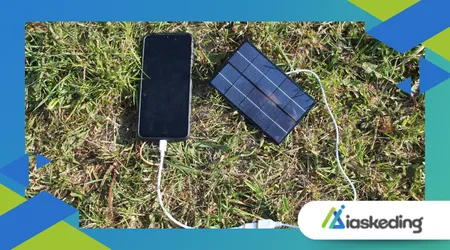
The achievement of Solar tandem cells surpassing 30% efficiency represents a seismic shift in the renewable energy landscape, promising a transformative acceleration in our global transition away from fossil fuels.
This new benchmark isn’t merely an incremental gain; it fundamentally alters the calculus of solar power’s potential.
This exciting development, leveraging the multi-junction architecture, is poised to reshape manufacturing processes and deployment strategies worldwide.
How significant is this threshold, and what ripple effects should the energy sector brace for?
How Do Tandem Cells Work to Achieve Such High Efficiency?
Tandem cells are essentially highly sophisticated “stacked” solar devices, designed to overcome the efficiency limitations inherent in traditional, single-junction silicon cells.
They are a brilliant engineering solution.
These innovative structures utilize two distinct layers, or sub-cells, each tuned to absorb a different segment of the solar spectrum. The top cell captures high-energy blue and green light.
The lower, often silicon, cell efficiently captures the remaining lower-energy red and infrared light that passes through the first layer.
++Is Lithium Iron Phosphate Better for Heavy-Duty Trucks?
This masterful division of labor allows for significantly more energy to be harvested from the same amount of sunlight.
This spectral splitting is what pushes their performance beyond the theoretical limits of single-junction photovoltaic (PV) technology.
Traditional crystalline silicon cells face a theoretical limit around 29.4%, a ceiling tandem technology has now convincingly shattered.
Why Is Efficiency Over 30% A Game-Changer For Solar Energy?
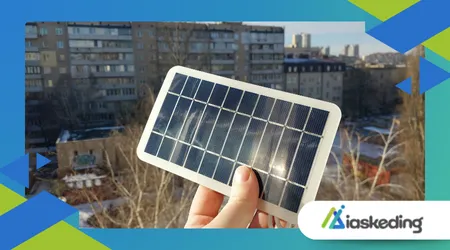
Crossing the Solar tandem cells surpassing 30% efficiency mark moves the technology from the realm of academic possibility to commercial inevitability, dramatically improving the economics of solar power.
Higher efficiency directly translates to lower costs per watt.
++How “flexible solar skins” are transforming urban surfaces into energy generators.
The critical metric in energy is the Levelized Cost of Electricity (LCOE), and greater efficiency lowers LCOE by reducing the Balance of System (BoS) costs.
Simply put, less land and fewer mounting structures, cables, and inverters are needed to generate the same amount of power.
Consider this: a system utilizing 30%-plus efficient panels needs roughly 20% less space than one using standard 25% efficient panels.
For large-scale solar farms or rooftop installations in dense urban environments, space-saving is a premium benefit.
This breakthrough provides a compelling economic argument for global adoption, accelerating solar’s competitive edge against conventional generation sources.
Explore more: Biomass Energy Explained: How It Works & Its Role in Clean Energy Transition
The entire value chain suddenly becomes more profitable and scalable.
What Material Innovations Are Driving Solar Tandem Cells Surpassing 30% Efficiency?
The major leap in performance stems primarily from integrating perovskite materials as the top cell. Perovskites boast remarkable properties.
Their strong light absorption and tunability allow researchers to engineer a perfect spectral partner for the underlying silicon bottom cell.
This hybrid approach capitalizes on the stability of silicon and the performance of perovskites.
Researchers have successfully addressed many early challenges related to perovskite durability and long-term stability in real-world conditions.
These material science advancements are crucial for eventual mass-market success.
The ongoing research focus involves scaling up manufacturing techniques while maintaining high efficiency and ensuring a reliable lifespan.
The industrialization of perovskite deposition techniques remains a key hurdle.
How Will This Technology Impact Real-World Solar Deployment?
The implications of Solar tandem cells surpassing 30% efficiency span from utility-scale power plants to everyday consumer electronics, opening up numerous new markets.
- Utility-Scale: New farms will require significantly less land, mitigating the “land use” objection often raised against large solar projects. This is a crucial advantage in land-constrained regions.
- Rooftop Solar: Residential and commercial rooftops with limited surface area can now achieve higher power output. This is particularly valuable in dense metropolitan areas like Tokyo or São Paulo, where space is a severe constraint.
For example, a typical American home with a limited roof space that previously generated 8 kW might now, with tandem cells, produce 10 kW or more, significantly increasing its energy independence.
This enhanced output makes solar viable for more homeowners.
If standard solar panels are like a single-lane highway, the tandem cell is a multi-layered expressway, allowing photons (cars) to travel and be harvested far more efficiently, increasing the throughput of energy dramatically.
What Are the Next Steps for Commercializing Tandem Solar Technology?
The immediate focus for the industry is moving from lab-scale records to reliable, high-volume manufacturing lines. Solar tandem cells surpassing 30% efficiency must be produced affordably.
Companies are now concentrating on optimizing production yields and ensuring the multi-decade durability required for power purchase agreements (PPAs) and financing.
Long-term reliability is paramount for investors.
A recent study published in Nature Energy found that tandem cells have demonstrated a degradation rate comparable to conventional silicon cells under accelerated testing conditions, a key indicator of commercial viability.
The supply chain needs to adapt to new material handling and deposition methods, representing an opportunity for existing silicon manufacturers to upgrade their facilities.
This evolution requires substantial capital investment and engineering ingenuity.
| Metric | Conventional Silicon (2024 Avg.) | Tandem Cell (Target/Actual 2025+) |
| Peak Efficiency (Lab) | $\sim 26.5\%$ | $>30\%$ |
| System Footprint for 1 GW | $\sim 3,000$ acres | $\sim 2,400$ acres |
| LCOE Reduction Potential | Base | $\sim 15-20\%$ lower |
| Market Readiness (Mass Production) | High | Mid-to-High |
This performance jump, evidenced by the table, makes the cost savings undeniable. Who wouldn’t want to generate more power from less real estate?
The challenge of cost parity with silicon remains, but the higher efficiency acts as a powerful offset. This technology will be quickly adopted by premium solar markets initially.
Conclusion: A New Era Fueled By Solar Tandem Cells Surpassing 30% Efficiency
The moment Solar tandem cells surpassing 30% efficiency became a reality, the world entered a new phase of the renewable energy revolution, fundamentally enhancing solar power’s global potential.
This breakthrough isn’t just a technical footnote.
It is a powerful economic catalyst, promising lower electricity costs, reduced land use, and greater energy independence for nations.
This development reinforces solar as the undisputed, long-term cornerstone of a decarbonized global energy mix.
Frequently Asked Questions: Solar tandem cells surpassing 30% efficiency
What are the main benefits of using tandem solar cells?
The primary advantage is their significantly higher efficiency, allowing them to convert more sunlight into electricity than conventional cells, which reduces the required installation area and overall system costs (LCOE).
Are tandem solar cells commercially available today?
While research cells have hit the 30% mark, widespread mass commercialization is currently scaling up, with several manufacturers expected to introduce high-efficiency tandem modules into the market throughout 2025 and 2026.
Does a tandem cell last as long as a silicon cell?
Recent research and accelerated testing indicate that the stability and projected lifespan of commercial-grade perovskite-silicon tandem cells are approaching those of established silicon technology, a crucial factor for utility-scale deployment financing.
