
Renewable Energy Grid Bottlenecks Slowing New Projects
The reality of Grid Bottlenecks Slowing New Projects has become the primary obstacle to achieving global decarbonization targets as we navigate the complex energy landscape of 2026.
While solar and wind technology costs have plummeted, the physical infrastructure required to transport these green electrons remains stuck in a previous century.
We are witnessing a bizarre paradox: developers have the capital and the hardware to build, yet they face decade-long waiting lists for a simple plug-in.
This systemic congestion threatens to derail the momentum of the entire energy transition, turning promising investments into stranded assets.
This article explores the technical, political, and economic friction points that are currently choking the global power supply.
What are the primary causes of current grid congestion?
The fundamental issue lies in the messy transition from centralized fossil fuel plants to decentralized, weather-dependent energy sources scattered across vast, often remote, geographic areas.
Legacy grids were designed for one-way traffic, from a few massive coal or gas plants directly to urban centers.
Now, thousands of smaller solar and wind farms are trying to push power onto the system simultaneously.
This surge creates thermal limits on transmission lines, leading to Grid Bottlenecks Slowing New Projects across North America and Europe.
There is something fundamentally frustrating about a system that “overflows” simply because we haven’t updated the transformers to handle 21st-century loads.
Without massive hardware upgrades, operators are forced to reject new connection requests just to keep the lights on.
How does the interconnection queue affect project financing?
For a renewable energy developer, time is quite literally money, and a five-year delay in grid connection can destroy the internal rate of return for even the most robust project.
Lenders are increasingly hesitant to fund projects that do not have a guaranteed “permission to play” on the national grid.
This uncertainty forces developers to pay for expensive system impact studies that may ultimately lead to a dead end.
Consequently, Grid Bottlenecks Slowing New Projects lead to an unfortunate consolidation of the market, where only the largest corporations can afford to sit on idle land for years.
This stifles innovation and prevents smaller, community-based energy projects from ever reaching the construction phase.
For a detailed look at international energy statistics and infrastructure progress, the International Energy Agency (IEA) provides essential data on global transition roadblocks.
Why is the geographic mismatch a hurdle for transmission?
The best places to generate wind and solar power are rarely the places where people actually live and consume the most electricity. This is the “spatial gap” of the green revolution.
Windy plains and sunny deserts are often hundreds of miles away from industrial hubs or coastal cities.
Building long-distance, high-voltage direct current (HVDC) lines involves navigating a nightmare of local zoning laws and private property rights.
Because Grid Bottlenecks Slowing New Projects are often local in nature, a single resistant county can block energy flow for an entire state.
This “NIMBYism” (Not In My Backyard) remains a significant social barrier that technology alone cannot solve. It’s an ideological bottleneck as much as a physical one.
Which technologies are helping to mitigate these bottlenecks?
Engineers are now deploying “Grid-Enhancing Technologies” (GETs) to squeeze more capacity out of existing lines without having to wait years for new steel towers to be built.
Dynamic Line Rating (DLR) sensors allow operators to monitor real-time weather conditions, often revealing that lines can safely carry more power on cool, windy days.
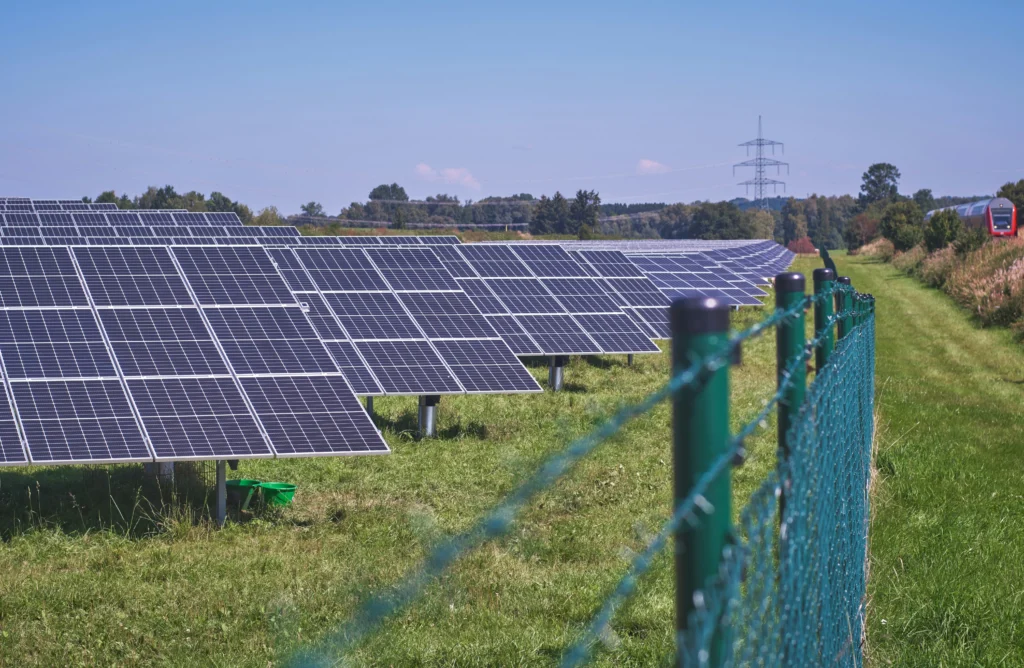
Advanced power flow controllers act like traffic lights for electrons, redirecting energy away from congested paths toward underutilized circuits.
While these solutions are faster to implement, they are often seen as a temporary band-aid for Grid Bottlenecks Slowing New Projects.
Eventually, the world must commit to the massive physical expansion of the “super-grid” to handle the projected doubling of electricity demand.
Wait Times and Capacity (2026)
The following table reflects the current average wait times for new utility-scale renewable projects to achieve full grid interconnection across major markets.
| Region | Avg. Wait Time (Years) | Projects in Queue (GW) | Primary Bottleneck Factor |
| North America | 6.5 | 1,200 | Aging infrastructure / Permitting |
| European Union | 5.0 | 850 | Cross-border coordination |
| China | 2.5 | 1,500 | Curtailment in remote provinces |
| Australia | 4.0 | 180 | Low system strength in rural areas |
| Brazil | 3.5 | 220 | Lack of long-distance HVDC lines |
How does grid instability impact the cost of energy?
When the grid is congested, operators must often “curtail”, or effectively waste, perfectly good renewable energy because there is no way to move it to customers.
This inefficiency keeps expensive, polluting gas plants running simply because they are closer to the city centers and already plugged in.
Consumers end up paying twice: once for the wasted green energy and again for the fossil fuels used to fill the gap.
Therefore, Grid Bottlenecks Slowing New Projects directly contribute to higher monthly utility bills and slower progress toward carbon neutrality.
The economic cost of a stagnant grid is now measured in billions of dollars of lost productivity and environmental damage.
What role does energy storage play in bypassing the grid?
Large-scale battery storage is emerging as a critical “buffer” that can hold excess energy during peak production and release it when the grid finally has room.
Learn more: How Battery Storage Is Changing the Renewable Energy Game
Co-locating batteries with solar farms allows developers to manage their own “exit” onto the grid more effectively.
However, even these systems eventually need to discharge their power, meaning they are not a total replacement for transmission infrastructure.
Some forward-thinking companies are exploring “behind-the-meter” solutions, where industrial plants move their operations directly next to wind farms to avoid the public grid entirely.
This trend highlights the desperation of the industry to find workarounds for the Grid Bottlenecks Slowing New Projects.
When will policy catch up to the technical reality?
Governments are finally beginning to realize that “green” targets are meaningless without a massive overhaul of the permitting processes for transmission lines.
New legislation in several countries aims to fast-track “nationally significant” energy corridors, overriding some of the local red tape that has stalled projects for decades.
Read more: Renewable Energy Policy Frameworks: Ensuring Long-Term Investment
There is a growing movement to modernize the “utility model,” incentivizing power companies to innovate rather than simply collecting guaranteed returns on old assets.
If these reforms succeed, we could see a massive surge in connectivity by the late 2020s.
However, the current lag remains a sobering reminder that the energy transition is a physical, industrial challenge as much as a digital one.
The path forward for a connected green future
We cannot build a 21st-century energy system on the skeleton of a 20th-century grid without facing these inevitable growing pains.
The persistent issue of Grid Bottlenecks Slowing New Projects is a call to action for engineers, policymakers, and investors to collaborate on a grand scale.
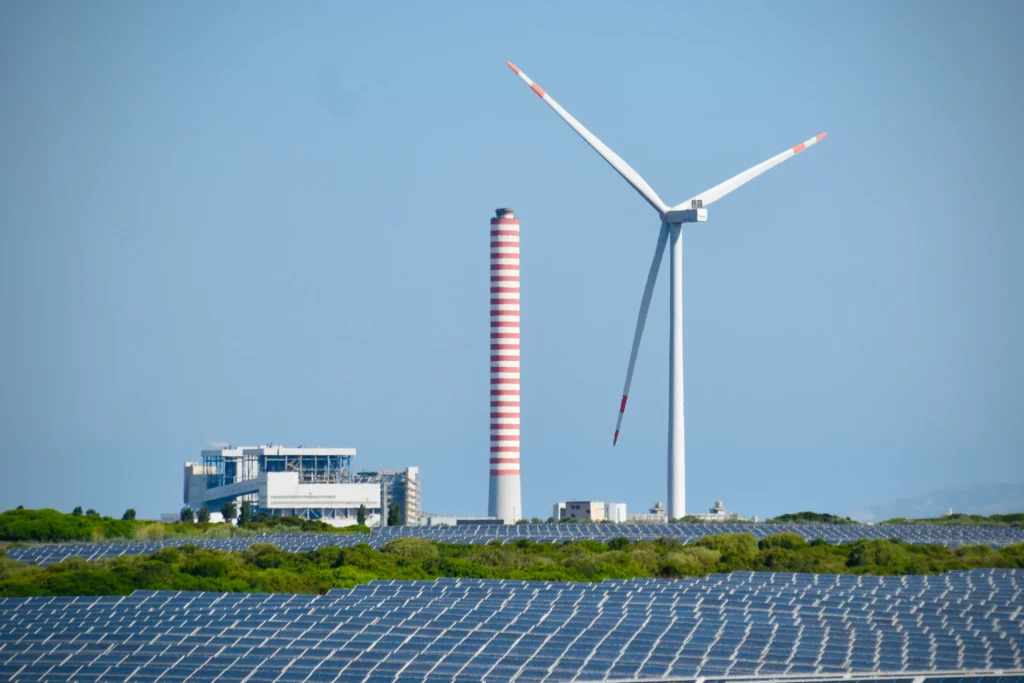
We must move beyond the “low-hanging fruit” of installing panels and start the hard work of digging trenches and stringing wires.
Read more: Top Green Energy Startups to Watch
The success of our climate goals depends entirely on our ability to move energy from where it is abundant to where it is needed.
Only by fixing the grid can we truly unlock the full potential of the renewable revolution and ensure a stable, affordable future.
For more technical insights into the future of power systems and grid modernization, the Electric Power Research Institute (EPRI) provides world-class research and collaboration for the global energy sector.
FAQ: Frequently Asked Questions
Can we solve grid bottlenecks without building new lines?
Grid-enhancing technologies can increase capacity by 10-30%, but they cannot handle the massive 100-200% increase in load required for a fully electric future.
Why don’t we just bury all the power lines?
Burying high-voltage lines is significantly more expensive, often 5 to 10 times the cost, and much harder to maintain, though it does avoid some aesthetic and NIMBY issues.
Do grid bottlenecks affect residential solar?
Usually no, but in some areas with extremely high solar density, utilities are starting to limit “net metering” or back-feeding to prevent local transformer overloads.
How does the grid stay stable with so much variable energy?
Operators use sophisticated forecasting and “spinning reserves” (usually batteries or gas plants) to balance the ups and downs of wind and solar production in real-time.
Will energy prices go down once the grid is fixed?
In the long run, yes. Access to cheaper wind and solar will lower the “fuel” cost to zero, but we must first pay the “mortgage” for the new infrastructure.
