
How Battery Storage Is Changing the Renewable Energy Game
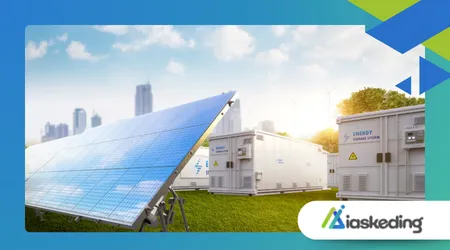
The rise of battery storage is revolutionizing how we harness and deploy renewable energy. No longer just an auxiliary technology, it’s now the backbone of a resilient, efficient, and sustainable power grid.
For years, the Achilles’ heel of solar and wind energy was their unpredictability. The sun sets, the wind calms—but energy demand never sleeps.
Battery storage changes that equation, turning sporadic generation into a steady, reliable power source.
The shift is already happening. In 2024, global investments in energy storage surpassed $50 billion, a clear signal that the industry sees battery storage as the missing link in the clean energy transition.
But why now? Advances in lithium-ion technology, policy incentives, and the urgent need for grid stability have converged, making storage not just viable but essential.
This isn’t just about storing electrons—it’s about reshaping entire energy markets, empowering consumers, and accelerating the decline of fossil fuels.
The Silent Revolution in Energy Infrastructure
For decades, renewables faced a critical limitation: intermittency. Solar panels don’t generate power at night, and wind turbines stall in calm weather.
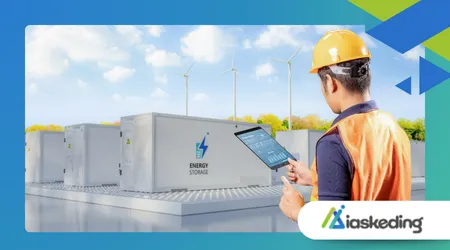
Battery storage bridges these gaps, storing excess energy when supply exceeds demand and releasing it when needed.
Take California, for instance. In 2024, the state avoided blackouts during a record heatwave thanks to grid-scale batteries supplying over 6,000 MW—enough to power 4 million homes.
This wasn’t just a milestone; it was a glimpse into the future.
But California isn’t alone. South Australia’s Hornsdale Power Reserve, often called the “Tesla Big Battery,” has saved consumers more than $200 million in grid stabilization costs since 2017.
++How Weather Affects Electric Motorcycle Performance
By responding to outages in milliseconds—far faster than gas peakers—it proves that battery storage isn’t just supplemental; it’s superior.
The real game-changer? Hybrid projects. Solar farms paired with storage, like Florida’s Manatee Energy Storage Center (409 MW), are now outcompeting natural gas plants in cost and efficiency.
From Backup to Mainstream: The Economics of Storage
Costs have plummeted. Since 2010, lithium-ion battery prices dropped by 89%, making large-scale projects viable. BloombergNEF predicts global battery storage capacity will hit 1,600 GWh by 2030—a 25-fold increase from 2023.
But economics alone don’t tell the full story. Consider Germany’s innovative “virtual power plants,” where home batteries aggregate to stabilize the grid. This decentralized model could redefine energy independence.
++How to Invest in Green Energy the Right Way
Utilities are also shifting strategies. Instead of building new gas plants, Arizona’s Salt River Project now relies on a 1 GWh battery system to meet peak demand. The result? Lower emissions and a more flexible grid.
Even oil giants are adapting. Shell’s 2025 investment plan includes $4 billion for storage projects, signaling that even fossil fuel incumbents see the writing on the wall.
The Grid of Tomorrow: Smarter, Faster, More Adaptive
Traditional grids were designed for one-way flow—power plants to consumers. Battery storage enables a dynamic, bidirectional system.
Imagine highways where cars suddenly reverse direction without crashing; that’s the level of transformation we’re seeing.
Australia’s Hornsdale Power Reserve slashed grid stabilization costs by 90%. Such successes prove that storage isn’t just an add-on—it’s the new rulebook.
++The Most Innovative Renewable Energy Projects Around the World
Microgrids are another frontier. In Puerto Rico, solar+storage systems kept lights on after Hurricane Fiona, while the central grid failed.
This resilience is why the U.S. Department of Energy is funding 85 microgrid projects nationwide.
The next leap? AI-driven optimization. Companies like Fluence use machine learning to predict demand and optimize battery dispatch, squeezing every possible watt from stored energy.
The Environmental and Ethical Balancing Act
Scalability remains an obstacle. Mining lithium and cobalt raises environmental and ethical concerns. Solid-state batteries promise a breakthrough, but commercial viability is still years away.
Recycling is gaining traction. Redwood Materials, founded by a Tesla alum, now recovers 95% of battery metals, turning old EV packs into new storage units.
Policy must keep pace. The EU’s new Battery Regulation mandates strict recycling targets, but the U.S. lags behind. Can legislation accelerate a circular economy for batteries?
Challenges: The Roadblocks Ahead
Then there’s regulation. Outdated policies often lag behind innovation. How do we craft laws that encourage storage without stifling competition?
Interconnection delays are another hurdle. In the U.S., some storage projects wait years for grid approval. Streamlining this process is critical for meeting climate goals.
Finally, public perception. Some communities resist large battery installations, fearing fires or pollution. Education and safer chemistries (like LFP batteries) will be key to winning trust.
A Glimpse Into the Future
The International Energy Agency (IEA) estimates that by 2040, renewables will supply 50% of global electricity. Battery storage will be the linchpin, ensuring stability amid this seismic shift.
One thing is certain: The energy game has changed. The question isn’t whether storage will dominate—it’s how quickly we’ll adapt.
The Role of Battery Storage in Energy Equity
One often overlooked aspect of battery storage is its potential to democratize energy access.
In developing regions where grid infrastructure is unreliable or nonexistent, solar-plus-storage microgrids are providing 24/7 power for the first time.
Take Tanzania’s Zola Electric systems, which combine solar panels with battery storage to power rural clinics and schools – transforming education and healthcare outcomes.
These decentralized solutions prove that battery storage isn’t just about optimizing existing grids, but about rewriting the rules of who gets access to reliable electricity.
The Innovation Race Heats Up
While lithium-ion dominates today, the storage landscape is evolving rapidly. Flow batteries, with their 20+ year lifespans, are gaining traction for grid-scale applications.
California’s Moss Landing facility recently expanded to 3GWh using this technology. Meanwhile, startups like Form Energy are developing iron-air batteries that could store power for 100 hours at record-low costs.
This innovation wave suggests we’re just scratching the surface of what battery storage can achieve.
The coming decade will likely see today’s cutting-edge solutions become obsolete, as new chemistries and architectures push the boundaries of efficiency and affordability.
The Consumer Revolution
Home energy storage is transforming ordinary households into active grid participants. In Germany, over 400,000 homes with solar-plus-storage systems now trade excess power through blockchain-enabled platforms.
This peer-to-peer energy sharing, made possible by battery storage, is challenging traditional utility business models.
In Australia, virtual power plants linking thousands of home batteries provide grid services more responsively than conventional power plants.
As storage costs continue falling, we may see the rise of “prosumer” economies where homes and businesses become both energy consumers and suppliers.
The Geopolitical Shift
The storage revolution is redrawing the global energy map. Countries rich in lithium, cobalt, and rare earths are gaining strategic importance, while traditional oil powers face declining influence.
China currently controls 80% of battery material refining, prompting the U.S. and EU to ramp up domestic supply chains through initiatives like the Inflation Reduction Act.
This transition mirrors the oil geopolitics of the 20th century, but with one crucial difference: renewable energy and battery storage technologies are ultimately more distributed and democratized.
For further reading, explore IEA’s 2024 Energy Storage Report and BloombergNEF’s latest findings.
The question isn’t whether there will be energy conflicts, but whether the storage era will lead to more equitable energy relationships between nations.
Key Data: Global Battery Storage Growth
| Year | Installed Capacity (GWh) |
|---|---|
| 2020 | 17 |
| 2025 | 420 (projected) |
| 2030 | 1,600 (projected) |
Source: BloombergNEF (2024)
Frequently Asked Questions
Q: How long do grid-scale batteries last?
A: Most lithium-ion systems last 10-15 years, though advancements in solid-state tech could extend this.
Q: Are batteries better than gas peaker plants?
A: Yes—they respond faster (milliseconds vs. minutes), emit zero carbon, and often cost less over time.
Q: What’s the biggest barrier to wider adoption?
A: Regulation and supply chain bottlenecks, though both are improving rapidly.
