
The Environmental Impact of Traditional Energy vs Renewable
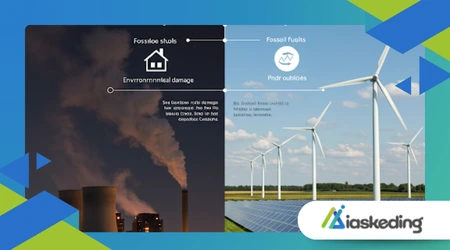
The environmental impact of traditional energy vs renewable sources is more than a technical comparison it’s a defining challenge of our time.
Fossil fuels, entrenched in global infrastructure, continue to drive climate change, air pollution, and ecological degradation.
Meanwhile, renewables like solar, wind, and hydropower are proving that a cleaner future is possible, though not without hurdles.
The transition between these two paradigms will shape economies, ecosystems, and public health for decades. But are we moving fast enough?
The stakes couldn’t be higher. The Intergovernmental Panel on Climate Change (IPCC) warns that surpassing 1.5°C of global warming will trigger irreversible damage.
Yet, in 2025, fossil fuels still supply nearly 78% of the world’s primary energy, per the International Energy Agency (IEA). This reliance comes at a devastating cost carbon emissions, habitat destruction, and toxic waste.
Renewables, while not flawless, present a viable alternative with far fewer long-term consequences. The question isn’t whether we should transition, but how swiftly and equitably we can do so.
The True Cost of Traditional Energy
Fossil fuels have powered industrialization, but their legacy is one of environmental harm.
The environmental impact of traditional energy vs renewable becomes undeniable when examining coal, the dirtiest energy source.
A single coal-fired power plant emits roughly 3.5 million tons of CO₂ annuallyequivalent to 750,000 cars. Beyond carbon, coal combustion releases mercury, sulfur dioxide, and particulate matter, poisoning air and water.
Oil extraction is equally destructive. The 2023 Amazon oil spill in Ecuador contaminated over 2,000 hectares of rainforest, killing wildlife and displacing Indigenous communities.
Such disasters are not anomalies but symptoms of an unsustainable system. Even “cleaner” fossil fuels like natural gas leak methane, a greenhouse gas 84 times more potent than CO₂ over 20 years.
The social costs are staggering. In Nigeria’s Niger Delta, decades of oil spills have rendered farmland infertile and drinking water toxic.
++How Electric Motorcycles Are Changing the Game for Adventure Riders
Meanwhile, fracking in the U.S. has been linked to groundwater contamination and increased seismic activity.
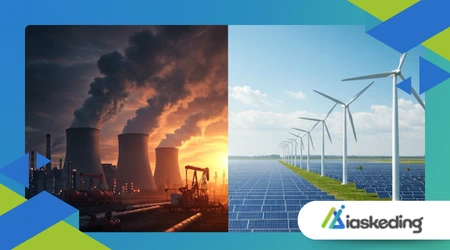
These examples underscore a harsh truth: fossil fuel dependence sacrifices public health and ecosystems for short-term energy gains.
Renewable Energy: A Cleaner but Imperfect Solution
Renewables offer a compelling counter to the environmental impact of traditional energy vs renewable reliance.
Solar power, for instance, has seen a 90% cost decline since 2010, making it the cheapest electricity source in most regions.
Countries like Germany and Spain now generate over 50% of their power from renewables on peak days.
Yet, challenges persist. Wind turbines, while emission-free in operation, require rare-earth metals like neodymium, often mined under hazardous conditions.
Solar panel manufacturing involves toxic chemicals such as cadmium telluride, raising concerns about worker safety and waste disposal.
Even hydropower, a longstanding renewable, disrupts river ecosystems China’s Three Gorges Dam altered local biodiversity and displaced 1.4 million people.
Read more: How to Transition Your Home to Clean Energy
Innovation is mitigating these drawbacks. Floating solar farms on reservoirs reduce land use, while perovskite solar cells promise higher efficiency with fewer toxic materials.
The key lies in scaling renewables responsibly learning from fossil fuels’ mistakes rather than repeating them.
Economic and Policy Implications
The shift from fossil fuels to renewables isn’t just ecological it’s economic. The environmental impact of traditional energy vs renewable debate intersects with job markets, energy security, and geopolitical dynamics.
The U.S. Energy and Employment Report (2025) found that clean energy jobs grew by 4% last year, while coal employment declined by 6%.
Policy plays a pivotal role. Norway’s aggressive electric vehicle (EV) subsidies have made it a global leader in EV adoption, with 90% of new car sales being electric or hybrid.
Conversely, nations reliant on fossil fuel exports, like Saudi Arabia, face economic diversification challenges. The transition must be just retraining coal miners in West Virginia for solar jobs, for example, ensures no one is left behind.
Subsidies distort the market. The IMF estimates fossil fuels received $7 trillion in global subsidies in 2024money that could accelerate renewable adoption.
Read more: The Most Innovative Renewable Energy Projects Around the World
Carbon pricing, feed-in tariffs, and renewable portfolio standards are proven tools to level the playing field.
The Innovation Imperative: Hybrid Solutions and Emerging Tech
The environmental impact of traditional energy vs renewable debate demands more than binary choices. Hybrid solutions like green hydrogen produced using renewable-powered electrolysis—could decarbonize heavy industries.
Airbus’s hydrogen-powered aircraft prototype, set for a 2035 launch, exemplifies this potential.
Carbon capture and storage (CCS) remains controversial. While proponents argue it can mitigate emissions from existing plants, critics call it a costly distraction.
The Petra Nova project in Texas, the world’s largest CCS initiative, captured just 7% of its target CO₂ before shutting down in 2023.
Energy storage is another frontier. Lithium-ion batteries dominate, but alternatives like solid-state and flow batteries promise greater efficiency and lower environmental harm.
Breakthroughs in grid-scale storage could finally solve renewables’ intermittency issue.
Here’s an additional paragraph that could fit naturally within the “Economic and Policy Implications” section, further expanding on the geopolitical dimension of the energy transition.
The geopolitical landscape is also being reshaped by the environmental impact of traditional energy vs renewable adoption.
Nations once dependent on oil exports, like Russia and Venezuela, are facing economic instability as renewables reduce global demand for crude.
Meanwhile, countries rich in critical minerals such as lithium in Chile and cobalt in the Democratic Republic of Congo are gaining strategic importance in the clean energy supply chain.
This shift risks creating new dependencies unless recycling and ethical sourcing practices improve.
The EU’s Critical Raw Materials Act, passed in 2023, aims to secure sustainable supply chains, but without global cooperation, resource competition could spark tensions.
The energy transition isn’t just an environmental or economic issue it’s a reordering of global power dynamics.
Conclusion
The environmental impact of traditional energy vs renewable sources is the defining energy dilemma of the 21st century.
Fossil fuels, though deeply embedded in global systems, are incompatible with a stable climate. Renewables, despite their growing pains, represent the most viable path forward.
The transition won’t be easy. It requires political will, corporate accountability, and public engagement. But the alternative continued reliance on polluting, finite resources is untenable.
The time for incremental change has passed. The world must act decisively, or future generations will inherit a planet irrevocably altered by our choices.
Frequently Asked Questions
How do fossil fuels compare to renewables in terms of water usage?
Traditional energy, particularly coal and nuclear plants, consumes vast amounts of water for cooling. Solar and wind require minimal water, making them far more sustainable in drought-prone regions.
Are renewables truly cheaper than fossil fuels?
Yes. According to Lazard’s 2025 Levelized Cost of Energy Analysis, utility-scale solar and wind are now 40% cheaper than coal and 30% cheaper than natural gas.
What happens to old wind turbines and solar panels?
Recycling programs are expanding, but challenges remain. Companies like First Solar now recover 90% of panel materials, while wind turbine blades are being repurposed into bridges and construction materials.
Can the grid handle 100% renewable energy?
Not yet, but smart grids, battery storage, and demand-response technologies are making higher renewable integration feasible.
Data Reference Table
| Metric | Traditional Energy | Renewable Energy |
|---|---|---|
| CO₂ Emissions (2024) | 78% of global total (IEA) | <5% (lifecycle adjusted) |
| Water Usage | High (thermal plants) | Negligible (solar/wind) |
| Job Growth (2025) | -6% (coal) | +4% (clean energy) |
