
Chain Drive vs Belt Drive in Electric Motorcycles: Which System Wastes Less Energy?
The discussion about the best transmission system for motorcycles is as old as the vehicle itself.
However, in the world of electrified two-wheelers, the question of Chain Drive vs Belt Drive in Electric Motorcycles gains a new and crucial dimension: energy efficiency.
In a battery-powered vehicle, every watt-hour counts.
The electric motor generates torque, but how that force reaches the rear wheel is vital. The transmission is the bridge linking the motor to the asphalt. Any energy loss on this path directly impacts battery range.
The performance of an electric motorcycle intrinsically depends on the optimization of every component. The transmission system contributes to the total consumption.
Less waste translates to more miles traveled.
The mechanical efficiency of the transmission determines how much of the engine’s raw power is effectively used. This is the central point of electric vehicle engineering.
How Does Chain Drive Work and What Are Its Advantages and Disadvantages?
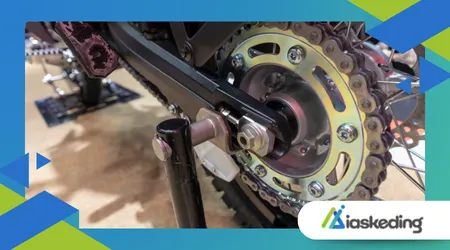
Chain drive utilizes interconnected metal links, engaged with toothed sprockets at the motor output and on the wheel. It is a robust and widely known design.
The main advantage of the chain lies in its raw mechanical efficiency under ideal conditions. High-quality chains can achieve efficiencies of up to 98% when new and perfectly lubricated.
Its durability and resistance to high torque are undeniable, which is important for the instant torque of electric motors. It is the standard in high-performance motorcycles.
++Solar tandem cells surpassing 30% efficiency: what this breakthrough means for the industry
On the other hand, the chain requires constant maintenance, such as lubrication and slack adjustment. This need for lubrication is an environmental and practical drawback.
Chain efficiency tends to drop quickly with dirt, lack of lubrication, or wear. Noise and unsprung weight on the wheel are also factors to consider.
How Does Belt Drive Operate and What Are Its Advantages and Disadvantages?
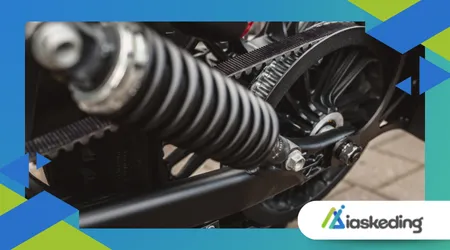
Belt drive employs a composite material belt (often with carbon fiber reinforcements) and pulleys. It is a cleaner and quieter solution.
The biggest appeal of the belt is its zero maintenance in practice and the absence of lubricants. This cleanliness is a differential for the urban electric bike user.
In terms of efficiency, the belt operates very consistently. It maintains a high efficiency (generally between 90% and 95%) throughout its lifespan, without the peaks and drops of the chain.
++How Thermal Drift Affects Electric Motorcycle Performance on Long Rides
The belt is significantly lighter than the chain and the sprocket/ring gear assembly. This reduces unsprung weight, improving handling and suspension response.
However, the belt has limitations in handling the extreme torque of very high-powered motorcycles.
It is more susceptible to slipping or breaking under excessive stress, although modern materials have mitigated this.
So, Which System – Chain or Belt – Wastes Less Energy in Real-World Use?
The core of the issue regarding Chain Drive vs Belt Drive in Electric Motorcycles lies in the difference between maximum efficiency and average efficiency in the real world.
The chain may be marginally more efficient in the lab, but in day-to-day use, the belt tends to be the winner in terms of long-term energy conservation.
Think of the chain as an elite athlete who needs perfect nutrition (lubrication) and rest (adjustment) to maintain performance.
++Electric motorcycle carbon footprint: environmental benefits
The belt, on the other hand, is a consistently fast marathon runner, who requires little preparation and maintains their pace for miles.
Dirt, dust, and poor lubrication are the deadly enemies of chain efficiency, increasing friction and, consequently, consumption. The belt does not suffer from this issue.
Zero Motorcycles, one of the oldest and most respected players in the electric motorcycle market, predominantly uses the belt system in its urban and long-distance models.
According to a comparative analysis of transmission systems, a well-sized belt system tends to show an efficiency loss of only 1% to 2% over 6,000 miles, while a chain with neglected maintenance can record losses reaching 5% to 8% over the same period.
This small percentage difference, when multiplied by thousands of charge and discharge cycles, represents precious miles of lost or gained range.
The Right Choice for Each Type of Electric Motorcycle: Practical Examples
The final decision of using Chain Drive vs Belt Drive in Electric Motorcycles must always align with the vehicle’s purpose.
Consider a high-performance off-road or supermoto electric motorcycle, such as the Stark Varg. The focus here is on brutal torque delivery and resistance to debris.
++Belt Drive on Electric Motorcycles: Why It’s Better Than Chains?
The chain is indispensable for its resilience and ability to handle abuse. The sacrifice in maintenance is accepted in exchange for robustness and peak performance.
Think of the Harley-Davidson LiveWire S2 Del Mar. A high-quality urban bike.
The belt is the ideal choice: it offers smooth power delivery, near-total silence, and the promise of “turn on and ride” without worrying about grease or adjustments.
The lower average energy loss maximizes the city experience.
Technology advances, and the carbon fiber belt is becoming stronger and lighter. Will the friction of Chain Drive vs Belt Drive in Electric Motorcycles soon be just a footnote in history?
| Characteristic | Chain Drive Transmission | Belt Drive Transmission |
| Maximum Efficiency | Up to 98% (With Perfect Lubrication) | Up to 95% (Consistent) |
| Maintenance | High (Frequent Lubrication and Adjustment) | Low/None (No Lubrication Required) |
| Relative Weight | Heavier | Lighter |
| Noise | Noisier | Quiet |
| Replacement Cost | Generally Lower | Generally Higher |
| Resistance to Debris | Very High | High/Medium |
Conclusion: The Future of Transmission and the Search for Range
The Chain Drive vs Belt Drive in Electric Motorcycles duel in the scenario of real efficiency is won, in most urban and long-distance cases, by the belt.
Its consistency, zero maintenance, and lower average energy loss make it the perfect partner for battery technology.
For extreme torque, the chain still holds the throne. The real revolution is not in power, but in how we conserve it.
Frequently Asked Questions (FAQ)
Do belt drives require any type of lubrication?
No. Modern belts are designed to operate dry. Adding lubricant can actually damage the belt material or attract dirt, compromising its durability.
Which transmission system is quieter on an electric motorcycle?
The belt drive system is significantly quieter. It lacks the metal-on-metal contact of the chain, which contributes to the near-silent riding experience valued in electric motorcycles.
Is it possible to convert an electric motorcycle from chain to belt drive?
Technically yes, but it is a complex process that requires careful engineering. It involves swapping sprockets for pulleys and ensuring the chassis and swingarm have the correct space and alignment for the belt, a job not recommended for amateurs.
Does the belt last longer than the chain?
A well-maintained chain can last longer in terms of total mileage. However, the cost-effectiveness and ease of use of the belt make it more attractive. The belt does not lose efficiency over its lifespan like the chain.
