
How “Anode-Free” Batteries Could Transform the Future of Electric Cars
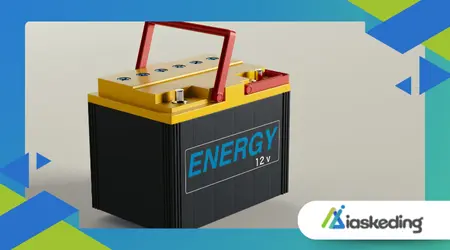
“Anode-Free” Batteries represent perhaps the most radical current shift in electric vehicle (EV) energy storage technology.
They are not merely an incremental improvement; they herald a fundamental redesign that challenges the conventional architecture of lithium-ion cells.
This innovation promises to redefine the core metrics of EV performance: range, cost, and ultimately, mass adoption.
It is a critical development that demands serious attention from both consumers and industry observers in 2025.
What Exactly Are “Anode-Free” Batteries and How Do They Differ?
A traditional lithium-ion battery requires a heavy graphite-based anode from the outset. This pre-existing component acts as a host to store lithium ions when the battery charges.
Eliminating this bulky material significantly simplifies the internal cell structure.
Instead of a thick, inert host material, the “Anode-Free” Batteries architecture starts with a bare current collector, typically copper foil.
The active lithium metal anode is formed in situ—plated onto this collector—during the very first charging cycle.
This ingenious design maximizes the energy-storing space within the same physical volume.
++Chain Drive vs Belt Drive in Electric Motorcycles: Which System Wastes Less Energy?
This simplification translates directly into performance gains for electric vehicles. It allows for an increase in the energy-dense cathode material, which stores the lithium.
This is the central reason this technology is viewed as the next logical step. The potential for substantial cost reductions is also a massive factor.
Why Do “Anode-Free” Batteries Offer Superior Energy Density?

Removing the thick, inactive graphite mass of the anode is a game-changer for energy metrics. The space previously occupied by graphite and its supporting materials is now available for the active cathode.
This increases the amount of energy that can be stored per unit of weight and volume. It’s a pursuit of purity in energy storage design.
Consider this: most advanced current lithium-ion cells top out around 300-350 Wh/kg at the cell level.
However, recent prototypes of anode-free pouch cells have demonstrated world-class gravimetric energy densities exceeding 500 Wh/kg under commercially relevant conditions.
This dramatic jump in energy density directly addresses the primary anxiety facing EV buyers—the dreaded range anxiety. Longer range with the same size battery is a massive market differentiator.
How Will “Anode-Free” Batteries Impact Electric Vehicle Range and Cost?
The direct impact on EV capabilities is nothing short of transformative. A lighter, more energy-dense battery pack means engineers have two attractive choices.
They can maintain the current driving range while drastically shrinking the physical size of the battery. Alternatively, they can keep the battery pack size consistent and achieve a far greater driving range.
For example, a major battery supplier to Tesla, Panasonic, has stated plans to develop anode-free technology by 2027.
Their goal is to deliver a battery with approximately 25% more energy capacity than their current state-of-the-art cells.
+ Electric Motorcycle Range Loss at Highway Speeds Explained
For a vehicle like the popular Tesla Model Y, this could translate into an increase in range of nearly 145 kilometers without enlarging the battery pack.
This would be a remarkable, tangible benefit for consumers.
Cost reduction is equally compelling, stemming from a simplified production chain.
Manufacturing graphite anodes is a complex, energy-intensive process requiring expensive facilities and solvents.
Eliminating this entire segment of production inherently drives down the total battery manufacturing cost.
++An Anode-Free Battery Future? – External Link
The cost-per-kilowatt-hour is the ultimate competitive battleground in the EV market.
| Characteristic | Traditional Li-ion (Graphite) | “Anode-Free” Batteries (Li Metal) |
| Anode Component | Graphite material/binder/current collector | Bare current collector (Cu) |
| Energy Density (Cell Level) | High (e.g., 300-350 Wh/kg) | Very High (e.g., 450-500+ Wh/kg) |
| Manufacturing Complexity | High (Anode production required) | Lower (Anode production eliminated) |
| Active Materials Used | Both Cathode and Pre-existing Anode | Only Cathode (Li metal plates in situ) |
What are the Current Technological Hurdles to Mass Adoption?
Despite the phenomenal theoretical advantages, commercialization faces significant challenges related to stability and cycle life.
The Achilles’ heel of any lithium metal battery—even the anode-free type—is the formation of dendrites. These are needle-like lithium structures that grow during charging.
They can puncture the separator and cause internal short circuits, leading to rapid capacity degradation and safety risks.
Researchers are intensely focused on developing solutions to this problem. They are using advanced electrolyte formulations and specialized interlayers to stabilize the lithium metal interface.
This research aims to ensure that the plating and stripping of the lithium metal are highly reversible and uniform.
Without consistent and high Coulombic Efficiency (CE), the battery will quickly lose capacity over time.
Think of it this way: a traditional graphite anode is like a well-tended garden, where the lithium ions are carefully tucked into neat rows.
An anode-free cell is more like trying to plate lithium onto a smooth ice rink.
The initial results are sleek and compact, but without careful management, the lithium tends to clump and form unstable patches. This is the “Anode-Free” Batteries stability paradox.
Why is the Lithium Inventory Loss the Major Barrier to Cycle Life?
The biggest practical issue is the lack of a lithium ‘reservoir’. Traditional batteries intentionally include an excess of lithium in the graphite anode to compensate for inevitable material losses during cycling.
An anode-free cell starts with zero excess lithium metal. Any loss of lithium inventory to side reactions with the electrolyte or to the formation of ‘dead lithium’ rapidly impacts the cell’s capacity.
This lack of tolerance means the technology must achieve near-perfect efficiency in every charge and discharge cycle.
A relevant statistic highlights this: while traditional lithium-ion batteries often achieve 80% capacity retention after 800 cycles, anode-free cells currently struggle to meet these durability standards without advanced, often proprietary, chemistries and protocols.
Industry pioneers are working on novel charging protocols and sacrificial lithium additives to improve this metric.
How are Industry Leaders Positioning Themselves for This Shift?
Major global players are aggressively pursuing this technology.
In addition to Panasonic’s public commitment, companies like CATL have also introduced “self-generated anode” concepts, working on nanoscale interfacial layers to boost ion conductivity.
The race is less about if this technology will arrive and more about who will be the first to achieve long-term durability and safety at scale.
Do we really believe that the century-long quest for optimal energy storage will not yield a solution to this final hurdle?
The incentives for achieving this breakthrough—the promise of higher range and lower cost—are simply too great.
This intense global competition ensures that a reliable solution is on the horizon.
The widespread integration of “Anode-Free” Batteries is no longer a distant dream, but a near-term engineering challenge being solved today.
Frequently Asked Questions
What is the core advantage of Anode-Free Batteries?
The main advantage is a significantly higher energy density, potentially exceeding $500 \text{ Wh/kg}$. This is achieved by removing the bulky graphite anode, which frees up space for more energy-storing cathode material, thus increasing EV range and reducing battery weight.
When are Anode-Free Batteries expected to be in mass-market EVs?
Major players, like Panasonic, have publicly targeted commercialization for electric vehicle use around 2027. Broader market penetration will follow once cycle life and manufacturing scalability challenges are conclusively resolved.
Are Anode-Free Batteries safer than current lithium-ion batteries?
While eliminating the anode production line improves manufacturing safety, the operational safety is still under intense scrutiny.
The use of highly reactive lithium metal carries a risk of dendrite growth, which can cause internal short circuits.
Research is focused on advanced electrolytes and solid-state concepts to mitigate this risk and ensure thermal stability.
