
Electric Motorcycle Lightweight Design vs Range Tradeoffs
Understanding Lightweight Design vs Range Tradeoffs is the central challenge for engineers and riders in 2026, as the electric motorcycle market finally moves past the “bigger is better” phase toward specialized urban efficiency.
While early electric bikes tried to mimic the heavy, lumbering touring capacity of gasoline machines, modern riders now demand a more nuanced balance between agility and battery longevity.
There is a specific kind of frustration in riding a bike that has a 200-mile range but feels like wrestling a refrigerator through city traffic.
What are the primary factors in electric motorcycle weight?
In a traditional motorcycle, the engine and fuel tank are the heavy hitters, but in electric models, the battery pack alone often accounts for nearly 40% of the total mass.
]Lightweight Design vs Range Tradeoffs are dictated by the current energy density of lithium-ion and solid-state cells, which, despite massive leaps in 2026, still lag behind gasoline’s raw energy-to-weight ratio.
It’s a stubborn physical reality that engineers can’t just “code” their way out of.
Chassis materials have had to evolve to compensate. Manufacturers are moving away from heavy steel frames toward trellis designs or monocoque structures that treat the battery as a stressed member.
This integration reduces the need for extra support brackets, shaving off crucial kilograms that improve the bike’s “flickability” in tight urban corners.
When you reduce unsprung weight in wheels and braking systems, the bike starts to feel less like a vehicle and more like an extension of your own body.
How does mass impact the overall range of an e-bike?
Mass is the absolute enemy of efficiency during stop-and-go city riding. Every time you twist the throttle from a red light, the motor must overcome the inertia of the bike’s total weight.
In urban environments, a lighter bike will always achieve better range per kilowatt-hour because it isn’t wasting half its energy just getting 500 lbs of metal moving again.
Once you reach a steady cruising speed on the highway, however, mass becomes less relevant than aerodynamic drag.
At 70 mph, the energy required to punch a hole through the air far exceeds the energy needed to keep a heavy bike rolling.
This creates a paradox that is often malinterpreted by buyers: lightweight bikes excel in the city but lose their relative advantage on long trips.
Regenerative braking partially offsets the weight penalty by “harvesting” kinetic energy during deceleration, but the conversion is never 100% efficient; you can’t defy the laws of thermodynamics, no matter how good the software is.
Why is adding more batteries not always the best solution?
It is tempting to think that a bigger battery always equals more miles, but engineers face a brutal law of diminishing returns.
As you add cells to increase capacity, the bike becomes heavier, requiring more energy to move and sturdier suspension and brakes to manage the load.
Eventually, the extra weight of the added batteries consumes more energy than the additional capacity provides.
This “weight spiral” can lead to a bike that feels sluggish and unresponsive. Modern design focuses on “right-sizing” the battery for the intended use rather than chasing arbitrary maximum numbers.
For a deeper dive into the technical standards and testing protocols for electric vehicle efficiency, the Society of Automotive Engineers (SAE) provides comprehensive white papers on battery integration and vehicle dynamics.
Which materials are currently solving the weight problem?
In 2026, we are seeing a massive adoption of recycled carbon fiber and thermoplastic composites in bodywork.
Read more: Why Lightweight Composite Chassis Matter More in Electric Trucks Than in Diesel Ones
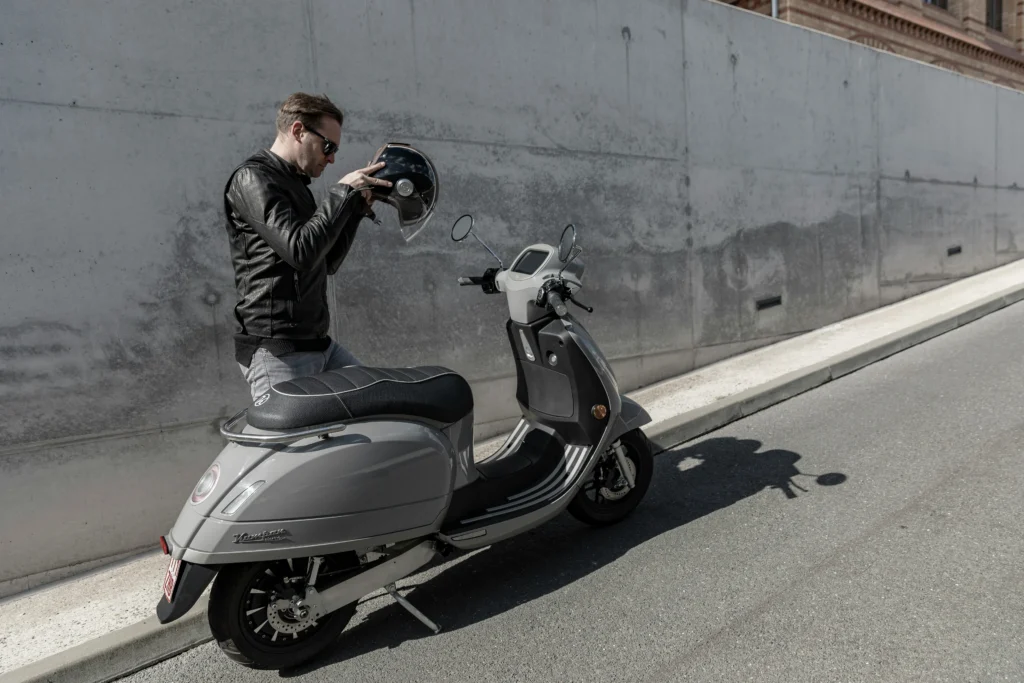
These materials offer incredible strength-to-weight ratios, allowing manufacturers to create complex aerodynamic shapes that were previously too heavy or expensive to produce at scale.
There is something almost surgical about the way these new frames are designed to shed every non-essential gram.
| Component | Standard Material | Lightweight Alternative | Weight Savings % |
| Main Frame | Steel Tube | Aluminum Monocoque | 25% – 35% |
| Wheels | Cast Aluminum | Forged Magnesium | 30% – 40% |
| Battery Casing | Steel/Plastic | Carbon Fiber/Composite | 15% – 20% |
| Bodywork | ABS Plastic | Thermoplastic / Carbon | 40% – 50% |
| Fasteners | Stainless Steel | Titanium Alloy | 45% |
How do aerodynamics influence the lightweight vs range debate?
While Lightweight Design vs Range Tradeoffs are crucial for agility, aerodynamics is the primary driver of range at high speeds.
A lightweight bike with poor wind protection will struggle to maintain efficiency on the freeway compared to a slightly heavier, fully-faired sportbike.
Learn more: Electric Motorcycle Aerodynamics Above 100 km/h Effects
It’s the difference between a knife and a brick; the knife doesn’t need to be heavy to cut through the air.
Manufacturers are now using Computational Fluid Dynamics to design “active aero” components, small wings or shutters that adjust based on speed to minimize drag.
This allows a bike to stay light and narrow for lane-filtering while becoming a slippery, long-range cruiser on the open road.
By stacking battery modules vertically rather than horizontally, designers can create a slimmer profile, reducing the frontal area that has to fight the wind.
What are the consumer tradeoffs when choosing a bike?
When you step into a showroom in 2026, you have to decide what kind of rider you truly are.
A lightweight electric naked bike might only offer a 100-mile range, but its 350-lb weight makes it a joy to handle.
Learn more: Electric Motorcycle Fast Charging vs Heat Tradeoffs
It feels like a mountain bike with a rocket engine, which is perfect for most daily commutes. It’s an honest, specialized tool.
Conversely, an electric touring bike might weigh 600 lbs but offer a 250-mile range. This bike is stable in crosswinds and comfortable for all-day riding, but it lacks the playful, visceral nature of its lighter counterparts.
To compare current market models and see real-world range testing across different weight classes, Motorcycle.com remains a top-tier resource for unbiased reviews.
Finding the Sweet Spot in the Electric Era
The evolution of the electric motorcycle is moving away from the “bigger is better” mentality of the early 2020s.
We are entering an era of surgical precision where Lightweight Design vs Range Tradeoffs are balanced through exotic materials and smarter software.
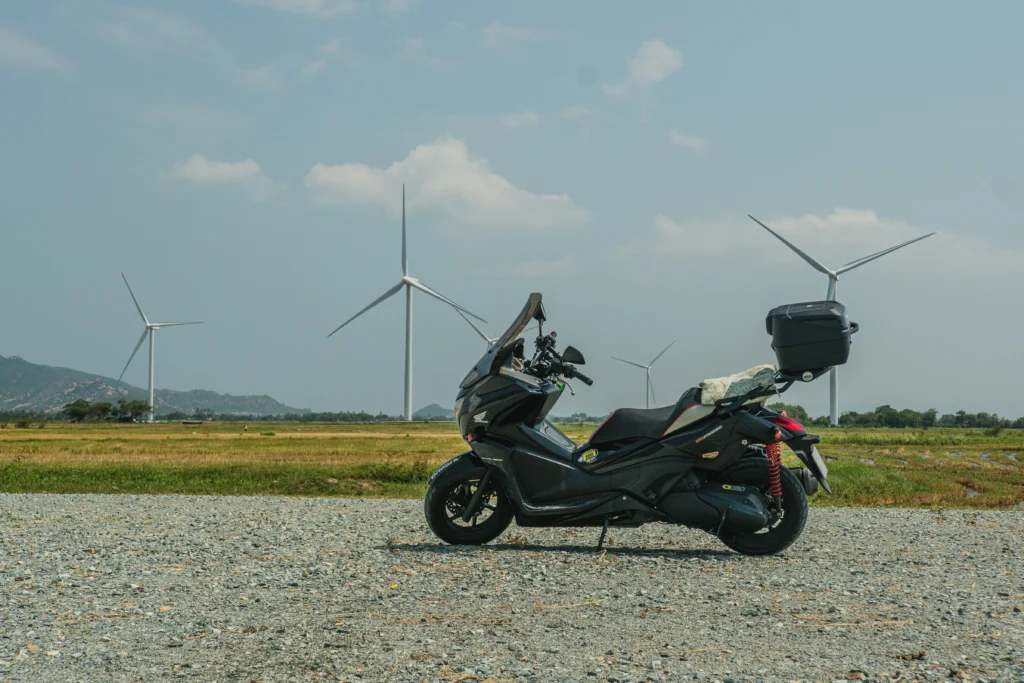
Whether you prioritize a flickable city carver or a steady long-distance cruiser, the technology of 2026 ensures you no longer have to compromise on the soul of the ride just to enjoy the benefits of electric propulsion.
FAQ: Electric Motorcycle Design
Does a lighter bike charge faster?
Usually, a lighter bike has a smaller battery, which fills up more quickly. However, actual charging speed depends on the battery’s “C-rate” and the charger’s output, not the vehicle’s weight.
Can I upgrade my bike to be lighter?
Swapping to forged wheels or titanium bolts can help shed weight, but be careful not to ruin the aerodynamics. Removing fairings might make the bike lighter but could actually decrease your highway range.
Why are electric bikes still heavier than gas bikes?
Gasoline has an energy density roughly 50 times higher than current batteries. Even with efficient motors, the sheer weight of the “fuel tank” (the battery) is simply much higher for the same distance.
Does my own weight affect the range?
Absolutely. The motor is moving the total mass of the vehicle and rider. A heavier load requires more energy to move, particularly on hills, which is why lightweight design at the factory level is so critical.
