
Is Lithium Iron Phosphate Better for Heavy-Duty Trucks?

Is Lithium Iron Phosphate Better? The answer appears to be a qualified, resounding yes, particularly when considering the grueling demands of commercial logistics.
For years, the high energy density of Nickel Manganese Cobalt (NMC) and Nickel Cobalt Aluminum (NCA) chemistries positioned them as the standard for electric vehicles.
However, the requirements for a tractor-trailer or a dump truck differ significantly from those of a passenger car.
Commercial hauling prioritizes durability, safety, and cost-efficiency over maximizing range per pound.
This fundamental difference in operational demands creates the perfect environment for Lithium Iron Phosphate (LFP) batteries to thrive.
Their inherent characteristics align closely with the brutal reality of heavy-duty applications.
How Does LFP Chemistry Differ from Traditional EV Batteries?
LFP batteries, utilizing an olivine-structure cathode, employ iron and phosphate instead of nickel and cobalt.
This fundamental change in composition yields several practical advantages directly relevant to commercial trucking fleets.
Iron and phosphate are more abundant and significantly less expensive than their NMC/NCA counterparts.
++How Peak Charging Loads From Electric Buses Are Forcing Cities to Redesign Substations
This substitution translates directly to a lower initial acquisition cost for electric trucks.
Furthermore, the LFP structure is intrinsically more stable, resisting thermal runaway more effectively than other chemistries.
This enhanced safety profile is invaluable for massive battery packs operating under high stress.
What Key Advantages Does LFP Offer for Heavy-Duty Trucking?
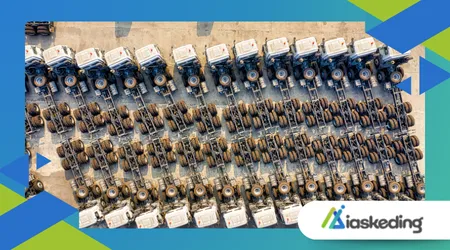
The primary benefits LFP brings to the table are safety, longevity, and affordability.
Unlike passenger vehicles that may cycle less frequently, a heavy-duty truck often completes multiple charge/discharge cycles daily.
++Can Electric Trucks Survive in Rural, Off-Grid
LFP excels in cycle life, maintaining its capacity for a significantly higher number of cycles than NMC.
Think of it this way: if an NMC battery is a sprinter, great for bursts of speed (high energy density), the LFP battery is a marathon runner, prioritizing consistent, long-term endurance.
This long-term endurance is critical for maximizing a fleet’s Return on Investment (ROI).
Fleet operators desire a battery that survives the truck’s operational life, ideally over a million miles, minimizing costly replacements.
Another compelling advantage is the ability of LFP to be charged to 100% state-of-charge routinely.
While NMC owners are often advised to limit daily charging to 80% to preserve battery health, LFP can be fully topped off without the same degradation penalty.
This ability to consistently use the full battery capacity is essential for optimizing logistical routes and minimizing range anxiety for long-haul drivers.
++Do Electric Trucks Actually Save Money in Fleet Operations?
Therefore, for the pragmatic fleet manager, Is Lithium Iron Phosphate Better in terms of overall lifetime cost and operational simplicity? The data strongly supports this conclusion.
How Do LFP’s Limitations Impact Trucking Applications?
Despite its compelling advantages, LFP is not without its drawbacks, most notably its lower energy density.
This translates to a heavier and larger battery pack for the same amount of energy compared to NMC.
In the trucking world, mass is a critical factor. The heavier the battery, the lower the maximum payload the truck can legally carry. T
his is a significant consideration, especially for applications like regional delivery or port hauling where every pound of freight matters.
Furthermore, LFP’s performance in extremely cold temperatures presents a challenge. Cold weather can temporarily reduce the usable range and slow down charging speeds.
While advanced thermal management systems mitigate this issue, it remains a relevant operational factor in colder climates.
Will LFP Dominate the EV Heavy-Duty Truck Market?
A careful look at recent industry moves suggests LFP will likely become the dominant chemistry for many commercial segments.
++Why LFP Batteries Are Superior for Commercial Electric Vehicles
Manufacturers are prioritizing this chemistry for drayage, refuse, vocational, and regional haul applications.
For ultra-long-haul routes, where minimizing weight and maximizing energy density are paramount, NMC will likely retain a segment of the market.
However, for the bulk of commercial transport—the daily grind of logistics—the high cycle life and cost-effectiveness of LFP are simply too powerful to ignore.
A key indicator of this shift is the global focus on LFP.
Research from BloombergNEF in 2024 noted a significant increase in LFP adoption across all EV sectors, with a particular emphasis on its use in commercial and storage solutions due to its price and safety.
The market clearly sees the value.
Consider this original example: A municipal sanitation department needs a refuse truck that runs five days a week and completes 1,500 full charge cycles over five years.
An LFP battery promises a reliable, full-capacity charge cycle every night with minimal capacity fade, offering predictable operation and lower replacement risk.
This is a stark contrast to a high-density chemistry that might experience greater degradation under the same stress.
The shift is undeniable. As we continue to ask: Is Lithium Iron Phosphate Better, we are moving past theoretical debate into operational reality. The cost benefits are tangible.
How Does the Economics of LFP Influence Fleet Decisions?
The economic case for LFP is incredibly strong. The cost of materials directly impacts the final price of the vehicle, and since LFP materials are cheaper, the cost-to-capacity ratio is superior.
This lower material cost is one of the primary drivers for the argument, Is Lithium Iron Phosphate Better for high-volume manufacturing.
This reduced cost serves as a crucial accelerator for the adoption of electric trucks. It helps shrink the Total Cost of Ownership (TCO) gap compared to diesel trucks, which is the key metric for fleet managers.
Lower initial purchase price and longer battery life mean a faster, more robust ROI.
Another original example: A regional food distributor operates a fleet of 50 delivery trucks within a 200-mile radius. Because these trucks return to the depot nightly, LFP’s lower range is acceptable.
The massive savings on initial purchase and the expectation of ten years of service from the LFP pack, compared to seven from an NMC pack, make LFP the clear financial winner.
Frequently Asked Questions
| Question | Answer |
| What is LFP’s main benefit for trucks? | Superior safety, longer cycle life, and lower material cost. |
| Is LFP safer than NMC? | Yes, its chemistry is intrinsically more resistant to thermal runaway. |
| Does LFP have less range than NMC? | Yes, LFP has a lower energy density, meaning a heavier pack for the same range. |
| How long does an LFP battery last? | LFP batteries typically offer a significantly higher number of charge cycles, often surpassing 3,000 before substantial degradation. |
Conclusion: LFP’s Future in High-Stress Environments
The electric truck industry is moving toward specialization.
While no single battery is perfect for every application, the core values of commercial trucking—safety, longevity, and predictable cost—strongly favor Lithium Iron Phosphate.
For the vast majority of heavy-duty, vocational, and regional transport tasks, the answer to our central question is clear: Is Lithium Iron Phosphate Better?
It offers a pragmatic, durable, and economically sound solution that promises to accelerate the electric transition of global logistics.
Why would fleets choose expensive complexity when durability and savings are on the table? The market has spoken.
