
How Peak Charging Loads From Electric Buses Are Forcing Cities to Redesign Substations

Peak Charging Loads From Electric Buses Are Forcing Cities to Redesign Substations: The future of urban transit is electric, a shift celebrated for its environmental benefits.
However, this transition presents a monumental hurdle for existing power infrastructure. Specifically, the concentrated power demand from large fleets necessitates a complete rethink of how energy is delivered.
This massive, sudden draw, particularly during peak off-peak hours, is stressing electrical grids in ways never anticipated.
This article delves into the systemic pressures applied to local power grids. We will explore how municipalities and utilities are grappling with this complex engineering puzzle.
The concentrated charging needs of a bus depot are fundamentally different from dispersed residential consumption.
Integrating this new load demands sophisticated planning and significant capital investment.
How Are Peak Charging Loads From Electric Buses Are Forcing Cities to Redesign Substations?
The sheer scale of concurrent charging is the primary issue. Consider a depot housing one hundred electric buses.
If a significant number of these vehicles plug in simultaneously after their evening routes, the demand surge is astronomical.
These buses, often requiring high-power DC fast chargers, collectively draw an immense, immediate load.
This scenario creates a “super-peak” that dwarfs typical neighborhood power consumption. An analogy might be trying to fill a swimming pool instantly through a garden hose.
++The Truth About Towing With an Electric Car
The necessary flow rate simply overloads the system. Existing substations, designed for gradual, predictable increases, struggle to handle this sudden and substantial new requirement.
They lack the transformer capacity and the robust distribution architecture to manage it effectively.
What Is the Impact of Concentrated Charging on Electrical Infrastructure?
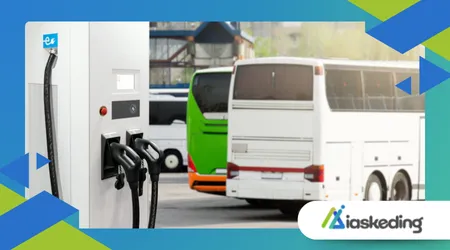
The stress is most acute at the substation level, the vital link between the high-voltage transmission network and local distribution.
Transformers, conductors, and switchgear must all be uprated. Without this infrastructure overhaul, utilities face serious risks of equipment failure, localized blackouts, and grid instability.
++How Micromobility Is Changing How We Commute: A Revolution on Two Wheels
One compelling example is found in the operational schedules of transit agencies. Buses return to the depot at the end of the service day, often between 8 PM and midnight.
This time window coincides with an already elevated evening residential demand, exacerbating the peak load problem.
How Does This Compare to Passenger Electric Vehicle Charging?
Unlike the distributed charging of passenger EVs, where vehicles charge sporadically across thousands of homes, bus charging is highly centralized.
A single bus depot can have a demand equivalent to a small town. This concentration makes proactive, targeted infrastructure upgrades absolutely critical.
What Are Cities Doing to Address the Peak Charging Loads From Electric Buses Are Forcing Cities to Redesign Substations?
Cities are implementing a multi-pronged approach that combines physical infrastructure upgrades with smart energy management.
++What Makes an Electric Train “Green”?
The redesign is not just about installing larger components; it involves integrating advanced technology. Modernization efforts focus on creating a resilient and intelligent grid.
Why Is Substation Uprating Necessary for E-Bus Fleets?
Utilities are expanding transformer capacity and reinforcing primary distribution feeders. This is a costly and lengthy process, often requiring new real estate acquisitions for larger substation footprints.
The objective is to increase the thermal and current-carrying capabilities of the equipment.
Furthermore, the voltage regulators and protection systems must be recalibrated for the fluctuating, high-current demands.
For instance, the City of Los Angeles Department of Water and Power (LADWP) has been strategically upgrading several substations near transit depots.
++Electric Vehicle Charging Infrastructure for Canada
These projects involve replacing decades-old equipment with high-capacity alternatives, anticipating future electrification goals. This preemptive investment is crucial for maintaining service reliability.
Can Smart Charging Strategies Mitigate Peak Loads?
Absolutely. Intelligent load management, or “smart charging,” is an essential component of the solution.
This involves software that coordinates charging schedules across the fleet, avoiding simultaneous maximum power draws.
By staggering the charge times and dynamically adjusting power delivery, the utility can “shave” the peak demand.
- Vehicle-to-Grid (V2G) Technology: Some pilot programs explore using bus batteries to feed power back into the grid during extreme peak periods, acting as a mobile energy storage system.
- Energy Storage Systems (ESS): Installing battery storage units at the depot can absorb electricity when it’s cheap and abundant, then release it to charge the buses during high-demand periods. This effectively buffers the substation from the worst of the charging spike.
The International Energy Agency (IEA) has highlighted the importance of load management in its recent analyses.
A 2024 IEA report noted that in densely populated urban areas, smart charging and battery storage can reduce the necessary peak capacity of new substations by up to 40%.
This statistic underscores the value of non-infrastructure solutions in managing the transition.
| Strategy | Primary Benefit | Infrastructure Impact |
| Substation Uprating | Increased power capacity and reliability | Major physical and capital investment |
| Smart Charging | Reduced instantaneous peak demand | Minimal, relies on software and communications |
| Battery Energy Storage | Peak shaving and demand flexibility | Moderate installation cost, high operational value |
What Does the Future Look Like as Peak Charging Loads From Electric Buses Are Forcing Cities to Redesign Substations?
The current challenge is, in reality, a catalyst for necessary modernization. The need to accommodate bus fleets accelerates the transition to a more flexible and robust “smart grid.”
This shift benefits the entire community, not just the transit system.
The redesign of substations symbolizes a deeper commitment to a sustainable, electrified future. It requires unprecedented cooperation between city planners, transit agencies, and power companies.
Ultimately, aren’t these massive infrastructure undertakings the true measure of a city’s commitment to clean air and resilient services?
The experience gained today ensures that as electric transport becomes the norm, the power grid will be ready.
The move to electric buses is non-negotiable for climate goals.
Addressing the intense demand from Peak Charging Loads From Electric Buses Are Forcing Cities to Redesign Substations is simply the cost of admission to this cleaner, quieter, and more sustainable future.
Frequently Asked Questions
What is the main engineering challenge posed by electric buses?
The core challenge is the concentrated, simultaneous power draw when a large number of buses plug in at a single depot, typically during evening hours.
This creates an extremely high, temporary peak load that can overwhelm the capacity of existing local substations, which were not designed for such massive, instantaneous demand spikes.
What is the difference between peak load and average load?
The average load is the standard, typical amount of electricity consumed over a long period. The peak load is the maximum amount of power drawn at any single point in time.
Electric bus fleets significantly increase the peak load because of their synchronized, high-power charging requirements.
How does Battery Energy Storage help with bus charging?
Battery Energy Storage Systems (ESS) act as a buffer. They charge up slowly from the grid during off-peak times or when renewable energy is abundant.
When the buses return and create a peak charging demand, the ESS discharges its stored energy to charge the buses, insulating the main substation from the sudden, massive power surge.
