
How “flexible solar skins” are transforming urban surfaces into energy generators.
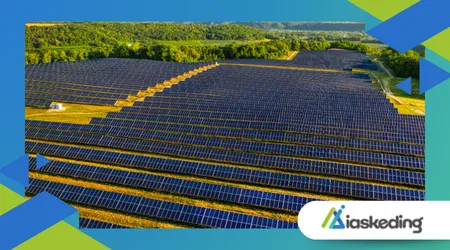
Flexible solar skins are redefining how our cities interact with energy. They transform ubiquitous urban surfaces into active, clean power generators.
This innovative technology is subtly, yet profoundly, changing the architectural landscape of metropolises worldwide.
Imagine a city where every window, every curved facade, and even every rooftop membrane contributes to the grid.
This is the promise that the next generation of photovoltaics is delivering. We’re moving far beyond the rigid, heavy panels of the past.
The shift toward lightweight, conformable solar materials unlocks an unprecedented potential for distributed energy generation.
Traditional solar was often an afterthought; now, it is an integral part of the building’s design. This seamless integration enhances both aesthetics and functionality.
How can a material so thin and light capture the sun’s power so effectively? The secret lies in advanced materials science and manufacturing techniques.
These new cells are often made from compounds like CIGS (copper indium gallium selenide) or organic polymers.
These materials are deposited onto flexible substrates, allowing the final product to bend, fold, and adhere to virtually any shape.
What Are Flexible Solar Skins and How Do They Work?
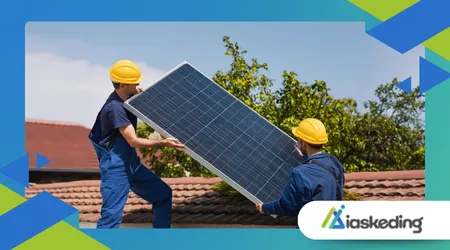
Flexible solar skins are ultra-thin, lightweight photovoltaic films or sheets. They are designed to be conformal, meaning they can conform to non-flat surfaces.
They represent a significant evolution from the bulky crystalline silicon panels.
Their functionality is based on the photovoltaic effect, just like conventional solar. However, the manufacturing process drastically reduces their thickness and weight.
+ Gravity-based energy storage using underground shafts: is it scalable?
This allows them to be applied like a sophisticated decal or wrap.
Instead of heavy glass and aluminum frames, these skins use durable, flexible polymers for encapsulation. This makes installation faster, easier, and less intrusive than previous methods.
The weight reduction is a game-changer for older buildings.
These materials are highly efficient, often achieving competitive energy conversion rates with traditional panels.
Continuous research is pushing these efficiencies even higher, making them an increasingly viable option. They offer a delicate balance of performance and versatility.
Why Is Their Lightweight Design Perfect for Urban Environments?
The defining characteristic of these skins—their light weight—solves one of the biggest challenges for urban solar adoption.
+ AI-driven shading prediction boosting solar farm output by up to 18%
Many older city rooftops simply cannot bear the structural load of traditional glass-and-silicon panels.
Think of it this way: traditional solar panels are like bulky, hardback books placed on a roof. Flexible solar skins, by contrast, are like a thin, rolled-up magazine.
The weight difference significantly expands the range of suitable buildings.
Furthermore, they are ideal for curved surfaces, skylights, and even vehicles within the urban setting. They utilize previously inaccessible surface areas, maximizing energy harvesting in dense population centers.
The city becomes a mosaic of power generation.
What are the Practical Applications and Future Examples of This Technology?
The applications are diverse and growing rapidly. They are moving beyond specialized projects into everyday urban infrastructure.
+ How to Stay Updated on Renewable Energy Trends
Their adaptability is limited only by human imagination and structural constraints.
Skyscraper Façades. Instead of just installing the skins on the roof, imagine a towering glass building wrapped in a nearly invisible layer of solar film.
The entire south-facing façade becomes a vertical power plant. This generates power where space is at a premium.
Public Transportation Hubs. Bus shelters, tram roofs, and train stations can be covered with these skins. This powers lighting, real-time data screens, and even local charging ports.
The infrastructure itself contributes to the energy needs of its users.
Data Highlight: Global Thin-Film PV Growth
According to a 2024 report by the International Energy Agency (IEA), the global production and deployment of thin-film photovoltaics (which includes flexible solar technologies) is projected to increase by over 35% between 2023 and 2028.
++Researchers claim solar efficiency breakthrough for flexible ‘skin’
This growth outpaces that of traditional crystalline silicon in specific niche markets.
What Are the Key Advantages of Adopting Flexible Solar Skins?
The arguments for adopting this technology are compelling, covering economic, environmental, and aesthetic benefits.
Flexible solar skins represent a smarter, more integrated approach to clean energy. They allow us to move power generation closer to the point of consumption.
| Feature | Conventional Solar Panels | Flexible Solar Skins |
| Weight | Heavy (high structural load) | Ultra-lightweight (minimal load) |
| Installation | Complex, requires mounting structure | Simple, can be adhered or rolled out |
| Surface Fit | Rigid, suited only for flat roofs | Conformal, suits curves and complex shapes |
| Aesthetics | Visible, often stands out | Can be nearly invisible, fully integrated |
Their reduced carbon footprint in manufacturing and transportation is another significant environmental plus. Less heavy material means less energy consumed to get them where they need to be.
This reinforces their green credentials.
Isn’t it time we stop treating solar power as an accessory and start seeing it as an essential building material?
The economic incentives, combined with escalating energy costs, make the case for adoption stronger every day.
Conclusion: A Paradigm Shift in Urban Power
The ascent of flexible solar skins signals a fundamental shift in how we power our cities.
We are moving from centralized power stations and bulky rooftop installations to a distributed, aesthetically integrated power-generating environment. Every surface becomes an asset.
As a seasoned observer of the renewable energy sector, I see this technology as more than just a passing trend; it is the logical evolution of urban sustainability.
Flexible solar skins offer a sleek, lightweight, and efficient path toward true energy independence for metropolitan areas.
This is the future, being adhered to a wall near you. The widespread deployment of these thin films will fundamentally change the energy profile of the modern city.
Frequently Asked Questions
Are flexible solar skins as durable as traditional panels?
Yes, modern flexible solar skins are designed for durability. They are typically encapsulated in weather-resistant, UV-stable polymers that protect the active cells.
While they may be more susceptible to physical tears than glass panels, they are highly resilient against thermal expansion and minor impacts, often carrying multi-year performance warranties.
Can they be applied to any type of roofing material?
They are extremely versatile and can be applied to most common roofing materials, including metal, TPO (thermoplastic polyolefin), EPDM (ethylene propylene diene monomer), and even curved surfaces.
The crucial factor is ensuring the surface is clean and prepped for proper adhesion to maximize lifespan and performance.
What is the lifespan of flexible solar skins compared to crystalline silicon?
The lifespan is becoming increasingly comparable. While crystalline silicon panels often exceed 25 years, the latest generation of flexible thin-film products is warranted for 10 to 20 years, with research aiming to close that gap completely.
Continuous improvements in encapsulation technology are key to enhancing their longevity.
