
Organic photovoltaic (OPV) roofs: why lower efficiency doesn’t mean lower potential
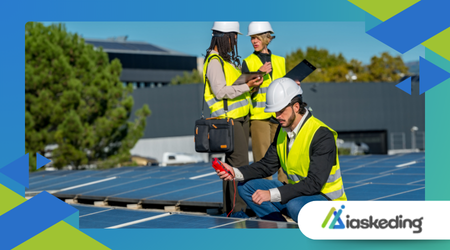
Industry leaders now recognize that flexibility and weight often outweigh peak power ratings in urban settings. Organic photovoltaic (OPV) roofs provide a lightweight solution for aging industrial buildings.
These structures often lack the reinforcement needed for heavy hardware. Engineers can apply organic films like a second skin over existing surfaces.
This adaptability transforms dormant rooftops into active power generators without structural overhauls. Standard silicon panels require rigid mounting systems that increase installation costs significantly.
Organic alternatives utilize roll-to-roll manufacturing, which drastically lowers the carbon footprint of production. The environmental payback period for these cells is remarkably short.
How does the lower efficiency of OPV translate to high performance?
Efficiency measures power per square meter under specific laboratory conditions. However, Organic photovoltaic (OPV) roofs perform exceptionally well in low-light and high-heat environments.
Silicon efficiency drops as temperatures rise on a hot summer day. Organic materials maintain stable output even when the thermometer climbs high.
Furthermore, organic cells capture energy from wider angles of sunlight. This makes them ideal for vertical facades or curved architectural features.
If a system generates more total energy over a year, does a lower peak efficiency really matter? This question challenges the traditional obsession with lab-rated percentages.
Read more: How to Stay Updated on Renewable Energy Trends
What makes the carbon footprint of OPV so attractive?
The manufacturing process for organic photovoltaics involves printing layers onto thin plastic films. This requires far less energy than melting high-purity silicon in furnaces.
Organic photovoltaic (OPV) roofs embody the principles of the circular economy more effectively than traditional glass modules. They use non-toxic carbon-based materials instead of rare metals.
Research by the Heliatek team demonstrates that their organic films can achieve a carbon footprint below 10 grams of $CO_{2}$ per kilowatt-hour.
++ Solar tandem cells surpassing 30% efficiency: what this breakthrough means for the industry
This is significantly lower than the average 40-50 grams associated with conventional solar. For companies targeting net-zero goals, this lifecycle analysis becomes a decisive factor.
| Feature | Conventional Silicon | Organic Photovoltaics (OPV) |
| Weight | ~15-20 kg/m² | < 2 kg/m² |
| Flexibility | Rigid | Highly Flexible |
| Installation | Mechanical racking | Adhesive/Integrated |
| Energy Payback | 12-18 months | 3-6 months |
| Appearance | Opaque blue/black | Semi-transparent/Custom colors |
How does structural versatility change the energy landscape?
Imagine a large stadium with a tensioned fabric roof that cannot support glass. By applying Organic photovoltaic (OPV) roofs, that facility suddenly powers its own lighting.
Another example involves historic buildings where aesthetic preservation remains a top priority for local councils. Semi-transparent organic films can cover windows without blocking the view.
++ How “flexible solar skins” are transforming urban surfaces into energy generators.
These applications represent “found space” for energy generation in dense cities. Traditional solar often competes for land or requires massive steel supports.
Organic tech thrives in the cracks of the built environment. It turns every surface into a potential source of clean electricity.
Why is installation speed a hidden economic advantage?
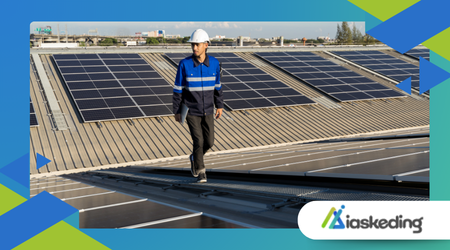
Labor costs often exceed the price of solar hardware in modern projects. Installing Organic photovoltaic (OPV) roofs is often as simple as unrolling a sticker.
Workers do not need to drill holes into the building envelope. This reduces the risk of water leaks and long-term structural damage.
++ 6 Reasons Why Organic Photovoltaic (OPV) Panels Are Changing Solar Energy
The speed of deployment allows large-scale projects to reach completion in days rather than weeks. This efficiency in labor offsets the need for higher energy density per panel.
Developers can cover much larger areas for the same total investment in manpower.
Is durability still a concern for organic materials?
Modern encapsulation techniques have solved many early degradation issues found in older organic prototypes.
Current Organic photovoltaic (OPV) roofs boast lifespans reaching twenty years in real-world conditions. This longevity ensures that the low initial cost results in a high return on investment.
Chemists continue to refine the molecular stability of the polymers used.
The industry now treats these systems as high-tech membranes rather than just electronics. They serve as both a protective layer and a power plant.
This dual-purpose functionality redefines the value proposition for commercial real estate owners.
What is the future potential of integrated organic power?
We are moving toward a world where every object harvests its own energy. Organic photovoltaic (OPV) roofs are the first step toward truly active infrastructure.
Think of it like a coat of paint that fuels your appliances. This technology bridges the gap between material science and renewable energy.
While silicon remains the workhorse for solar farms, organic cells will rule the urban jungle. They offer a level of design freedom that was previously impossible.
Architects no longer have to choose between beauty and sustainability in their projects.
Conclusion
The evolution of Organic photovoltaic (OPV) roofs proves that “best” is a subjective term in engineering. While they may not win a laboratory efficiency race, they win the race for versatility.
True sustainability requires solutions that fit into our lives without massive compromises. Organic solar is the flexible, green, and smart choice for our future.
Would you like me to research specific case studies of OPV applications in European cities for your next column?
Frequently asked questions
What is the average efficiency of OPV in 2025?
Commercial organic cells typically reach 12% to 14% efficiency in field applications today.
Can OPV panels be recycled easily?
Yes, because they are carbon-based and use thin films, they are much easier to process than glass-and-metal panels.
Do organic roofs work when it is cloudy?
They are actually more effective than silicon in diffuse light, making them great for overcast climates.
Are they more expensive than traditional solar?
The price per watt is slightly higher, but the total installation cost is often lower due to reduced labor.
