
How Regenerative Braking Works in Electric Motorcycles
One of the most fascinating and crucial technologies driving this evolution is regenerative braking.Electric motorcycles are more than just a passing trend;
They represent a fundamental shift in how we think about personal transportation. One of the most fascinating and crucial technologies driving this evolution.
It’s the ingenious system that captures energy you’d normally waste, turning a simple act of slowing down into a power-generating opportunity.
This isn’t just about efficiency; it’s about extending your range, reducing wear and tear, and fundamentally changing the way you interact with your bike.
But how does this seemingly magical process actually work? Let’s take a deep dive into the technology that’s making electric motorcycles smarter and more sustainable.
The Physics Behind the Power-Up
To truly grasp how this technology functions, we first need to understand the basic principles of an electric motor. It’s a remarkably versatile device.
When you apply power to it, it spins, propelling the motorcycle forward.
This is the “motor” part of its job. The genius of an electric motorcycle lies in the fact that this same motor can be reversed into a generator.
When you’re braking or coasting, the wheels continue to spin the motor. This rotational motion, instead of being powered by the battery, is now used to generate electricity.
This newly created current is then fed back into the battery, giving it a small but meaningful charge.
The process is similar to a bicycle dynamo.
As the wheel spins, it turns a magnet inside a coil of wire, generating a small amount of electricity to power the lights. In an electric motorcycle, this concept is scaled up dramatically.
The same motor that accelerates you from a standstill becomes the very device that recharges your battery.
This dual functionality is the core of regenerative braking, and it’s a game-changer for the entire industry.
++ Electric Motorcycle Safety Tips Every Rider Should Know
More Than Just a Brake: The Two Modes
The implementation of regenerative braking isn’t a one-size-fits-all solution; it’s a nuanced system. It typically operates in two main ways, each with a distinct feel for the rider.
The most common form is triggered when you release the throttle. As you ease off the power, the motor instantly begins to act as a generator, creating a drag or a braking effect.
This gives a unique “engine braking” sensation similar to downshifting on a traditional gas-powered motorcycle, but without the gears.
The other mode is activated by the brake lever. When you pull the brake lever, the system prioritizes regenerative braking first, before engaging the physical brake pads.
This two-tiered approach allows for a smooth, intuitive riding experience.
The rider feels a natural deceleration when simply backing off the throttle, which is perfect for city riding and stop-and-go traffic.
Then, for more deliberate braking, the system seamlessly transitions from recapturing energy to using the physical brakes.
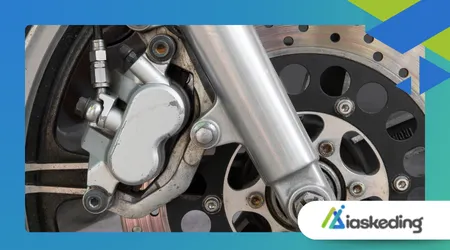
This intelligent integration of regenerative and friction braking not only improves efficiency but also significantly extends the life of your brake pads and rotors.
The Real-World Impact: Efficiency and Performance
The benefits of this technology are far more than just theoretical. The real-world impact on efficiency and performance is undeniable.
A study from the U.S. Department of Energy found that regenerative braking can recover up to 20% of the energy consumed during urban driving.
This statistic alone highlights the massive potential of this system to stretch every electron in your battery, leading to longer rides and less frequent charging.
Imagine a scenario where a rider on a typical commute is constantly accelerating and decelerating.
With every stoplight or slowdown, the system is actively working to put power back into the battery, turning what was once wasted kinetic energy into usable electricity.
This process transforms the very nature of energy consumption.
It’s an example of how modern engineering is finding ways to close the loop on efficiency, turning a negative (losing speed) into a positive (gaining power).
It’s not just a cool feature; it’s a core component that makes electric motorcycles a viable and practical option for daily riders.
++ What to Know Before Buying Your First E-Motorcycle
Analogies and Examples to Clarify the Concept
Think of it like this: an electric motorcycle with regenerative braking is like a self-winding watch.
A conventional watch needs to be wound manually, just as a gas motorcycle requires you to constantly fill it with fuel.
A self-winding watch, however, uses the motion of your wrist to wind the internal spring, storing that energy to power the watch.
Similarly, an electric motorcycle uses the kinetic energy of its own motion—the natural slowing down and coasting—to recharge its battery.
This captured energy is then stored and reused to power the motor again.
Maintenance, Longevity, and the Bottom Line
The long-term effects of using a motorcycle with regenerative braking are equally impressive. One of the most significant advantages is the reduced wear and tear on traditional brake components.
Since the system handles a large portion of the braking duties, the physical brake pads and rotors are used less frequently and less aggressively.
This translates to fewer maintenance visits and lower ownership costs over the life of the motorcycle. The table below illustrates this cost savings.
++ How to Plan a Road Trip on an Electric Motorcycle
| Component | Standard Motorcycle (Annual Cost) | Electric Motorcycle with Regenerative Braking (Annual Cost) |
| Brake Pads & Rotors | $150 – $300 | $50 – $100 |
| Oil & Filter Changes | $100 – $200 | $0 |
| Drive Chain Maintenance | $50 – $100 | $0 (many use belt/shaft drives) |
| Total Estimated Savings | $300 – $600 | $50 – $100 |
This data clearly demonstrates how regenerative braking contributes to the overall affordability and sustainability of electric motorcycles.
By minimizing the need for replacement parts and routine fluid changes, the technology lowers the barrier to entry and makes electric riding a more sensible financial choice.
++ What Is Regenerative Braking, and How Does It Work in Electric Motorcycles?
Conclusion: A New Era of Efficiency and Control
The magic of regenerative braking lies in its simplicity and its powerful impact. It’s an elegant solution to an age-old problem of wasted energy.
By transforming the electric motor into a generator during deceleration, it extends range, reduces maintenance costs, and creates a more intuitive riding experience.
As electric motorcycles continue to evolve, this technology will remain a cornerstone of their design, pushing the boundaries of what is possible on two wheels.
The future of motorcycling isn’t just electric; it’s smart, efficient, and regenerative.
Dúvidas Frequentes
Is regenerative braking a new technology?
While it has become a prominent feature in electric vehicles recently, the concept has existed for over a century, with early applications in electric trains and trams.
Can I turn regenerative braking off?
Many modern electric motorcycles offer different riding modes that allow you to adjust the intensity of the regenerative braking effect, or in some cases, turn it off entirely.
Does regenerative braking fully recharge the battery?
No, it doesn’t fully recharge the battery.
It provides a small but significant boost by recapturing a portion of the energy that would otherwise be lost during braking. It’s a supplement, not a primary charging method.
