
The growing adoption of transparent solar panels in commercial architecture

Modern energy efficiency reaches new heights with the strategic integration of transparent solar panels in commercial architecture, transforming static glass skyscrapers into active power plants.
This shift represents a fundamental evolution in how we conceive urban spaces, moving beyond mere occupancy toward self-sustaining ecosystems.
As 2026 unfolds, the fusion of renewable technology and high-end design has become the gold standard for Grade-A office developments globally.
Summary of Key Insights
- The Technology: How selective light absorption enables power generation without blocking views.
- Architectural Shifts: The move from rooftop-only solar to full-facade energy harvesting.
- Economic Impact: Significant reductions in operational costs and HVAC loads.
- Future Projections: The role of perovskite-based “power generation glass” in 2026.
What are transparent solar panels in commercial architecture?
Technological breakthroughs have allowed engineers to develop photovoltaic systems that are virtually indistinguishable from standard glass windows.
These systems leverage Transparent Luminescent Solar Concentrators (TLSCs).
Unlike traditional blue or black silicon panels, these units use organic salts to absorb non-visible wavelengths of light, specifically ultraviolet and infrared.
++Thermal Runaway Prevention in Megawatt-Charging Electric Trucks: Engineering Trade-Offs
The visible spectrum passes through, maintaining 60% to 80% transparency levels.
This dual-purpose material serves as both a structural envelope and a functional energy generator.
In 2026, the implementation of transparent solar panels in commercial architecture is no longer a niche experiment but a mainstream requirement.
How does solar glass contribute to Net-Zero building goals?
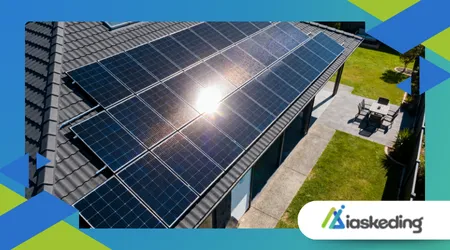
Modern skyscrapers possess limited roof space but vast vertical surface areas. Conventional solar arrays cannot meet the high energy demands of a 50-story office tower using only the roof.
By utilizing the entire facade, architects can increase the energy-harvesting footprint by over 500%.
++AI-driven shading prediction boosting solar farm output by up to 18%
This massive surface area compensates for the lower efficiency of transparent cells compared to traditional opaque panels.
Current commercial installations in 2026 show that integrated facades can offset between 40% and 75% of a building’s total electricity demand. This makes carbon neutrality a tangible reality for developers.
Why is 2026 the turning point for adoption?
Market maturity and policy shifts have accelerated the transition.
The global BIPV (Building-Integrated Photovoltaics) market is currently experiencing an unprecedented compound annual growth rate exceeding 18%.
Research from institutions like The Hong Kong Polytechnic University has pushed semi-transparent cell efficiency toward the 10% mark.
These gains make the return on investment increasingly attractive for institutional investors.
++How to Choose the Right Solar Panel System
Furthermore, the introduction of “Power Generation Glass” by major manufacturers has standardized the installation process.
Glazing contractors can now handle these panels with the same equipment used for traditional curtain walls.
Performance Comparison: Traditional vs. Transparent Solar (2026 Data)
| Feature | Traditional Silicon Panels | Transparent Solar Glass (BIPV) |
| Typical Efficiency | 20.0% – 24.5% | 5.0% – 12.0% |
| Light Transmission | 0% (Opaque) | 60% – 85% |
| Optimal Placement | Rooftops / Ground Mounts | Windows / Facades / Skylights |
| Aesthetic Impact | High Visibility (Industrial) | Invisible / Seamless Integration |
| Primary Light Absorbed | Full Visible Spectrum | UV and Infrared (Invisible) |
| Secondary Benefit | None | UV Protection & Heat Reduction |
Which materials are driving this architectural revolution?
Perovskite-based hybrids have emerged as the dominant force in the industry this year. These thin-film layers are exceptionally flexible and can be applied directly to glass or plastic substrates.
Organic photovoltaics (OPVs) also play a critical role.
They offer a high degree of color customization, allowing architects to maintain specific aesthetic identities without compromising on energy production capabilities.
The integration of transparent solar panels in commercial architecture often involves tandem cells.
These combine perovskite with silicon to capture a broader range of the solar spectrum while remaining see-through.
When does the investment in transparent solar become profitable?
The economic viability of these systems is tied to the “piggyback” method of installation. Since a building requires glass windows regardless, the incremental cost is solely the solar coating.
Maintenance costs are comparable to standard glass cleaning, as the photovoltaic layers are protected within the double-glazing units.
This ensures longevity and protects the delicate electronic components from environmental wear.
Operational savings are twofold: direct electricity generation and reduced cooling costs.
By absorbing infrared light, these panels naturally lower the internal temperature, reducing the load on HVAC systems by up to 30%.
What are the main challenges for large-scale implementation?
Balancing light transmission with energy conversion remains a primary engineering hurdle.
A completely clear panel would theoretically capture no energy, while a dark one would eliminate the benefits of natural light.
Standardization of electrical connections across massive facades requires precise planning. Every window unit must be wired into a central microgrid or battery storage system to maximize utility.
Despite these hurdles, the rise of transparent solar panels in commercial architecture continues.
Smart-building regulations in major American cities now incentivize these technologies through significant tax credits and zoning bonuses.
How do these panels impact the occupant experience?
Natural light is essential for employee well-being and productivity. These panels provide clear views of the outside world while filtering out harmful UV rays that damage skin and fade furniture.
Glade reduction is another significant benefit. The selective absorption of certain light frequencies helps maintain a comfortable internal environment without the need for heavy tinting or permanent blinds.
Investors recognize that high-tech, sustainable features increase property value.
Buildings equipped with the latest renewable technologies command higher rents and enjoy lower vacancy rates in the competitive 2026 market.
Conclusion: Transparent solar panels in commercial architecture
The evolution of transparent solar panels in commercial architecture marks a definitive shift in urban design philosophy.
By 2026, we have moved past the era of passive structures that merely consume resources.
Today’s commercial buildings are dynamic participants in the energy grid, harvesting power from every sunlit surface.
As efficiency continues to climb and production costs fall, the “glass box” skyscraper is finally fulfilling its potential as a clean energy engine.
For more technical insights on the global energy transition, visit the International Energy Agency (IEA).
Frequently Asked Questions
Can transparent solar panels replace all windows in a building?
Yes, they are designed to replace standard architectural glass. Modern versions provide the same structural integrity and thermal insulation as traditional double-paned windows while generating power.
Are these panels affected by the angle of the sun?
Unlike rooftop panels that require specific tilting, transparent solar glass is highly effective at capturing ambient and reflected light. This makes them ideal for vertical surfaces in dense urban environments.
How long do transparent solar panels last?
Most commercial-grade systems installed in 2026 come with a performance warranty of 25 to 30 years. The photovoltaic materials are sealed inside the glass, protecting them from degradation.
Do they work on cloudy days or in shaded areas?
Because they target UV and infrared light, these panels can still generate electricity during overcast weather. They are less sensitive to shading than traditional monocrystalline silicon panels.
