
Electric Transport Micromobility Grid Load Challenges
Micromobility Grid Load Challenges are surfacing as the hidden bottleneck of our 2026 urban energy transition.
In city after city, the rapid surge in e-bikes and e-scooters is clashing with distribution networks that were never built for this kind of granular, high-frequency demand.
While these lightweight vehicles are worlds more efficient than electric cars, their sheer volume and concentrated charging patterns in dense neighborhoods are creating localized “pockets” of energy stress.
Managing this influx isn’t just a transport issue anymore; it is a critical requirement for keeping the lights on in our most crowded zip codes.
What is the impact of micromobility on urban power distribution?
The primary strain on our infrastructure isn’t necessarily the total volume of electricity consumed—it’s the timing and the density of the draw.
As the global micromobility market approaches $213 billion this year, millions of commuters are plugging in their devices simultaneously between 6:00 p.m. and 8:00 p.m.
This creates a sharp spike in local transformers that were originally designed for steady household lighting and simple appliances.
In many older metropolitan areas, the grid operates on an outdated “top-down” philosophy. Micromobility Grid Load Challenges arise when hundreds of high-amperage fast chargers are activated in a single city block.
This can lead to localized brownouts or heat damage to underground cables already struggling under the weight of warming summers. It is an invisible kind of wear and tear that cities are only now beginning to quantify.
Unlike electric vehicles, which often have dedicated 240V lines in a garage, micromobility devices are frequently plugged into standard wall outlets in cramped apartments.
This distributed, unmanaged load makes it nearly impossible for utility companies to predict demand without sophisticated smart meter integration.
We are essentially running a 21st-century fleet on a mid-20th-century backbone.
How does battery swapping help mitigate peak load stress?
One of the most effective solutions to emerge in 2026 is the widespread adoption of battery swapping stations (BSS).
By separating the battery from the vehicle, operators can charge hundreds of cells during off-peak hours, like the middle of the night or midday when solar production is at its peak.
This turns the charging station into a giant sponge for excess energy.
These stations act as a buffer. The user swaps a depleted battery for a full one in under 60 seconds, putting zero immediate pressure on the local circuit.
According to data from the International Energy Agency (IEA), integrated energy management in these hubs can reduce peak demand impact by as much as 40% compared to direct-to-vehicle charging.
There is something inherently logical about this: instead of dragging the grid to the vehicle, we bring the energy to the user in a controlled environment.
Furthermore, we are seeing the rise of “Vehicle-to-Grid” (V2G) applications where these idle batteries can actually push energy back into the building during emergencies.
This transforms a potential burden into a decentralized energy reserve.
Why are commercial delivery fleets the biggest challenge?
While individual commuters pose a problem, the massive growth of gig-economy delivery services has escalated the situation into a crisis of scale.
Delivery riders require multiple fast-charges per day just to stay on the road. Logistical hubs in urban centers are now drawing power equivalent to small industrial factories, often without any of the necessary infrastructure upgrades.
Micromobility Grid Load Challenges are particularly acute in “delivery deserts” where infrastructure hasn’t kept pace with demand.
When dozens of riders congregate at a single charging point near a popular restaurant hub, the local circuit can exceed its safety limits within minutes.
This has forced some municipalities to implement “charging permits” to manage the density of commercial electricity use, a move that costuma ser mal interpretado como uma taxa extra, mas que é, na verdade, uma medida de segurança.
To solve this, smart charging algorithms are being deployed. These systems communicate with the grid to slow down charging speeds when the total load is high.
It is a digital balancing act that ensures the pizza stays hot and the neighborhood lights stay on, proving that software is often just as important as copper wire.
Which technologies are leading the grid-resilience movement?
The focus in 2026 has shifted toward “Solid-State” batteries and “Gallium Nitride” (GaN) chargers. These technologies offer much higher efficiency and lower heat signatures.
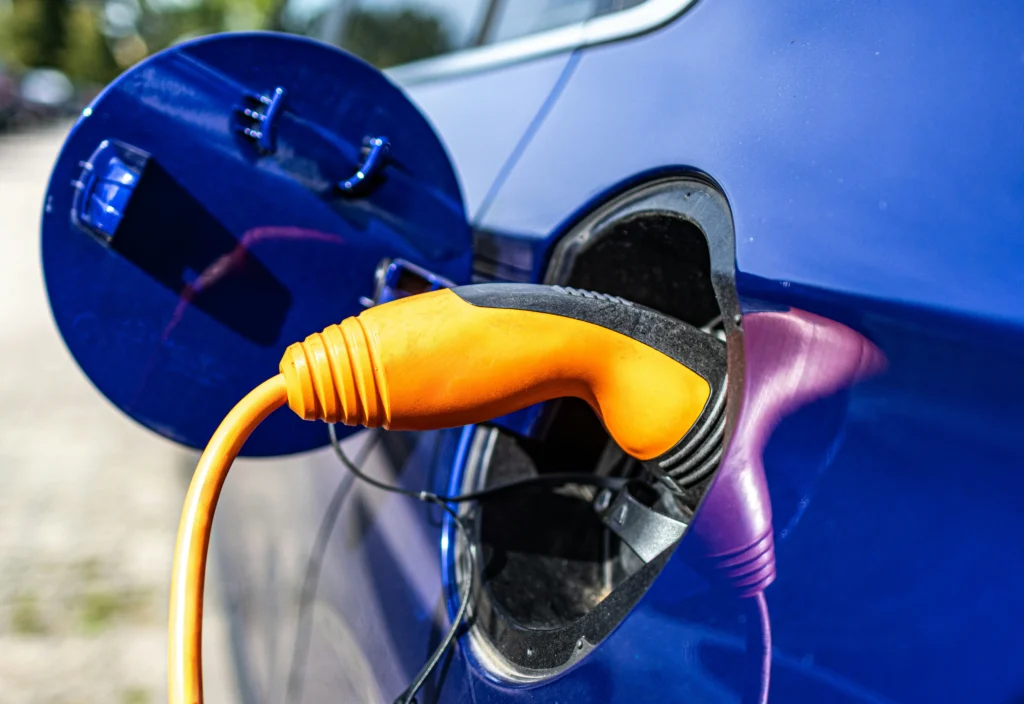
When chargers generate less heat, they waste less energy, which cumulatively reduces the strain on aging building wiring and local transformers.
| Technology | Impact on Grid Load | Implementation Level (2026) | Primary Benefit |
| Smart Charging Apps | High Reduction | 65% of Shared Fleets | Throttles power based on grid health |
| GaN Chargers | Moderate Efficiency | 40% of Retail Market | Reduces heat waste and energy loss |
| Solar-Powered Docks | Grid Independent | 15% of Urban Hubs | Provides carbon-neutral, off-grid power |
| Battery Swapping | Massive Load Shift | 25% of Global Cities | Moves charging to off-peak hours |
| V2G Integration | Grid Support | 5% (Pilot Stages) | Uses batteries as neighborhood backup |
How can city planning resolve these electrical bottlenecks?
Urban planners are finally beginning to treat charging as a utility, similar to water or sewage.
New residential developments in 2026 are increasingly required to include “micromobility rooms” equipped with fire-suppression systems and load-balanced circuits.
Read more: Renewable Energy Grid Bottlenecks Slowing New Projects
This centralizes the load and allows for easier monitoring by utility providers, preventing the “silent” overload of individual apartment outlets.
By integrating renewable energy sources directly into charging hubs, cities can bypass the grid entirely for a portion of the day.
Solar-canopied bike racks are no longer a novelty; they are a necessity for reducing the carbon intensity of the last-mile journey.
These “micro-grids” act as islands of stability in an increasingly volatile energy market.
For a deeper look into how urban infrastructure is adapting to these shifts, the Fortune Business Insights reports on the shared mobility ecosystem highlight the intersection of IoT tracking and energy management as the key driver for 2026 market growth.
What role does consumer behavior play in grid stability?
Education is the final piece of the puzzle. Most users are unaware that charging their e-bike at 2:00 a.m. is significantly better for the environment than doing so at 7:00 p.m.
Dynamic pricing models, where electricity is cheaper at night, are being used to nudge consumers toward better habits, but the psychological shift is slow.
Learn more: Pioneering Energy Storage Technologies for Grid Stability
Micromobility Grid Load Challenges are often exacerbated by the “set it and forget it” mentality. Smart plugs that automatically start charging at midnight are becoming a standard DIY tool for the sustainable home.
This small change, when multiplied by millions of users, creates a massive shift in the national load profile, proving that individual choices still carry weight.
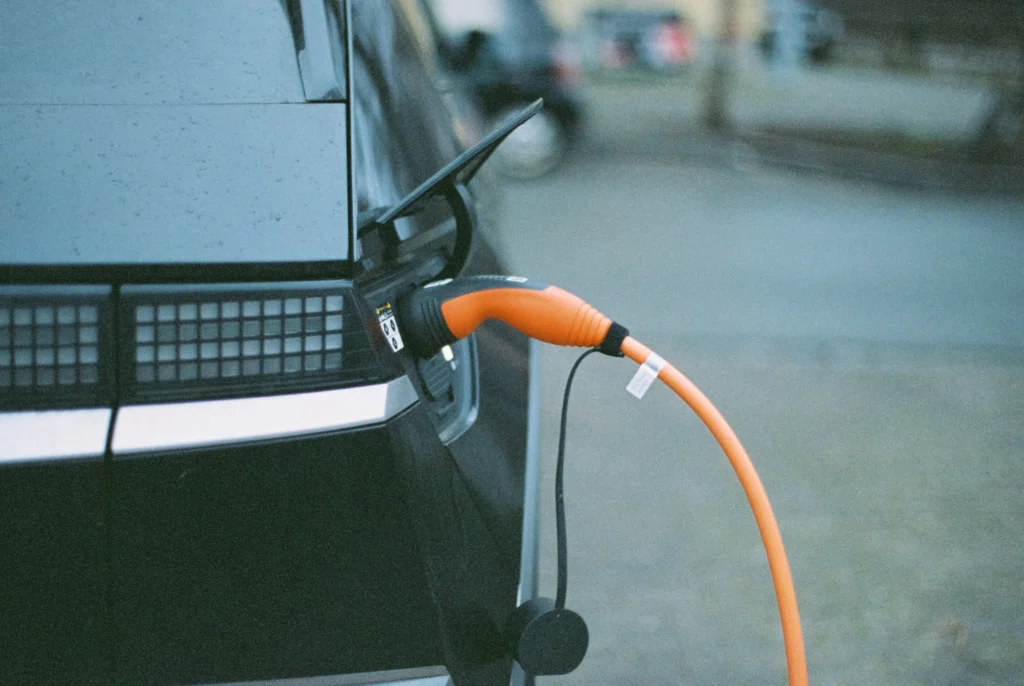
The shift is moving from “how do we get more power?” to “how do we use what we have more intelligently?”
By treating our e-bikes not just as vehicles, but as part of a connected energy network, we can ensure that the micromobility revolution doesn’t outpace the wires that power it.
Powering the future of the last mile
The journey toward 100% electric micromobility is not a straight line; it is a complex negotiation between our desire for freedom and the physical limits of our power lines.
Micromobility Grid Load Challenges are the growing pains of a world moving away from fossil fuels.
Read more: How Micromobility Is Changing How We Commute: A Revolution on Two Wheels
By investing in smart charging, battery swapping, and consumer education, we can turn these challenges into a more resilient, decentralized energy future.
The revolution is here, and as long as we manage the current wisely, the road ahead looks incredibly bright.
FAQ: Micromobility and the Grid
Will my e-bike cause a blackout in my apartment building?
A single e-bike is unlikely to cause a problem, but if twenty people in an old building all use fast-chargers at the same time, it can trip breakers. It is always safer to use smart timers to charge during off-peak hours.
Is battery swapping better for the grid than home charging?
Generally, yes. Swapping stations manage their load professionally and charge when demand is low, whereas home charging is often unmanaged and occurs right during the evening peak.
Do solar-powered charging stations actually work in cloudy cities?
Modern solar panels are efficient enough to trickle-charge batteries even in overcast conditions. They are usually paired with a battery storage system to ensure power is available regardless of the weather.
What is “Vehicle-to-Grid” (V2G) for e-scooters?
V2G allows the electricity stored in a scooter’s battery to be sent back into the grid during times of extreme demand. It helps balance the neighborhood load and can even earn the owner credits on their bill.
Why don’t cities just build more power plants?
Upgrading high-voltage lines and building new plants takes decades and billions of dollars. Managing existing demand through smart technology is faster, cheaper, and far more sustainable in the long run.
