
What Makes an Electric Train “Green”?
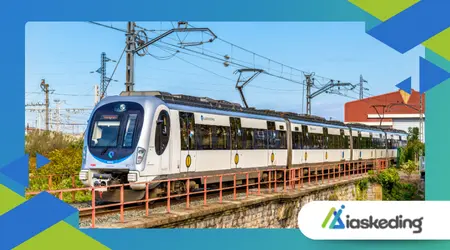
What Makes an Electric Train “Green”? This question is more complex than it seems. The answer goes far beyond the simple absence of a diesel smokestack.
True sustainability is a journey, not just a destination. Electric trains are a cornerstone of green transportation.
Yet, their eco-friendly credentials depend heavily on several crucial factors. Let’s delve into what truly powers their green reputation.
The core of their environmental benefit lies in their energy source. An electric train is only as clean as the electricity it consumes.
If the grid it draws from relies on fossil fuels, its green image tarnishes. The system is merely outsourcing its emissions to a power plant. This critical detail often gets lost in public discourse.
However, the potential for a truly zero-emission journey is immense. When powered by renewable sources, the electric train transforms.
It becomes a powerful tool in the fight against climate change. This synergy between green energy and transport is the future.
How Does the Source of Electricity Define Its “Greenness”?
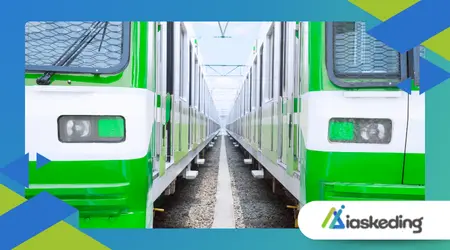
The electricity powering the locomotive is the single most significant factor. A grid dominated by solar, wind, or hydropower makes the train a true champion of sustainability.
This direct link is fundamental to understanding its environmental impact. Many nations are now actively greening their national grids. This transition directly benefits their electric rail networks.
Consider Germany’s ambitious “Energiewende” (energy transition). Their investment in renewables directly lowers the carbon footprint of their extensive Deutsche Bahn rail system.
Every solar panel and wind turbine installed contributes to cleaner rail travel. This is a tangible example of policy shaping greener transport outcomes.
Conversely, a train running on coal-powered electricity has a significant, albeit indirect, carbon footprint. The pollution is simply displaced from the city center to the power station’s location.
++How Falling Prices in EVs Are Opening Up the Market for More Buyers
Therefore, a holistic view of the entire energy lifecycle is essential for a fair assessment.
Beyond the Power Source, What Else Contributes?
Energy efficiency and innovative technologies play a massive role. Modern electric trains are marvels of engineering.
They are designed for maximum efficiency. One key technology is regenerative braking. When an electric train brakes, its motors act as generators. They convert kinetic energy back into electricity.
++The Best Folding Electric Bikes for City Life
This recaptured energy is then fed back into the power lines. It can be used by other trains on the same line.
This creates a highly efficient, closed-loop system. It significantly reduces overall energy consumption. This elegant solution is a prime example of smart, sustainable engineering at work.
The materials and manufacturing process also matter. Building a train, like any large vehicle, is resource-intensive.
Manufacturers are increasingly adopting circular economy principles. They use recycled materials and design for easier end-of-life disassembly.
Read more: How Safe Are Electric Public Transport Options?
This reduces the train’s environmental impact over its entire lifecycle.
Are Electric Trains Truly a Panacea for Urban Pollution?
In urban environments, the benefits are undeniable. Electric trains produce zero direct tailpipe emissions. This means no nitrogen oxides (NOx) or particulate matter (PM2.5).
These pollutants are major contributors to respiratory diseases in cities. The air quality in and around train stations improves dramatically.
++ How green are electric trains?
This directly translates to significant public health benefits. It creates a more pleasant and healthier urban landscape for everyone.
The reduction in noise pollution is another significant advantage. Electric trains are remarkably quiet compared to their diesel counterparts. This creates more livable communities along railway corridors.
So, What Makes an Electric Train “Green”? It’s this powerful combination of factors. The shift away from fossil fuels is just the beginning.
How Does Rail Compare to Other Transport Modes?
The efficiency of moving people and goods by rail is unmatched. A single train can replace hundreds of cars or dozens of trucks.
This massively reduces traffic congestion and overall emissions. This inherent efficiency is a foundational pillar of its green credentials.
According to the International Energy Agency (IEA), rail transport accounts for 8% of global motorized passenger movements but only 2% of total transport energy consumption.
This statistic starkly illustrates the efficiency advantage that rail holds over other modes of transport. It is a powerful argument for modal shift.
Think of the electrical grid as a large reservoir. A train powered by renewables is like drawing pure, clean water from it.
A diesel train, in contrast, is like having a small, dirty puddle for every journey. The analogy highlights the centralized and cleaner potential of the electric system.
What Makes an Electric Train “Green”? This fundamental efficiency is a key part of the answer.
What Is the Role of Infrastructure and Longevity?
Railway infrastructure is built to last for decades, even centuries. This longevity contrasts sharply with roads, which require frequent and resource-intensive resurfacing.
Once built, the environmental cost of the infrastructure is amortized over a very long period. This long-term perspective is crucial.
The trains themselves are also durable, long-lasting assets. They often have a service life of 30 years or more.
This is significantly longer than most cars or buses. This durability means fewer resources are consumed for manufacturing replacements. This contributes significantly to their overall sustainability profile.
The integration of rail with other sustainable transport modes, like cycling and walking, creates a truly green mobility ecosystem.
Well-designed stations with secure bike parking and pedestrian-friendly access encourage a complete shift away from car dependency. It’s about creating a seamless, sustainable journey from door to door.
Comparative Energy Consumption by Transport Mode (per passenger-km)
| Transport Mode | Energy Consumption (Wh/p-km) |
| Electric Train | 15-50 |
| Bus | 30-100 |
| Car (Gasoline) | 150-350 |
| Airplane (Short-haul) | 250-450 |
This table clearly shows the superior energy efficiency of electric rail. What Makes an Electric Train “Green”?
The numbers speak for themselves. This efficiency is a core component. The data underscores why investing in electric rail is a smart environmental choice.
Is the Future of Green Transport on Rails?
The evidence strongly suggests so. As countries race to decarbonize their economies, electric rail emerges as a proven, scalable solution.
The technology is mature, reliable, and constantly improving. The integration with renewable energy is the final piece of the puzzle. It unlocks the full potential of green rail transport.
The journey towards sustainability requires a multi-faceted approach. There is no single silver bullet.
But with its inherent efficiency and potential for zero-emission operation, the electric train is arguably the most powerful weapon in our arsenal. Why wouldn’t we prioritize a solution that is already so effective?
This brings us back to our central question. What Makes an Electric Train “Green”? It is the synergy of clean energy, superior efficiency, and intelligent technology. It is a system-wide approach.
Conclusion: What Makes an Electric Train “Green”
In the final analysis, the green credentials of an electric train are not a given. They are the result of conscious choices.
These choices range from national energy policy to specific engineering designs. A train is not just a vehicle; it is part of a complex, interconnected system.
What Makes an Electric Train “Green”? It’s the commitment to powering it with renewables. It’s the innovation of regenerative braking.
It’s the unmatched efficiency in moving people and goods. It’s the clean air it provides in our cities. It’s a holistic vision for sustainable mobility.
The electric train is not just a greener way to travel. It represents a smarter, more efficient, and healthier future for our planet.
The answer to What Makes an Electric Train “Green”? is this comprehensive, system-level transformation. It’s a journey we must all get on board with.
Frequently Asked Questions: What Makes an Electric Train “Green”
1. Are electric trains always better for the environment than diesel trains?
Yes, even when powered by a mixed-energy grid, electric trains are generally better.
Their superior energy efficiency and the absence of direct, localized emissions in urban areas give them a significant advantage. The environmental benefit grows substantially as the electricity grid becomes cleaner.
2. What is the environmental impact of building new railway lines?
The construction of new railway lines does have an environmental impact, including habitat disruption and the carbon footprint of materials like concrete and steel.
However, these impacts are a one-time investment. Over the long operational life of the railway, the significant emissions savings from transport far outweigh the initial construction impact.
3. Can regenerative braking power the entire train?
No, regenerative braking cannot power the train entirely on its own.
It can, however, recover a significant portion of the energy used for acceleration, typically reducing a train’s net energy consumption by 15-30%, depending on the route’s topography and the frequency of stops.
4. How do high-speed electric trains compare environmentally?
High-speed trains consume more energy per kilometer than conventional trains due to aerodynamic drag at high speeds.
However, they remain far more efficient per passenger than air travel or driving the same distance. When powered by renewable energy, they offer a very sustainable and fast alternative for medium-distance travel.
