
How Falling Prices in EVs Are Opening Up the Market for More Buyers
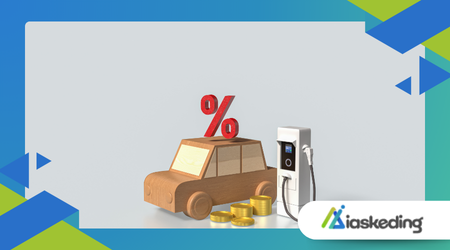
Falling Prices in EVs Are Opening Up the Market for More Buyers—this paradigm shift is rapidly redefining the landscape of personal transportation.
The once-niche market of electric vehicles (EVs) is now poised for a massive expansion, moving from a luxury aspiration to a mainstream reality.
This evolution is driven primarily by increasingly competitive pricing strategies from manufacturers and economies of scale.
The initial premium associated with early electric models acted as a significant barrier for many consumers.
High battery costs translated directly into elevated showroom prices, relegating EVs to the upper segments of the market. Today’s trends, however, are clearly signaling the end of this exclusivity.
Why Are EV Prices Declining So Rapidly?
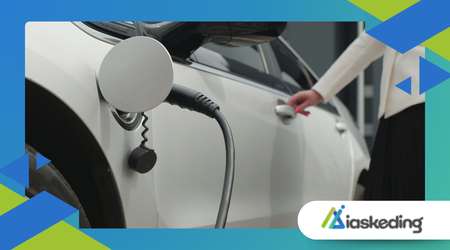
The most substantial factor in the diminishing cost of electric cars is the continuous reduction in battery costs.
Lithium-ion battery packs, which represent a large portion of an EV’s manufacturing expense, are getting cheaper to produce every year.
This is a direct result of manufacturing optimization and technological advancements.
Another critical element is the sheer scale of production.
As more major automotive companies commit to electrification, they invest heavily in dedicated EV platforms and giga-factories.
Read more: Best Books and Documentaries About Green Energy
This mass production yields substantial economies of scale, making each unit less expensive to produce.
What Does Market Expansion Mean for the Average Consumer?
For the majority of car buyers, lower prices mean one thing: accessibility.
The total cost of ownership (TCO) for an EV is already attractive due to lower “fuel” and maintenance costs.
Other people are reading: Can Solar Panels Cover Your EV Charging Needs? A Case Study
When the sticker price becomes comparable to a gasoline-powered equivalent, the financial choice becomes a clear winner.
Consider an analogy: Early smartphones were prohibitively expensive and only accessible to a select few.
As manufacturing matured and technology became standardized, prices dropped, making them ubiquitous. The EV market is following this exact trajectory.
How Is the Increased Competition Affecting Pricing Strategies?
The intense rivalry among established automakers and new entrants is fueling the price drops.
++How to Prepare Your Garage for Overnight EV Charging
Companies like Tesla, Ford, General Motors, and a host of aggressive Chinese manufacturers are engaged in a silent price war.
This competition forces everyone to find efficiencies or risk losing market share.
Automakers are now strategically introducing smaller, more affordable EV models designed specifically for the budget-conscious buyer.
Read more: New twists in the electric-vehicle transition: A consumer perspective
These vehicles prioritize essential features and efficient battery packs over long-range, high-performance specifications, effectively creating new entry points.
How Do Incentives and Government Policies Influence Affordability?
Government incentives play a vital role in bridging the current price gap, particularly in transitional markets.
Tax credits, rebates, and reduced registration fees significantly lower the initial purchase price for consumers. These policies are designed to accelerate adoption and combat climate change.
Moreover, many regional governments are investing in public charging infrastructure, which alleviates range anxiety—another major psychological barrier for potential buyers.
A robust infrastructure increases consumer confidence in making the switch.
Which Examples Illustrate the Trend of Lower EV Prices?
A perfect example is the market’s shift away from focusing solely on high-end luxury vehicles.
In 2024 and 2025, several automakers released fully capable electric crossovers and hatchbacks with starting prices well under $35,000, sometimes even before incentives.
This was an unthinkable proposition just a few years ago.
Another powerful illustration is the emergence of smaller, highly efficient city-focused electric cars.
These models, often designed by European and Asian manufacturers, are proving that electrification doesn’t require a large, expensive vehicle. They address the daily commuting needs of millions.
What Is the Impact of Falling Battery Costs on EV Sticker Prices?
The cost of a lithium-ion battery cell pack has seen a dramatic decrease over the past decade.
A 2024 analysis by BloombergNEF revealed that the average battery pack price had fallen significantly below $150 per kWh.
This statistic is crucial because the industry widely considers the $100/kWh mark to be the point of full price parity with internal combustion engine (ICE) vehicles, and the industry is quickly moving toward it.
This continuous decline directly translates into lower vehicle manufacturing costs, which are then passed on to the consumer.
Manufacturers are now utilizing this advantage to produce electric vehicles that are price-competitive with their gasoline counterparts, even for mid-range models.
| Year | Average Li-ion Battery Pack Price (USD/kWh) | Trend Status |
| 2015 | $350 | Early Adoption/High Cost |
| 2020 | $156 | Maturing Technology |
| 2024 | $120 (Estimated) | Approaching Price Parity |
| 2028 | $90 (Projected) | Mass Market Dominance |
The table above visually confirms the aggressive downward cost trajectory of the core EV component.
What Does This Mean for the Future of Automotive Sales?
The market has reached a critical inflection point where affordability is becoming the driving force behind purchasing decisions.
Falling Prices in EVs Are Opening Up the Market for More Buyers, creating millions of new customers who were previously excluded.
This widening consumer base is forcing automakers to diversify their offerings and marketing.
Will the mass adoption of EVs truly signal the end of range anxiety as charging infrastructure becomes as common as gas stations? It certainly seems that way. The momentum is undeniable.
This shift isn’t just about selling more cars; it’s about making a cleaner, more sustainable future accessible to everyone.
The industry is recognizing that long-term success hinges not on exclusivity, but on high-volume, mainstream affordability.
Falling Prices in EVs Are Opening Up the Market for More Buyers is a theme that will dominate automotive news for the remainder of the decade.
The democratization of the EV is officially underway, promising a significant change in the way the world moves.
The impact of this affordability is creating a virtuous cycle: lower prices lead to higher sales, which allows for greater economies of scale, leading to even lower prices.
Falling Prices in EVs Are Opening Up the Market for More Buyers, transforming a once-premium segment into a mass-market phenomenon.
Falling Prices in EVs Are Opening Up the Market for More Buyers is now a reality due to fierce competition.
Falling Prices in EVs Are Opening Up the Market for More Buyers benefits everyone. The future of the automotive industry is undeniably electric and, more importantly, affordable.
Frequently Asked Questions (FAQ)
1. Will used EV prices also fall significantly?
Yes. As new EV prices drop and the sheer volume of electric cars on the road increases, the used EV market is becoming more robust and competitive.
Depreciation rates are normalizing, meaning used models will become increasingly attractive and affordable alternatives for many buyers.
2. How do battery recycling improvements affect cost?
Improvements in battery recycling and ‘second-life’ applications (using older EV batteries for static grid storage) are contributing to lower costs.
Extracting valuable materials like lithium and cobalt from spent batteries reduces the need for new raw material mining, leading to lower overall input costs for new battery packs over time.
3. Is the charging network keeping up with this growth in affordability?
While charging infrastructure development faces regional challenges, significant private and public investment is accelerating its deployment.
The focus is shifting from simply having chargers to having reliable, fast-charging networks in key corridors and urban centers to support the rapidly growing number of new, affordable EVs.
