
Can Solar Panels Cover Your EV Charging Needs? A Case Study
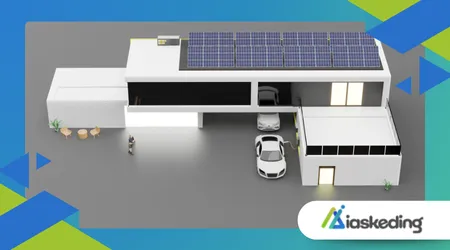
Can Solar Panels Cover Your EV Charging Needs?
This is one of the most pressing questions for electric vehicle owners considering solar power.
Moving beyond gasoline is one major step; powering your ride with sunshine is the next, and potentially the most rewarding. It’s a compelling vision of true energy independence.
The convergence of electric vehicle (EV) adoption and residential solar technology has ignited a powerful shift. People are genuinely excited about slashing their fuel and electricity bills.
This perfect pairing promises a drastic reduction in one’s carbon footprint, a noble pursuit.
But how realistic is this self-sufficiency?
Can rooftop photovoltaic (PV) systems truly generate enough energy? Many variables influence the outcome, making a simple “yes” or “no” impossible.
The feasibility is highly dependent on individual circumstances, climate, and driving habits.
Key Variables in the EV-Solar Equation
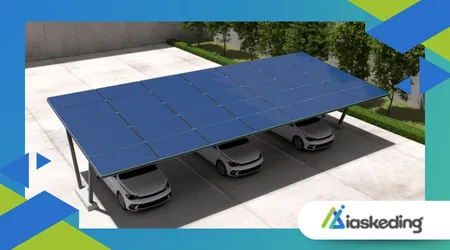
Determining the right solar system size involves a careful assessment of household and vehicle energy needs.
The EV’s annual mileage and efficiency are primary factors in this complex calculation.
A compact EV requires significantly less charging energy than a large electric SUV, for example.
Household electricity consumption is another critical piece of the puzzle. Do you run a power-hungry home with constant air conditioning?
If so, the solar system must be sized for everything, not just the car. This holistic view is essential for proper planning.
The geographical location heavily dictates the available sunlight hours and intensity.
++How to Make Your Business More Energy-Efficient
Regions like Arizona or Southern California boast optimal solar conditions.
In contrast, cloudier locales necessitate a larger array to produce the same energy.
The Suburban Commuter’s EV
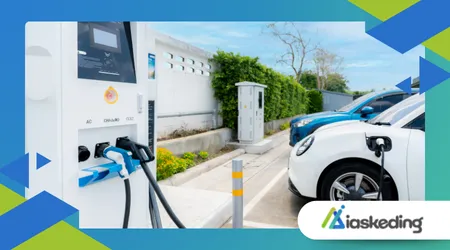
Consider the example of a hypothetical suburban family, the Millers, living in Denver, Colorado. They drive a Tesla Model 3 Long Range, covering roughly 12,000 miles annually.
++Electric SUVs Gaining Popularity: Best Options & Comparing Range, Price
This translates to an estimated 3,400 kWh of charging per year, based on the vehicle’s efficiency.
Their home uses an additional 8,000 kWh for standard appliances and utilities.
Therefore, the total annual energy demand is approximately 11,400 kWh. Denver has a strong solar resource, yielding about 4.5 peak sun hours daily.
To meet that 11,400 kWh annual need, the Millers would need a solar array sized to produce that much power.
++How to Calculate True EV Efficiency in Kilowatt-Hours per 100 km
Calculating system size involves dividing the annual need by the location’s specific solar factor.
For their location, an array of approximately 8.5 kW is necessary to achieve near 100% energy offset, including the EV.
This demonstrates that Can Solar Panels Cover Your EV Charging Needs is a matter of scale.
A significant portion of the system’s output is dedicated solely to the car.
The investment in the solar array grows proportionally with the miles driven.
++Charging an Electric Vehicle with Solar Energy: Is it a Good Option?
The Economics of Solar Charging
The initial cost of installing an 8.5 kW system is substantial, but the long-term savings are compelling.
Federal and state incentives significantly reduce the upfront price, making the investment more accessible. The electricity generated essentially locks in a zero fuel cost for the EV.
Think of it this way: buying a solar array is like prepaying for 25+ years of fuel and electricity at a fixed, competitive rate.
Every time you “fill up” your EV with free sunshine, you are directly realizing a return on that investment. This is the financial argument in its simplest form.
The Can Solar Panels Cover Your EV Charging Needs equation often includes a battery storage system.
A home battery allows the Millers to store the solar energy generated during the day and use it to charge the EV at night or when the sun isn’t shining.
This feature enhances independence and hedges against power outages.
Beyond the Numbers: Intelligent Charging
An often-overlooked factor is the timing of the charging. Smart charging systems can prioritize using solar energy directly during the day.
This minimizes drawing power from the grid, maximizing the solar self-consumption rate.
For instance, the Millers can plug in their car when they get home from work and schedule the charging to begin at midday on Saturday when the sun is brightest.
Consider a second example: an urban resident in Seattle with a smaller EV, a Nissan Leaf, driving only 6,000 miles a year (about 1,600 kWh).
Because Seattle is cloudier and their driving is less, their total required system size might be only 5.5 kW. A smaller system means lower cost, but it still proves that solar can handle the bulk of their needs.
A Note on Real-World Performance
It is crucial to look at reputable industry data when making these decisions.
According to a 2023 report by the National Renewable Energy Laboratory (NREL), the typical residential solar system can effectively offset 100% of a home’s electricity consumption, assuming optimal sizing and placement.
This capacity inherently includes the ability to charge an EV, provided the system accounts for the vehicle’s specific energy needs from the outset.
The challenge isn’t the technology’s capability; it’s the homeowner’s ability to size it correctly and manage consumption.
| Vehicle Type | Estimated Annual kWh Needed (12,000 miles/yr) | Equivalent Solar System Size (Example Climate) |
| Compact EV (e.g., Mini Cooper SE) | 2,700 kWh | 2.0 kW |
| Mid-Size Sedan (e.g., Tesla Model 3 LR) | 3,400 kWh | 2.5 kW |
| Large SUV (e.g., Ford F-150 Lightning) | 4,500 kWh | 3.3 kW |
Note: System size for EV charging only; assumes a median solar resource location.
The table above illustrates the direct correlation between vehicle size, driving habits, and the solar array extension required.
It clearly shows that Can Solar Panels Cover Your EV Charging Needs isn’t a pipe dream.
The Argument for Energy Independence
Ultimately, the synergy between solar panels and an EV represents a profound leap toward energy independence.
It shifts power from a centralized utility to the individual homeowner. By generating their own transportation fuel, homeowners insulate themselves from volatile gasoline and grid electricity prices.
Can Solar Panels Cover Your EV Charging Needs? The answer is unequivocally yes, under the right conditions and with smart planning.
Doesn’t the thought of free, sun-powered miles feel like the ultimate upgrade to your driving life? It is a potent combination of sustainable living and smart personal economics.
The future of driving is undeniably electric.
The future of fueling that drive is overwhelmingly solar.
Investing in a properly sized solar system is perhaps the most intelligent financial and environmental decision an EV owner can make today. It ensures that the promise of clean transportation is fully realized.
The core of the matter remains: Can Solar Panels Cover Your EV Charging Needs is less about the technology and more about the integration. Ensure the system is adequately sized.
Make use of smart charging.
Can Solar Panels Cover Your EV Charging Needs: Conclusion
Successfully coupling solar power with EV charging is achievable, provided a thorough analysis of energy consumption, location, and driving behavior is performed.
The initial investment pays dividends in the form of zero-cost fuel and a lower carbon footprint.
The dream of perpetually driving on sunshine is already a reality for millions, proving that Can Solar Panels Cover Your EV Charging Needs is a question that now has a practical, powerful answer.
Frequently Asked Questions
How much does it cost to add solar for an EV?
The cost is highly variable, depending on your car’s energy requirements and your location.
The average homeowner needs to add approximately 2-4 kW of solar capacity solely for their EV, which can cost anywhere from $5,000 to $12,000 before incentives, depending on the system type and installer.
Will my solar panels work at night for charging?
Solar panels do not generate power at night. To charge your EV with solar power after sundown, you will need a home battery storage system to hold the excess energy generated during the day.
Otherwise, the EV will draw power directly from the utility grid.
Does a hybrid vehicle benefit from solar panels?
Yes, a plug-in hybrid electric vehicle (PHEV) benefits greatly. PHEVs have smaller batteries, requiring less energy and, consequently, a smaller, less expensive solar array to fully offset their electric charging needs.
What happens if I generate more power than my EV needs?
In most regions with “Net Metering,” any excess power your solar system generates is sent back to the utility grid.
In exchange, the utility provides you with credits on your electricity bill, often offsetting the cost of power you draw from the grid at night or when your system is underproducing.
Can Solar Panels Cover Your EV Charging Needs?
Yes, absolutely. With proper planning and system sizing that accounts for both the home’s energy use and the EV’s annual mileage, solar panels can cover 100% of an EV’s charging needs.
