
The Growth of Solar Farms in Rural Areas and Their Economic Impact
Across America’s heartland, a quiet revolution is taking place. Solar farms in rural areas are transforming the landscape, boosting economies by creating jobs, increasing tax revenues, and providing steady income for farmers. As the sun’s rays beam down on vast fields, they’re not just nurturing crops – they’re powering a bright future for rural economies.
The economic benefits of solar farms are becoming increasingly clear. From job creation to boosted tax revenues, these clean energy installations are breathing fresh air into rural areas. Farmers are finding a new cash crop in solar panels, with renewable energy in agriculture offering a steady income stream alongside traditional farming practices.
As we explore this growing trend, we’ll uncover how solar farms are reshaping rural America, bringing both opportunities and challenges to the communities they touch. Let’s shed light on this sunny new chapter in our nation’s energy story.
Understanding Solar Farm Development in Rural Landscapes
Solar farm implementation in rural areas is reshaping land use patterns across the country. As farmers seek new revenue streams, agricultural solar projects are becoming increasingly popular. These projects involve careful site selection, considering factors like sunlight exposure, grid connectivity, and soil quality.
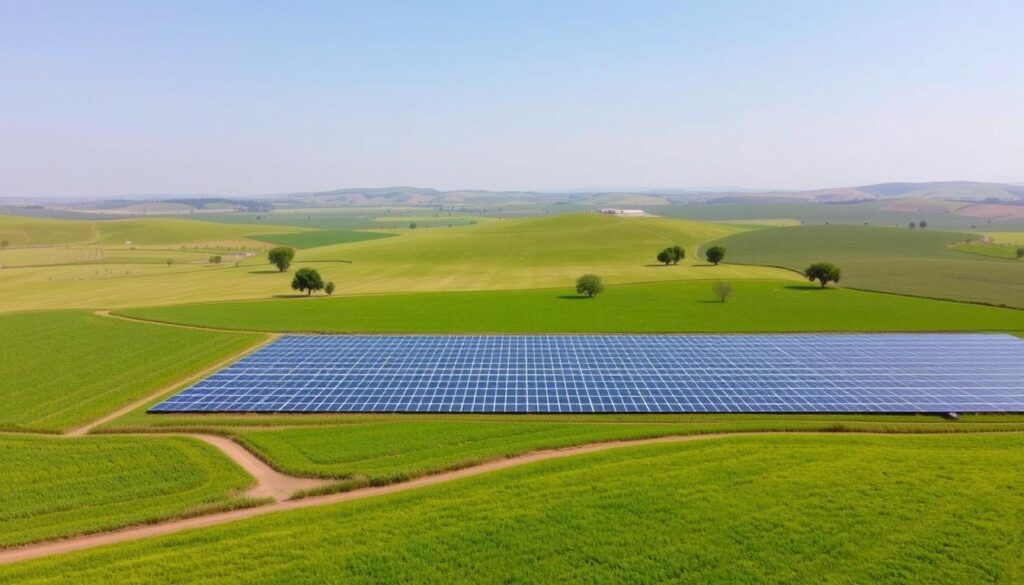
Land leasing agreements form the backbone of solar farm development. Farmers can earn steady income by leasing portions of their land to solar companies. These long-term contracts often span 20-30 years, providing financial stability for rural landowners.
The technical aspects of installing large-scale solar arrays involve:
- Site preparation and grading
- Mounting system installation
- Solar panel placement
- Electrical wiring and inverter setup
Dual-use farming is an innovative approach to rural land use for solar energy. This concept allows solar panels and crops to coexist on the same plot. Shade-tolerant crops can grow beneath elevated panels, maximizing land productivity.
“Agrivoltaics represents a win-win solution for farmers and renewable energy advocates alike.”
Solar farm implementation doesn’t mean abandoning traditional agriculture. Many projects incorporate sheep grazing for vegetation management, preserving the land’s agricultural character while generating clean energy.
Solar farms and rural economies
Solar farms are transforming rural landscapes and economies across America. The economic impact of solar farms extends far beyond clean energy production. These installations bring new life to struggling agricultural communities through rural job creation and agricultural diversification.
Solar projects create jobs in construction, maintenance, and operations. Local workers gain skills in renewable energy technologies, boosting employment opportunities. Farmers benefit from stable, long-term income by leasing land for solar panels, providing financial security during crop yield fluctuations.
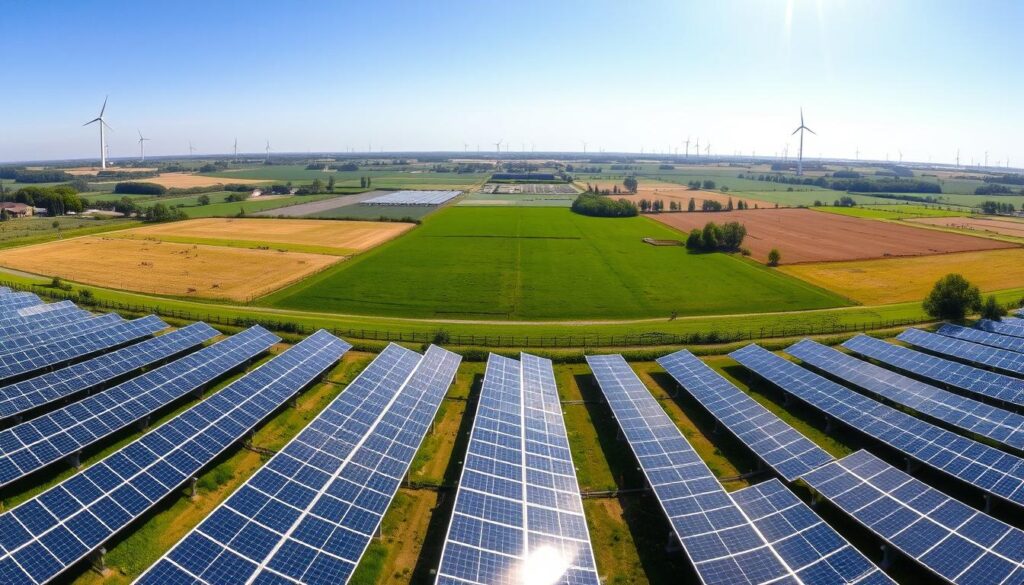
Solar farms increase local tax revenues, funding essential services and infrastructure improvements. This influx of money stimulates economic growth in rural areas, attracting new businesses and residents. The diversification of income sources helps stabilize rural economies, reducing dependence on traditional farming practices.
“Solar farms have revitalized our community. They’ve brought jobs, increased our tax base, and given farmers a reliable income stream,” says Sarah Johnson, a rural development specialist.
Let’s examine the economic benefits of solar farms in rural areas:
| Benefit | Impact |
|---|---|
| Job Creation | 200-400 jobs per project during construction; 10-20 permanent positions |
| Farmer Income | $500-$1,000 per acre annually through land leases |
| Tax Revenue | $500,000-$1 million annually for local governments |
| Economic Diversification | Reduced reliance on traditional agriculture; increased stability |
As solar farms continue to expand, their positive economic impact on rural communities grows. These projects offer a path to sustainable development, blending clean energy production with rural economic revitalization.
Environmental and Land Use Considerations
Solar farms play a crucial role in sustainable energy production, but their environmental impact must be carefully managed. As large-scale installations, they can affect local ecosystems and wildlife habitats. Proper land conservation strategies are essential to minimize these effects while harnessing clean energy.
Solar farm developers are implementing innovative approaches to balance energy production with environmental stewardship. One such method is the creation of pollinator-friendly solar installations. These designs incorporate native plants around and under solar panels, providing habitats for bees, butterflies, and other important pollinators.
Another promising concept is agrivoltaics, which combines solar energy production with agriculture. This dual-use approach allows for crop cultivation or livestock grazing beneath elevated solar panels. It maximizes land use efficiency and supports local farming communities.
“Agrivoltaics represent a win-win solution for clean energy and agriculture, addressing both our power needs and food security concerns.”
To illustrate the environmental considerations of solar farms, let’s examine some key factors:
| Factor | Potential Impact | Mitigation Strategy |
|---|---|---|
| Soil Quality | Compaction and erosion | Use of permeable ground covers |
| Wildlife | Habitat disruption | Creation of wildlife corridors |
| Water Resources | Altered drainage patterns | Implementing rainwater harvesting systems |
| Visual Impact | Changes to rural landscape | Strategic placement and visual screening |
By addressing these environmental concerns, solar farm developers can ensure that their projects contribute positively to both sustainable energy production and land conservation efforts.
Community Response and Social Impact
Solar farm development in rural areas sparks diverse reactions. Many communities welcome the economic boost and job opportunities. Others express concerns about changes to their cherished landscapes. Rural community engagement plays a crucial role in shaping solar farm public perception.
Successful projects often involve transparent communication with residents. Developers who listen to local concerns and adapt plans accordingly tend to gain more support. Some communities have negotiated benefits like discounted electricity rates or funding for local initiatives.
Visual impact remains a common worry. Creative solutions include strategic placement and natural screening with trees or hedgerows. These efforts help preserve the rural character while embracing clean energy.
“Our solar farm has brought new life to our struggling community. It’s given us a sense of pride in contributing to a sustainable future.”
Local energy independence is a powerful motivator for many rural areas. Solar farms can reduce reliance on distant power sources, enhancing grid resilience. This self-sufficiency appeals to communities seeking greater control over their energy future.
| Aspect | Positive Impact | Community Concerns |
|---|---|---|
| Economy | Job creation, increased tax revenue | Potential decrease in property values |
| Environment | Clean energy production | Habitat disruption |
| Energy | Local energy independence | Grid integration challenges |
| Aesthetics | Modern, progressive image | Changes to rural landscape |
As solar farms continue to expand, finding a balance between clean energy goals and community needs remains essential. Engaging residents early and often in the planning process can lead to more harmonious outcomes and broader acceptance of solar technology in rural settings.
Conclusion
Solar farms are changing the game for rural areas. They bring new jobs and money to places that need it. Farmers can make extra cash by renting out their land. This helps keep farms running and boosts local economies.
The future of rural solar farms looks bright. As we move towards cleaner energy, these projects will grow. They offer a way for rural communities to join the renewable energy transition. This shift can lead to sustainable rural development and a greener future.
But it’s not all smooth sailing. Some worry about how solar farms affect farmland and wildlife. Others fear they might change the look of the countryside. To succeed, solar projects need to work with local communities. They must balance clean energy goals with rural traditions and needs.
As we look ahead, solar farms will play a big role in rural areas. They can help create jobs, support farmers, and fight climate change. With careful planning, these projects can power a brighter future for rural America.
FAQ
What are the main economic benefits of solar farms in rural areas?
How do solar farms impact agricultural land use?
What environmental considerations are there for solar farms in rural areas?
How do rural communities typically respond to solar farm development?
What is the process for developing a solar farm on rural land?
Can solar farms contribute to sustainable rural development?
What are some innovative approaches to solar farm design in agricultural areas?
How do solar farms affect property values in rural areas?
