
How Smart Cities Are Using Renewable Energy to Power the Future

Smart cities are no longer a futuristic concept—they are the present. By 2025, urban centers worldwide are leveraging renewable energy to combat climate change, reduce costs, and enhance livability.
According to the International Energy Agency (IEA), smart cities now account for 65% of global investments in clean energy infrastructure, a staggering leap from just a decade ago.
But what makes these cities truly “smart”? It’s not just about installing solar panels or wind turbines it’s about integrating them into a seamless, intelligent network that optimizes consumption, storage, and distribution.
From AI-managed microgrids to kinetic energy-harvesting sidewalks, innovation is redefining urban sustainability.
Consider this: If a city were a living organism, renewable energy would be its circulatory system, constantly adapting to demand while minimizing waste.
Are we witnessing the birth of a new era in urban development? The evidence suggests we are.
The Renewable Blueprint of Smart Cities
Urbanization is accelerating, and with it, energy demands. Smart cities tackle this challenge by embedding renewables into their core infrastructure.
Take Copenhagen, for example. The Danish capital aims to become carbon-neutral by 2025, with wind energy supplying 80% of its electricity.
Its district heating system, powered by biomass and waste-to-energy plants, ensures efficiency even in harsh winters.
Another standout is Singapore, where floating solar farms on reservoirs generate 60 megawatts—enough to power 16,000 homes.
These projects highlight how geography is no longer a barrier to clean energy adoption. Instead, it’s an opportunity for innovation.
Storage remains a critical hurdle, but breakthroughs like solid-state batteries and hydrogen fuel cells are changing the game.
+Electric car maintenance: What’s different and what you need to know
Los Angeles recently deployed the world’s largest lithium-ion battery storage facility, stabilizing its grid while cutting reliance on fossil fuels.
Policy and Public-Private Synergy
Governments play a pivotal role in accelerating the transition.
The European Union’s Green City Accord mandates that 100 cities achieve carbon neutrality by 2030, backed by €360 billion in funding.
Meanwhile, in the U.S., the Inflation Reduction Act has spurred $220 billion in private-sector renewable investments since 2022.
Private companies are equally vital. Google, for instance, powers its data centers with 90% renewable energy, while Tesla’s Virtual Power Plant initiative turns home batteries into a decentralized grid.
These collaborations prove that sustainability and profitability can coexist.
Citizen participation completes the equation. In Stockholm, an app called Elvis lets residents sell excess solar energy back to the grid, democratizing energy distribution.
++Charging Ahead: How Long Does It Take to Charge an Electric Motorcycle?
When policy, technology, and community align, smart cities don’t just function—they thrive.
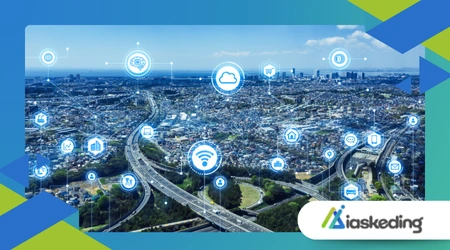
The Role of AI and IoT in Energy Optimization
Artificial intelligence is the silent architect behind smart cities’ energy efficiency.
Barcelona’s Sentilo platform uses IoT sensors to monitor street lighting, adjusting brightness based on real-time foot traffic. This alone saves 30% in energy costs annually.
Predictive analytics also prevent waste. In Tokyo, AI forecasts electricity demand with 95% accuracy, allowing utilities to balance supply dynamically.
Imagine a thermostat that learns an entire city’s rhythms—that’s the power of machine learning in energy grids.
Yet challenges persist. Cybersecurity risks loom as grids become more connected. Cities like Dubai counter this with blockchain-encrypted energy transactions, ensuring both transparency and security.
Transportation Revolution in Smart Cities
Smart cities are redefining urban mobility by integrating renewable energy into transportation networks.
Electric buses, like those in Shenzhen, now make up 100% of the city’s public transit fleet, reducing emissions by 48% since 2019.
Read more: Top 5 Electric Skateboards for Commuting and Fun
Charging stations powered by solar canopies and kinetic roads that generate electricity from vehicle movement demonstrate how infrastructure can serve dual purposes.
The rise of vehicle-to-grid (V2G) technology allows EVs to store and discharge energy back into the system during peak demand.
London’s pilot program with Nissan Leaf batteries has shown a 10% reduction in grid strain during high-usage periods.
Could this be the end of traditional power plants? While not immediate, the shift is undeniable.
Micro-mobility solutions, such as solar-powered e-scooters and bike-sharing systems, further decrease reliance on fossil fuels.
Paris’s Vélib’ program, now 80% powered by renewables, proves that small-scale innovations contribute significantly to a city’s energy ecosystem.
Waste-to-Energy: The Circular Economy in Action
Smart cities are turning waste into watts, closing the loop on sustainability.
Oslo’s waste-to-energy plants now convert 50% of household trash into heat and electricity, heating 160,000 homes annually.
This approach not only reduces landfill use but also cuts methane emissions—a greenhouse gas 25 times more potent than CO2.
Anaerobic digestion facilities, like those in San Francisco, transform organic waste into biogas, fueling municipal vehicles.
The city’s Zero Waste initiative has diverted 80% of refuse from landfills, showcasing how environmental and energy goals can align.
The next frontier? AI-powered sorting systems that increase recycling accuracy to 95%, minimizing contamination.
Rotterdam’s Smart Bin network uses sensors to optimize collection routes, slashing fuel consumption by 20%. In smart cities, even garbage has a purpose.
Resilience Against Climate Extremes
As climate change intensifies, smart cities are building energy systems that withstand disasters.
Miami’s storm-resistant solar microgrids kept hospitals running during Hurricane Ian, while Copenhagen’s flood-adaptive wind turbines pivot to avoid damage during severe weather.
Underground thermal storage, like Helsinki’s Väre system, stockpiles summer heat for winter use, ensuring consistent supply despite seasonal fluctuations.
Such innovations prove that renewables aren’t just cleaner—they’re more reliable.
Community microgrids also empower neighborhoods to operate independently during outages.
Brooklyn’s Sunswick project, a peer-to-peer solar trading network, maintained power during a 2024 blackout. In smart cities, energy isn’t just sustainable—it’s unshakable.
Conclusion
Smart cities are proving that sustainability and innovation are not mutually exclusive—they’re interdependent.
By harnessing renewables, these urban hubs are cutting emissions, lowering costs, and improving quality of life. The question isn’t whether this model will dominate; it’s how quickly the rest of the world will catch up.
The future of energy isn’t hidden in a lab or a policymaker’s desk—it’s unfolding on rooftops, in streets, and through the collective will of communities.
The revolution is here, and it’s powered by sunlight, wind, and human ingenuity.
Frequently Asked Questions
How do smart cities ensure energy reliability during unfavorable weather?
Advanced storage systems, like Tesla’s Megapack or hydrogen reserves, provide backup during low solar or wind activity. Grids also diversify sources to mitigate risks.
Are smart city initiatives economically viable for developing nations?
Yes. Projects like India’s Solar Cities Program show that scalable, phased investments make renewables accessible without straining budgets.
What’s the biggest obstacle to widespread adoption?
Legacy infrastructure. Retrofitting old grids requires capital, but long-term savings justify the shift.
Do residents have a say in these energy transitions?
Absolutely. Platforms like Amsterdam’s Energy Atlas empower citizens to track and influence local energy policies.
Will smart cities eventually eliminate fossil fuels entirely?
While complete eradication is ambitious, cities like Reykjavik (100% geothermal) prove it’s possible with the right resources.
