
Swap Station Pricing Models Reshape Electric Motorcycle Costs
Analyzing how Swap Station Pricing Models Reshape electric motorcycle ownership economics highlights a fundamental shift in urban mobility financing, battery lifecycle management, and fleet operational costs.
Separating the initial vehicle purchase price from battery ownership lowers upfront capital hurdles, making two-wheeled electric vehicles competitive with internal combustion engine models.
Commercial fleets and daily urban commuters leverage subscription-based energy access to eliminate battery degradation risks while securing predictable operating expenses across high-mileage routes.
Understanding commercial tariff structures, battery-as-a-service frameworks, and energy swap networks clarifies how modern rider billing models drive global light electric vehicle adoption.
How do battery-as-a-service structures lower initial motorcycle acquisition costs?
Decoupling battery costs from the chassis purchase reduces upfront vehicle retail prices by thirty to forty percent across major electric motorcycle segments.
Riders purchase the motorcycle frame and electric motor while subscribing to automated battery swap networks through monthly or pay-per-use tariff structures.
This separation shifts long-term battery degradation risks and replacement liabilities entirely from individual consumers to commercial network operators and utility providers.
Observing how Swap Station Pricing Models Reshape upfront consumer expenditures demonstrates how subscription mechanics accelerate urban fleet electrification across competitive transport markets.
What are the primary commercial billing models for battery swapping networks?
Subscription pricing generally falls into three operational tiers: flat-rate unlimited monthly access, distance-based energy packages, or pay-as-you-go per-kilowatt-hour billing structures.
Flat-rate monthly subscriptions serve high-frequency commercial delivery riders who require multiple daily battery swaps to maintain continuous urban delivery schedules.
Distance-based plans cater to daily urban commuters, offering fixed monthly swap allowances aligned with predictable workplace traveling distances.
Pay-as-you-go tariffs appeal to casual riders, charging fees based on consumed energy differentials measured during automated cabinet exchanges.
Financial Comparison of EV Two-Wheeler Energy Business Models
| Operational Metric | Traditional Fixed Battery Charging | Flat-Rate Swap Subscription | Pay-Per-Swap Energy Tariff |
| Upfront Vehicle Purchase Cost | Full vehicle and battery price | Chassis purchase only (Battery excluded) | Chassis purchase only (Battery excluded) |
| Battery Degradation Liability | Owner absorbs replacement costs | Network operator manages health | Network operator manages health |
| Refueling Downtime Duration | 2 to 6 hours static plug charging | Under 60 seconds automated swap | Under 60 seconds automated swap |
| Monthly Operating Predictability | Variable based on utility rates | Fixed monthly operational expense | Variable based on mileage covered |
Why do commercial delivery fleets prefer swap subscriptions over static plug charging?
Commercial delivery couriers maximize daily revenue by keeping vehicles moving rather than idling at static charging stations for multiple hours.
Read more: Electric Motorcycle Swappable Battery Network Limits
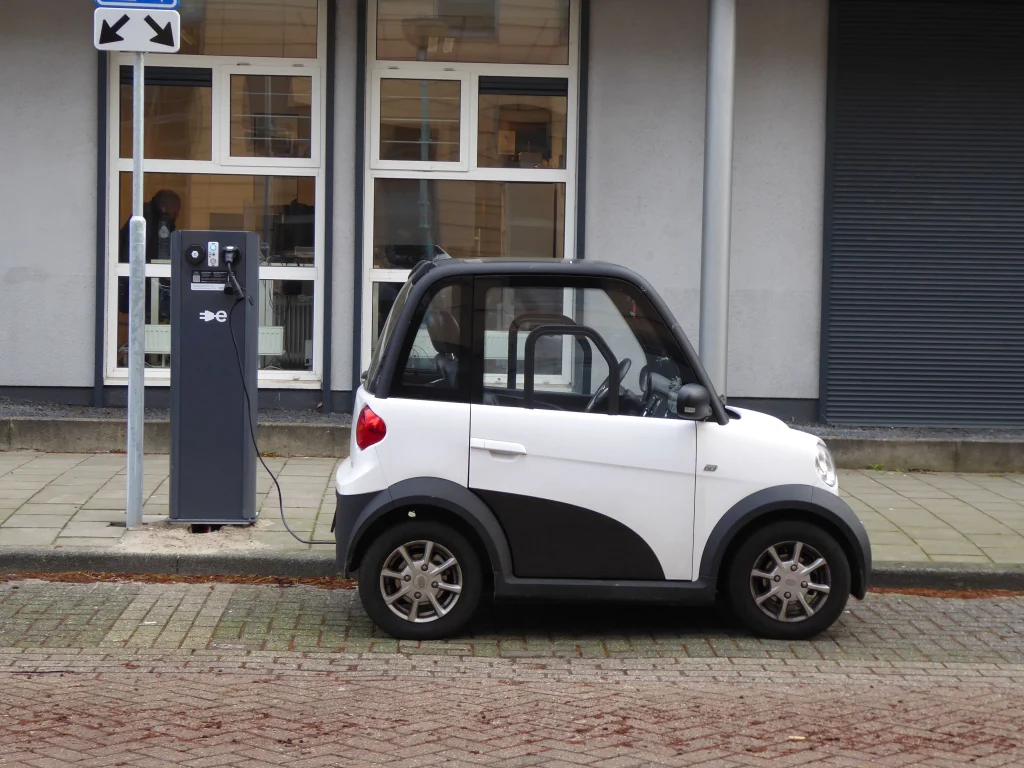
Swapping depleted battery packs for fully charged units in under one minute eliminates charging downtime, enabling multi-shift vehicle operations.
Predictable monthly swap subscription fees simplify corporate accounting, allowing logistics companies to project fleet operational expenditures with high accuracy.
Review electric vehicle infrastructure frameworks and grid integration guidelines maintained by the International Energy Agency (IEA) to examine global energy transitions.
How do smart grids and automated cabinets optimize swap pricing tariffs?
Automated swap cabinets charge depleted battery packs off-peak when electricity prices drop, storing low-cost energy for peak daytime rider demand.
Intelligent energy management platforms adjust local swapping tariffs dynamically, offering discounts to riders who exchange batteries at off-peak locations.
Read more: Electric Transport Battery Swapping Scaling in Cities
Grid-integrated battery storage cabinets can feed power back into local distribution grids during emergency peak hours, generating ancillary utility revenues.
Evaluating how Swap Station Pricing Models Reshape urban grid balancing emphasizes the dual role of battery swapping hubs as energy storage assets.
Which factors determine long-term total cost of ownership for riders?
Calculating total cost of ownership involves comparing daily fuel expenditures, battery lease terms, maintenance requirements, and resale value retention figures.
Eliminating engine oil changes, spark plug replacements, and clutch maintenance offsets monthly battery subscription fees for high-mileage commercial riders.
Learn more: Electric Transport Swap Battery Safety in Urban Housing
Standardized swappable battery formats preserve vehicle resale values, as secondary market buyers receive access to fresh, healthy battery packs.
Explore transportation safety research, vehicle standards, and electrification policies published by the U.S. Department of Transportation (DOT) for technical context.
Frequently Asked Questions (FAQ)
Is battery swap subscription cheaper than charging a fixed battery at home?
Home charging remains slightly cheaper per kilowatt-hour, but battery swapping eliminates expensive battery replacement costs and eliminates charging downtime completely.
What happens if a swappable battery pack degrades while in my possession?
Swapping cabinet sensors automatically detect degraded or damaged cells during exchanges, removing unhealthy packs from circulation for central recycling without rider penalties.
Do battery swapping stations require standardized battery designs across different brands?
Yes, successful swapping networks require shared physical dimensions, connector configurations, and communication protocols across participating electric motorcycle manufacturers.
Can commercial fleets customize swap tariff plans based on seasonal demand?
Most network operators offer scalable enterprise accounts that allow fleet operators to increase or pause swap allowances based on seasonal delivery volumes.
The reality that Swap Station Pricing Models Reshape two-wheeled transport economics positions swappable infrastructure as an essential driver of global urban electrification.
Lowering upfront purchase barriers while providing instant energy access delivers an unmatched balance of affordability, uptime, and operational predictability for modern riders.
