
Battery Leasing Trends Supporting Electric Motorcycle Growth
Analyzing Battery Leasing Trends Supporting electric motorcycle adoption reveals how decoupling energy storage costs from vehicle purchase prices lowers upfront entry barriers and accelerates urban fleet electrification globally.
Rising urban congestion, stringent emission regulations, and evolving delivery logistics demand affordable mobility alternatives that eliminate lengthy charging downtime while maintaining predictable operational expenses for commercial fleets.
What is battery leasing and how does it lower upfront purchase costs for riders?
Battery-as-a-Service models separate the recurring energy storage hardware cost from the electric motorcycle chassis, allowing consumers and fleet operators to purchase only the vehicle body.
Because energy storage units account for up to forty percent of total manufacturing expenses, removing them from initial retail sticker prices creates immediate price parity with traditional combustion-engine motorcycles.
Observing Battery Leasing Trends Supporting market growth demonstrates how monthly subscription models eliminate consumer anxiety regarding long-term pack degradation, shifting degradation risks entirely onto infrastructure operators.
Riders gain continuous access to fully tested, calibrated, and insured battery packs without worrying about expensive replacement costs when energy storage capacities naturally decline over time.
How do automated battery swapping stations eliminate long charging downtime?
Swapping infrastructure replaces depleted energy storage units with fully charged packs in under ninety seconds, bypassing traditional slow-charging bottlenecks that ground commercial riders for hours.
Automated kiosks monitor temperature, voltage, and state of health continuously during charge cycles, ensuring every swapped pack meets rigorous safety and performance standards before release.
The following comparative table illustrates real market parameters, operational metrics, and economic characteristics distinguishing traditional home charging setups from subscription-based battery swapping networks:
| Operational Metric / Feature | Traditional Fixed Battery System | Subscription Battery Swapping Network |
| Initial Upfront Hardware Cost | High (Includes full battery pack price) | Low (Chassis only, subscription fee applies) |
| Energy Replenishment Speed | 2 to 6 hours (AC/DC charging) | 1 to 2 minutes (Kiosk pack exchange) |
| Battery Degradation Risk | Borne entirely by individual owner | Managed and replaced by service operator |
| Primary Target Market Use Case | Commuters with dedicated overnight charging | Delivery drivers and high-mileage urban fleets |
Evaluating these distinct operational metrics highlights why high-mileage commercial couriers overwhelmingly favor subscription models to maximize active daily riding hours and income potential.
Why are commercial delivery fleets adopting subscription models so rapidly?
Last-mile delivery companies operate on tight margins where vehicle uptime, predictable maintenance schedules, and low cost-per-kilometer directly dictate business profitability across competitive urban markets.
Leasing structures convert volatile battery depreciation risks into fixed monthly operating expenses, simplifying corporate cash flow management while guaranteeing continuous fleet availability throughout work shifts.
To review official international energy statistics, transport policies, and global electric vehicle outlooks, explore the reports on the International Energy Agency (IEA).
Expanding Battery Leasing Trends Supporting two-wheeler adoption empower fleet managers to scale operations quickly without tying up massive capital reserves in depreciating battery assets.
Standardized modular battery packs allow mixed commercial fleets to share unified swapping networks, optimizing regional charging infrastructure utilization while reducing municipal grid pressures during peak hours.
Which technological advancements ensure battery safety and health management?
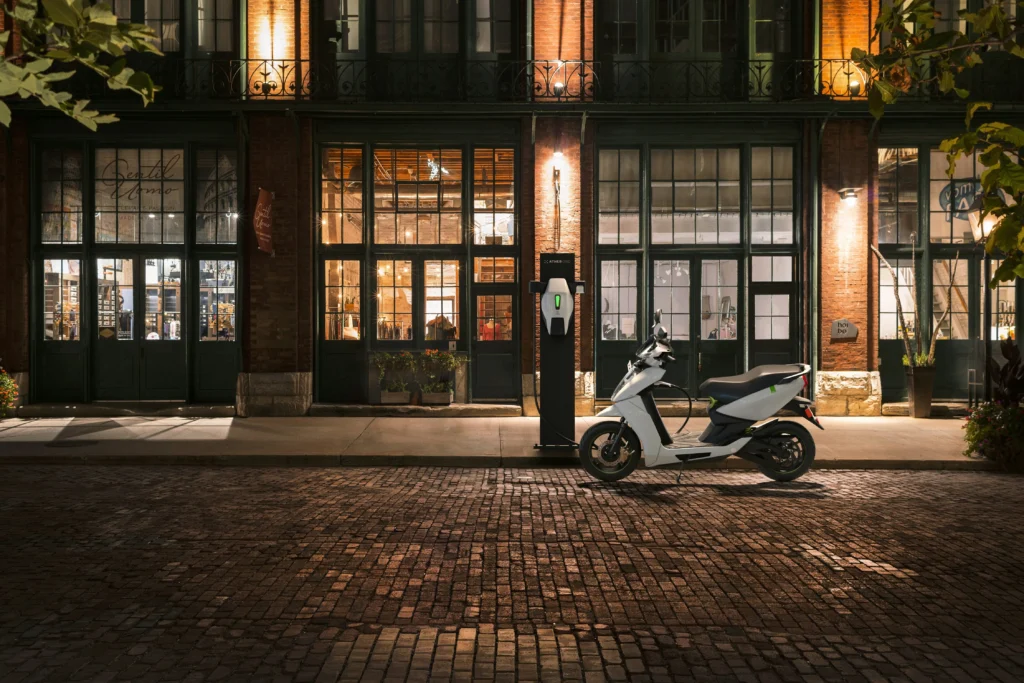
Cloud-connected battery management systems transmit real-time telemetry data regarding cell temperatures, internal resistance, charge cycles, and voltage balance to centralized network monitoring platforms.
Learn more: Subscription Models Emerging in Electric Motorcycle Markets
Predictive analytics identify thermal anomalies or minor cell imbalances early, allowing system operators to isolate vulnerable packs at swapping kiosks before potential hardware failures occur on public roads.
Centralized charging in climate-controlled kiosks extends overall lithium-ion cell lifespans significantly compared to irregular, unmonitored home charging using unstable residential electrical outlets.
When leased batteries reach end-of-life thresholds for automotive use, operators repurpose them into stationary energy storage systems, supporting circular economy practices and environmental sustainability initiatives.
What future regulatory frameworks will drive global two-wheeler swapping standards?
Government agencies increasingly incentivize standardized battery dimensions, connector interfaces, and communication protocols to build interoperable charging ecosystems across competing motorcycle manufacturers.
Universal battery physical formats allow riders to access dense swapping networks regardless of motorcycle brand, driving massive network effects and accelerating global urban electrification targets.
Read more: The Future of Solid-State Batteries in Electric Motorcycles
To analyze international transportation regulations, environmental standards, and sustainable mobility frameworks, consult the official resources at the United Nations Environment Programme (UNEP).
Understanding Battery Leasing Trends Supporting sustainable urban transport confirms that decoupled energy business models represent the future foundation of commercial and personal two-wheeler mobility worldwide.
Continued policy support and infrastructure investment will solidify battery-as-a-service as the primary catalyst for replacing fossil-fuel motorcycles across emerging and developed markets alike.
Transforming urban mobility through flexible energy access
Decoupling battery ownership from two-wheeler vehicles solves the core financial and operational challenges that historically hindered widespread electric motorcycle adoption across urban centers.

Emerging Battery Leasing Trends Supporting modular swapping networks deliver predictable costs, instant energy replenishment, and superior battery longevity for commercial and private riders.
Learn more: Mid Drive Motors Dominating Modern Electric Motorcycle Designs
Explore local battery subscription offerings, evaluate your daily mileage requirements, and transition to cleaner, more economical two-wheeler mobility with confidence today.
FAQ (Frequently Asked Questions)
Does battery leasing save money compared to buying a motorcycle with a fixed battery?
Yes. Leasing significantly lowers the initial vehicle purchase price, while monthly subscription fees are often offset by lower fuel and maintenance costs for high-mileage daily riders.
What happens if a leased battery degrades or loses total charge capacity?
The network operator bears full responsibility for battery health. If a pack falls below performance thresholds, the operator replaces or reconditions it at no extra cost to subscribers.
Can I charge a leased electric motorcycle battery at home overnight?
Many leasing programs offer hybrid options, providing a home charger alongside swapping network access for ultimate flexibility depending on your daily commuting routine.
Are leased motorcycle batteries standardized across different vehicle brands?
Major industry consortia are actively establishing standardized battery dimensions and voltage protocols, allowing interchangeable battery usage across participating motorcycle manufacturers globally.
