
EVs in the Real World: Traffic Jams, Detours, and Charging Fails
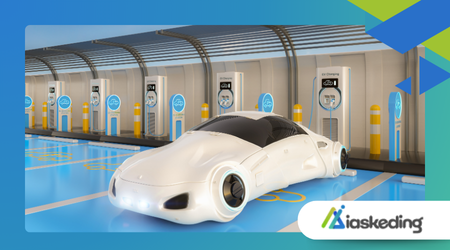
The truth about EVs in the real world is far more nuanced than the marketing suggests, filled with the same mundane, frustrating challenges every driver faces.
The romanticized image of electric vehicles is one of silent, swift, and eco-friendly travel. We see sleek designs gliding through futuristic cityscapes, effortlessly reaching their destination.
But what happens to the electric vehicle experience when the road gets real?
The Reality of Range Anxiety in Rush Hour
Anyone who drives an EV understands that range is not a fixed number. It’s a dynamic variable. Stop-and-go traffic, for example, is a double-edged sword for EV drivers.
While regenerative braking can recover some energy, the constant acceleration and deceleration can also drain the battery faster than cruising at a steady speed.
The advertised range on a highway might not hold up during a gridlock.
A colleague of mine recently experienced this firsthand on a trip from downtown Chicago to the suburbs.
What should have been a 45-minute drive turned into a two-hour ordeal. He watched his range estimation drop at a frightening pace, his anxiety mounting.
The fear of getting stuck with a dead battery on the side of a busy highway is a very real, and often overlooked, part of the ownership experience.
++ How to Calculate True EV Efficiency in Kilowatt-Hours per 100 km
The Unpredictable Nature of Detours
Navigation apps are a godsend, but they don’t always account for charging infrastructure.
A sudden road closure or a detour can add significant miles to a trip, turning a planned journey into a game of “will I make it?”
This adds a layer of complexity to route planning that internal combustion engine (ICE) drivers don’t have to consider.
Consider a family on a road trip. They’ve planned their stops around a specific fast charger on the main interstate. A detour due to an accident forces them onto a rural highway.
Suddenly, the nearest charger is 50 miles away, and they have to reconsider their entire plan, potentially losing hours of travel time.
This isn’t a hypothetical scenario. It’s a frequent challenge for those exploring outside of well-established EV corridors.
The Fickle Friend: Public Charging Stations
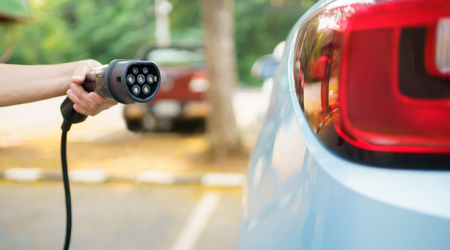
Finding a charging station is one thing; finding one that works is another. The public charging infrastructure is improving, but it’s far from perfect. It’s an issue that plagues EVs in the real world.
You pull up to a station, only to find a broken screen, a failed connection, or a charger already in use. It’s a frustrating lottery that can turn a quick top-up into a half-hour delay.
A recent study by J.D. Power, published in early 2025, revealed that a significant percentage of EV charging attempts fail.
Their data showed that a noticeable portion of public charging attempts were unsuccessful.
This frustration is compounded when drivers are on a tight schedule or are running low on battery. It’s a key pain point for EV adoption.
++ How to Know if a Used Electric Car Is Still a Good Deal
Navigating the Charging Queue
The charging experience is not always a solo one. As more EVs hit the road, the demand on public fast chargers is increasing.
This can lead to queues, especially at popular locations during peak travel times. The five-minute stop for gas turns into a 30-minute wait, then a 30-minute charge.
This adds a substantial amount of time to travel.
Imagine a busy weekend on a major interstate. Everyone is trying to get home. The two fast chargers at a rest stop are occupied, and two other vehicles are waiting.
This scenario isn’t just an annoyance; it’s a fundamental shift in how we think about refueling. Waiting in line for a charger is a new form of traffic jam.
Charging Failures: A Digital Problem
Charging fails can be a mystery. Is it the car? The charger? The network?
The problem isn’t always physical. It can be a software glitch, a communication error between the vehicle and the charging station.
This digital complexity adds another layer of potential failure, one that’s unfamiliar to drivers used to the mechanical simplicity of a gas pump.
A user at an Electrify America station might try to initiate a charge only to receive an error message on the screen.
The network might be down, the payment system might be unresponsive, or there could be a compatibility issue with the vehicle’s software.
This is a common and vexing issue for those operating EVs in the real world.
++ Can Your Electric Car Power Your Home During an Outage?
The Charging Infrastructure and Human Behavior
The analogy of the public charging network is like a series of scattered, sometimes-functional water fountains in the middle of a desert.
You might find one, but will it be working? And will there be a line? This analogy highlights the current gap between the dream of seamless EV travel and the reality of a patchwork infrastructure.
This isn’t to say that all public charging is bad. Many stations work perfectly.
However, the inconsistency is a significant barrier to mainstream adoption. People need reliability, and right now, the infrastructure doesn’t always provide it.
The challenge is not just building more chargers, but building more reliable and integrated systems. The development of robust charging infrastructure is a critical next step for the industry.
| Charging Scenario | ICE Vehicle Experience | EVs in the real world Experience |
| Rush Hour | Lower fuel efficiency, but no range anxiety. | Regenerative braking helps, but range is unpredictable. |
| Detours | A quick stop at any gas station along the new route. | Requires re-routing to find a compatible charger. |
| Charger Availability | Numerous gas stations, low chance of a wait. | High demand at popular locations, potential for queues. |
| “Refueling” Time | 5-10 minutes. | 20-40 minutes (for fast charging). |
| System Failures | Very rare pump or payment failures. | Software and network issues can cause charging failures. |
The Path Forward: A Call for Robustness
The challenges faced by EVs in the real world are not insurmountable. They represent the growing pains of a new technology.
The key to solving these issues lies in building a more resilient, widespread, and reliable charging network.
It requires collaboration between car manufacturers, charging companies, and governments to standardize technology and improve user experience.
The future of EVs is bright, but it requires a realistic assessment of the present. We can’t ignore the traffic jams, the detours, and the charging fails.
Addressing these issues head-on is crucial for building consumer trust. The widespread adoption of EVs in the real world depends on it.
Dúvidas Frequentes
Q1: Is it really that bad to own an EV?
No, it’s not. The challenges are real, but they are manageable. For many people with home charging, the daily experience is excellent. The issues primarily arise on long-distance trips.
Q2: Is the technology for charging getting better?
Yes, it is. New technologies are being developed to improve charging speed, reliability, and network communication. More chargers are also being installed daily.
Q3: How can I avoid these problems as an EV owner?
Planning is key. Use reliable apps to check charger status and plan routes with charging stops in mind. Consider investing in a home charger if possible to handle most of your daily needs.
