
Can Your Electric Car Power Your Home During an Outage?
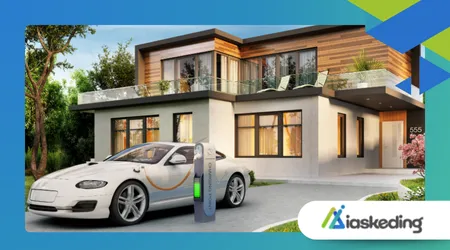
The idea of using an electric car to power your home during an outage is no longer futuristic—it’s happening now.
As climate change fuels more extreme weather and aging power grids struggle to keep up, homeowners are searching for reliable backup solutions.
Enter the electric vehicle (EV), which is quietly evolving from mere transportation into a mobile power station.
But how viable is this really? Can your EV truly keep the lights on when the grid goes dark? The answer is yes—with some important caveats.
Not all electric cars can do it, and not all homes are set up to take advantage of this feature. Yet, for those with the right technology, the benefits are undeniable.
Imagine a major storm knocks out power for days. While your neighbors scramble for generators, you simply plug your car into your home’s energy system.
The fridge stays cold, the Wi-Fi stays on, and critical medical devices keep running. This isn’t a hypothetical scenario—it’s already happening in places where Vehicle-to-Home (V2H) technology is in use.
The potential here is massive. With millions of EVs on the road, we’re looking at a decentralized energy network that could make blackouts a thing of the past.
But before we get ahead of ourselves, let’s break down how this works, who’s leading the charge, and what you need to make it a reality in your own home.
The Rise of Bidirectional Charging: More Than Just a Gimmick
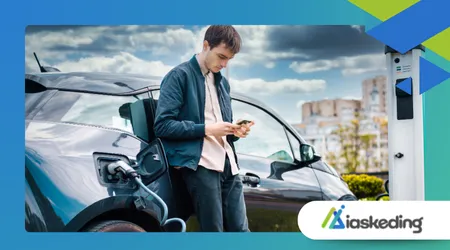
Bidirectional charging is the breakthrough making all of this possible. Unlike traditional charging, which only pulls electricity from the grid to the car, this technology allows energy to flow both ways.
That means your EV’s massive battery can send power back—to your house, the grid, or even another EV.
++How to Plan a Road Trip on an Electric Motorcycle
Ford was one of the first major automakers to embrace this with the F-150 Lightning, which includes an onboard system capable of powering an average home for up to three days.
Hyundai followed suit with its IONIQ 5, and Nissan has been experimenting with V2H capabilities in its Leaf for years.
A 2024 study by the National Renewable Energy Laboratory (NREL) found that a single EV battery could sustain essential home loads for 48 to 72 hours, depending on usage.
That’s a lifeline during prolonged outages, especially in disaster-prone regions.
But why isn’t this standard yet? The main hurdles are infrastructure and cost. Most homes aren’t equipped with bidirectional chargers, and retrofitting isn’t cheap.
Additionally, not all EVs support the feature—yet. However, as more automakers commit to bidirectional tech, these barriers will quickly fall.
++The Surprising Differences Between AC and DC Charging
Some utilities are even incentivizing V2H adoption. In Vermont, Green Mountain Power offers rebates for customers who use their EVs as backup power, recognizing the broader grid benefits.
This kind of support will be crucial in scaling the technology.
How It Works: The Nuts and Bolts of V2H
For an electric car to power your home during an outage, three key components must align:
1. A Bidirectional Charger
Standard chargers are one-way streets—energy flows in, but not out.
++Electric Car Depreciation: A Model-by-Model Breakdown
Bidirectional chargers, like those from Wallbox or Fermata Energy, act as two-way conduits. They’re the bridge between your car’s battery and your home’s electrical system.
2. A Compatible Electric Vehicle
Not all EVs can send power back. As of 2025, the most notable models with V2H capabilities include:
- Ford F-150 Lightning (up to 9.6 kW output)
- Hyundai IONIQ 5 (3.6 kW output)
- Nissan Leaf (older models with CHAdeMO ports)
- Upcoming GM Ultium-based EVs (expected 2026)
3. A Home Energy Management System
This is the brain of the operation. Systems like Sunrun’s Brightbox or dcbel’s home energy station manage power flow, ensuring your home draws from the car only when needed.
Without this, you risk draining your EV battery too quickly.
The Switchover Process
When the grid fails, a properly configured system automatically disconnects from the utility (to prevent backfeeding, which can endanger repair crews) and switches to the EV’s power.
The transition is seamless—often taking less than a second.
Real-World Examples: Who’s Actually Doing This?
1: Surviving a Texas Winter Storm
In February 2025, another brutal freeze left thousands without power. But Lisa from Austin kept her home running for two full days using her F-150 Lightning.
She prioritized her refrigerator, Wi-Fi router, and a space heater, cycling usage to conserve energy.
2: Hurricane Backup in Florida
After Hurricane Ian, Mark in Tampa used his Nissan Leaf to power essential medical equipment for his elderly mother.
While neighbors relied on noisy, gas-guzzling generators, his setup was silent and emission-free.
These stories highlight the real-world potential—but also the limitations. Neither Lisa nor Mark could power their entire homes indefinitely. Strategic load management was key.
Read more: Electric Vehicles: A Better Alternative to Generators for Emergency Power
The Limitations: What Your EV Can’t Do (Yet)
While V2H is revolutionary, it’s not a magic bullet. Here’s what you need to consider:
1. Battery Capacity Constraints
A typical EV holds 60–100 kWh, enough for essentials but not whole-home backup. High-draw appliances (like air conditioners or electric stoves) will drain the battery fast.
2. Not All EVs Support It
Tesla, the EV market leader, still doesn’t offer bidirectional charging (though rumors suggest a 2026 rollout). If you drive a Model Y, you’re out of luck—for now.
3. Upfront Costs
A full V2H setup—including charger, installation, and home integration—can run $5,000–$10,000. That’s steep, though still cheaper than a whole-house generator.
The Future: Where V2H Is Headed
Automakers are betting big on bidirectional tech. GM’s Ultium platform will make it standard by 2026, and startups like dcbel are streamlining home integration.
Utilities are also waking up to the potential. In California, PG&E is testing V2G (Vehicle-to-Grid) programs, where EVs stabilize the grid during peak demand.
This could turn EV owners into mini power suppliers, earning credits for feeding energy back.
Final Verdict: Should You Rely on Your EV for Backup Power?
If you live in an area prone to outages and own a compatible EV, yes—it’s a smart investment. But if you’re expecting a Tesla Powerwall-level solution, temper your expectations.
The technology is still evolving, but the trajectory is clear: within a few years, using an electric car to power your home during an outage will be as normal as charging your phone with a power bank.
Dúvidas Frequentes (FAQs)
1. Can any electric car power a home?
No—only models with bidirectional charging capability (e.g., Ford F-150 Lightning, Hyundai IONIQ 5) can do this.
2. How long can an EV power a home?
Depending on usage, 1–3 days for essential loads (fridge, lights, Wi-Fi). High-power devices reduce this significantly.
3. Is it safe to use my EV as a backup power source?
Yes, if installed correctly. Proper isolation from the grid (to prevent backfeed) is critical.
4. Will using my car for home power damage the battery?
Not significantly. Most EVs buffer a portion of the battery to prevent deep discharge, preserving longevity.
5. What’s the cost of setting up V2H?
Between $3,000–$10,000, depending on equipment and installation complexity.
References & Further Reading:
