
Battery innovations powering electric transport
The market for electric vehicles has been steadily growing, drawing us closer to a cleaner, greener future with the help of battery innovations.
Batteries are at the core of these vehicles, providing the necessary power to propel them forward, making electric transport a reality. This growth is driven by the need for sustainable energy solutions, and battery innovations are playing a crucial role in this transition.
As we look to the future of electric transport, it’s clear that battery innovations will continue to shape the industry. With companies like Tesla and GM leading the charge, we can expect to see significant advancements in battery technology, from improved efficiency to increased sustainability. The use of lithium-ion batteries, for example, has become widespread in electric vehicles due to their high energy per unit mass and volume, alongside a high power-to-weight ratio, high energy efficiency, and long life.
The global energy storage market is projected to grow 30% annually to 2030, according to BloombergNEF, with sodium-sulphur batteries and other technologies emerging as key players in the storage of renewable energy. As the demand for electric vehicles continues to rise, the automotive industry’s demand for batteries increases production volumes, leading to cost reductions and improvements in technology reliability and safety, ultimately driving the growth of sustainable energy solutions and electric transport.
The Evolution of Electric Vehicle Batteries
Electric vehicle batteries have come a long way since the invention of the first rechargeable battery, a lead-acid battery, by Gaston Planté in 1859. This innovation allowed for the flow of electrons to be reversed to recharge the battery from an outside electrical source, paving the way for the development of electric vehicle batteries. Over the years, lithium-ion batteries have become the preferred choice for electric vehicles due to their high energy per unit mass and volume relative to other energy storage systems.
Some notable milestones in the evolution of electric vehicle batteries include the development of the first electric car with regenerative braking by Louis Antoine Krièger in 1894, and the introduction of electric vehicles with a range of 60 miles in the late 1990s. Today, electric vehicles are becoming increasingly popular, with more than 3 percent of new vehicle sales being electric vehicles.
Here are some key advantages of lithium-ion batteries:
- High energy density
- Long cycle life
- Low self-discharge rate
As technology continues to advance, we can expect to see further improvements in the performance and efficiency of electric vehicle batteries and energy storage systems, making electric vehicles an even more attractive option for consumers.
| Year | Electric Vehicle Sales |
|---|---|
| 2020 | 6.6 million |
| 2023 | 7.6% of total vehicle sales in America |
Understanding Modern Battery Architecture
Modern battery architecture is a complex system that involves the design and development of cell design and energy storage systems. The term “battery” was first coined by Benjamin Franklin in 1749, and since then, batteries have evolved significantly. Today, batteries play a crucial role in powering electric vehicles, renewable energy systems, and portable electronics.
The battery architecture of a battery refers to the overall design and configuration of the battery cells, modules, and packs. It involves the selection of materials, the design of the cell and module, and the integration of the battery management system. A well-designed battery architecture can significantly impact the performance, efficiency, and safety of the battery.
Some of the key factors that influence battery architecture include the type of cell design, the energy storage capacity, and the power output. For example, lithium-ion batteries have a high energy density and are widely used in electric vehicles and portable electronics. On the other hand, lead-acid batteries have a lower energy density but are still widely used in automotive and renewable energy applications.
The development of advanced energy storage systems is critical to the widespread adoption of electric vehicles and renewable energy technologies. These systems involve the use of advanced materials, designs, and technologies to improve the efficiency, safety, and cost-effectiveness of energy storage. Some of the key technologies being developed include solid-state batteries, lithium-air batteries, and flow batteries.
In conclusion, modern battery architecture is a complex and evolving field that involves the design and development of advanced cell design and energy storage systems. As the demand for electric vehicles and renewable energy technologies continues to grow, the development of advanced battery architecture will play a critical role in enabling the widespread adoption of these technologies.
| Battery Type | Energy Density | Power Output |
|---|---|---|
| Lithium-ion | High | High |
| Lead-acid | Low | Low |
| Nickel-metal hydride | Medium | Medium |
Revolutionary Battery Innovations in Electric Transport
Revolutionary battery innovations are transforming the electric transport sector, with solid-state batteries and sodium-ion batteries leading the charge. These emerging technologies offer improved safety, energy density, and charging speeds, making them ideal for electric vehicles. For instance, electric motorcycles are benefiting from these advancements, with some models boasting zero emissions and instant torque.
CATL’s introduction of the TECTRANS battery system at IAA Transportation 2024 has revolutionized the commercial transportation sector. The TECTRANS – T Superfast Charging Edition for heavy-duty trucks offers a 70% charge in just 15 minutes, while the TECTRANS – T Long Life Edition sets an industry benchmark with a lifespan of up to 15 years or 2.8 million kilometers. These innovations demonstrate the potential of revolutionary battery innovations to drive the adoption of electric vehicles.
Some key benefits of these battery innovations include:
- Improved energy density, resulting in longer ranges and reduced charging times
- Enhanced safety features, such as reduced risk of thermal runaway
- Increased efficiency, leading to lower operating costs and reduced environmental impact
As the demand for electric vehicles continues to grow, sodium-ion batteries and solid-state batteries are poised to play a crucial role in shaping the future of the industry. With their improved performance, safety, and efficiency, these revolutionary battery innovations are set to drive the next wave of electric vehicle adoption, enabling a more sustainable and environmentally friendly transportation sector.
| Battery Type | Energy Density | Charging Speed |
|---|---|---|
| Lithium-ion | 240 Wh/kg | 30 minutes to 1 hour |
| Sodium-ion | 150 Wh/kg | 15 minutes to 30 minutes |
| Solid-state | 300 Wh/kg | 5 minutes to 15 minutes |
Improving Battery Performance and Efficiency
Researchers have been continuously working to enhance battery performance and efficiency by exploring alternative chemistries and advances in materials. This has led to significant improvements in the range and charging time of electric vehicles.
Some of the key areas of research include:
- Exploratory Battery Materials Research
- Applied Battery Research
- Advanced Battery Development, System Analysis, and Testing
The goal of this research is to reduce the cost, volume, and weight of batteries while simultaneously improving their performance and tolerance to abuse conditions. For example, the Vehicle Technologies Office aims to reduce the cost of electric vehicle batteries to less than $100/kWh, ultimately reaching $80/kWh.
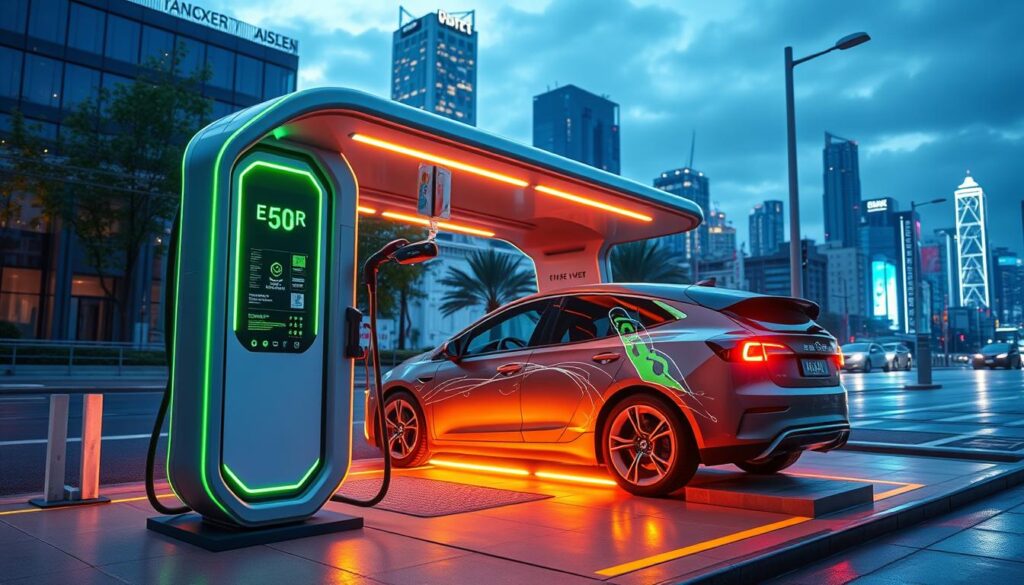
Additionally, researchers are working on developing battery cells and modules that can significantly reduce battery cost, increase life, and improve efficiency, particularly tailored for specific vehicle applications. The U.S. Advanced Battery Consortium goals include achieving 80% charge in under 15 minutes with 275 watt-hour/kilogram cells, a 1000-cycle lifespan, and 15 years of battery life.
| Research Area | Goal |
|---|---|
| Exploratory Battery Materials Research | Improve battery performance and efficiency |
| Applied Battery Research | Develop new battery materials and technologies |
| Advanced Battery Development, System Analysis, and Testing | Reduce battery cost and increase lifespan |
Fast-Charging Technologies Transforming Electric Transport
Fast-charging technologies are revolutionizing the electric transport industry, enabling the widespread adoption of electric vehicles. Ultracapacitors play a crucial role in this transformation, storing energy in the interface between an electrode and an electrolyte when voltage is applied. This results in very high power density, allowing for high amounts of power to be delivered in a short time.
Some notable advancements in fast-charging technologies include the development of energy storage systems that can charge electric vehicles to 80% in under 10 minutes. Companies like CATL are introducing innovative products, such as the T Superfast Charging Edition, which offers a 70% charge in 15 minutes due to its remarkable 4C peak charging rate.
The benefits of fast-charging technologies are numerous, including:
- Increased energy density, resulting in smaller and more efficient batteries
- Faster charging times, reducing range anxiety and making electric vehicles more practical for daily use
- Improved safety, with advanced technologies like ultra-stable interfaces and enhanced cell service life
As the demand for electric vehicles continues to grow, the need for convenient and efficient fast-charging solutions becomes increasingly important. With ongoing investments in research and development, we can expect to see significant advancements in fast-charging technologies, ultracapacitors, and energy storage systems in the near future.
| Technology | Charging Time | Energy Density |
|---|---|---|
| CATL T Superfast Charging Edition | 15 minutes | 175Wh/kg |
| Group14’s silicon-carbon battery material | less than 10 minutes | up to 50% greater energy density |
Sustainable Battery Manufacturing
Sustainable battery manufacturing is crucial for reducing waste and minimizing environmental impact. The production of electric vehicle batteries requires significant amounts of energy and resources, resulting in greenhouse gas emissions. However, by implementing sustainable practices, manufacturers can reduce their environmental footprint. For instance, recycling lithium-ion batteries can help conserve natural resources and decrease the amount of waste sent to landfills.
Some of the benefits of sustainable battery manufacturing include:
- Conservation of natural resources
- Reduced greenhouse gas emissions
- Decreased waste sent to landfills
A circular economy that includes battery recycling can reduce the lifecycle emissions associated with battery production by 7-17%. Additionally, recycling can produce 80% fewer emissions than extraction. As the demand for electric vehicles continues to grow, sustainable battery manufacturing will play a vital role in reducing the environmental impact of the transportation sector.
By adopting sustainable practices, manufacturers can not only reduce their environmental footprint but also improve their bottom line. Sustainable battery manufacturing is an essential step towards a more environmentally friendly transportation sector.
| Benefits of Sustainable Battery Manufacturing | Description |
|---|---|
| Reduced Greenhouse Gas Emissions | Decrease in emissions through recycling and sustainable practices |
| Conservation of Natural Resources | Preservation of natural resources through recycling and efficient use |
| Decreased Waste | Reduced waste sent to landfills through recycling and proper disposal |
Battery Recycling and Environmental Impact
Battery recycling is crucial for reducing waste and minimizing the environmental impact of electric vehicle production. The U.S. Department of Energy is supporting the Lithium-Ion Battery Recycling Prize to develop and demonstrate profitable solutions for collecting, sorting, storing, and transporting spent and discarded lithium-ion batteries for eventual recycling and materials recovery. This initiative aims to promote sustainable battery recycling practices and reduce the environmental cost of mining lithium, cobalt, and nickel.
Recycling electric car batteries can significantly reduce the carbon footprint associated with manufacturing new batteries. According to studies, recycling can bring $164 to $700 more per ton of lithium carbonate equivalent than direct lithium extraction and conventional mining. Additionally, a circular battery economy can reduce emissions related to EV production and decrease reliance on virgin materials.
- Reducing the release of toxic chemicals into the environment
- Conserving finite resources such as lithium, cobalt, and nickel
- Decreasing the carbon footprint associated with manufacturing new batteries
By adopting sustainable battery recycling practices, we can minimize the environmental impact of electric vehicle production and promote a more circular economy.
As the demand for electric vehicles continues to grow, it is essential to develop and implement effective battery recycling strategies. By doing so, we can reduce waste, minimize environmental pollution, and promote a more sustainable future for the automotive industry. Reducing waste and promoting environmental sustainability are crucial for the long-term success of the electric vehicle market.
Cost Analysis and Market Dynamics
The electric vehicle batteries market is experiencing rapid growth, with sales doubling every two to three years over the past thirty years. This growth is driven by the rise of electric cars, with cost analysis playing a crucial role in the industry’s development. The cost of material recovery remains a challenge, and researchers are working to develop more efficient and cost-effective recycling processes.
Market dynamics are influenced by ongoing technological advancements, scalability of battery production, and regulatory support. The global EV Battery market is valued at USD 104,495.8 million in 2022 and is expected to reach USD 533,343.1 million by 2029, indicating substantial growth. Key factors driving this growth include:
- Decreasing battery costs, with a 99% reduction over the last 30 years
- Increasing energy density, with a fivefold increase over the last 30 years
- Government policies and regulatory support for the adoption of electric vehicles
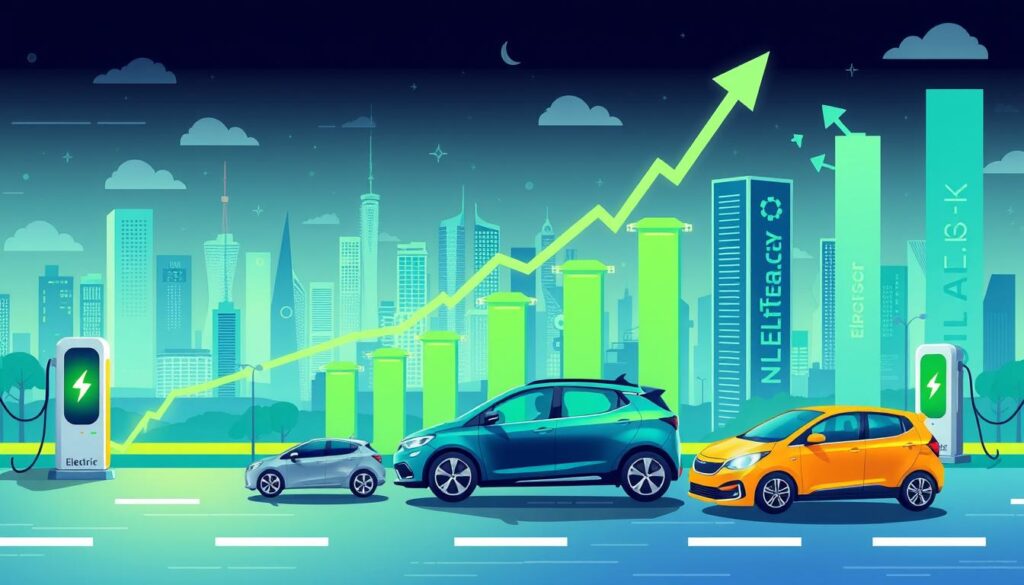
As the industry continues to evolve, cost analysis and market dynamics will play a crucial role in shaping the future of electric vehicle batteries. With the forecast indicating significant growth and opportunities for businesses in the EV Battery market, it is essential to stay informed about the latest developments and trends in the industry.
Integration Challenges and Solutions
As the world shifts towards electric vehicles, the transport industry faces significant integration challenges in incorporating these vehicles into existing infrastructure. One major hurdle is the need for standardized charging systems and grid management, which poses technical hurdles that must be overcome. Governments and industry leaders are working together to establish regulatory frameworks that promote the widespread adoption of electric vehicles.
Some of the key challenges in integrating electric vehicles into the existing transportation infrastructure include:
- High infrastructure costs
- Expensive electric vehicles
- Scarcity of charging stations
- Limited vehicle range
Despite these challenges, many countries are making significant strides in promoting the adoption of electric vehicles. For example, China aims to have electric vehicles account for 20% of total new car sales by 2025, while the European Union has set a goal of having at least 50% of new car sales be electric by 2035. To achieve these goals, governments and industry leaders must work together to address the integration challenges and technical hurdles that stand in the way of widespread electric vehicle adoption.
By establishing clear regulatory frameworks and investing in the development of new technologies, we can overcome the integration challenges and create a more sustainable transportation system for the future.
Future Prospects of Battery Technology
The future prospects of battery technology are promising, with emerging trends and innovations driving the next wave of electric vehicles. Solid-state batteries and sodium-ion batteries are expected to play a significant role in this development, enabling faster charging, longer ranges, and improved safety.
Some of the key developments in battery technology include the use of silicon anodes in lithium-silicon batteries, which can increase the capacity of lithium-ion batteries by up to ten times. Additionally, companies like NAWA Technologies and SVOLT are working on innovations such as ultra-fast carbon electrodes and cobalt-free batteries, which offer higher energy density and longer ranges.
The future prospects of battery technology are not limited to these developments. Researchers are also exploring new materials and technologies, such as sand batteries and nanowire batteries, which have the potential to provide better performance and longer lifetimes. As the demand for electric vehicles continues to grow, the emerging trends and innovations in battery technology will play a crucial role in shaping the industry.
- StoreDot’s organic peptide compound-based chargers, which can recharge EV batteries in five minutes
- Toyota’s solid-state battery using sulfide superionic conductors, which can charge in just seven minutes
- Ryden’s dual carbon technology, which allows for EV batteries that are more sustainable and environmentally friendly
These developments demonstrate the rapid progress being made in battery technology and highlight the excitingfuture prospectsof this field.
Global Innovation Hubs and Research Centers
Global innovation hubs and research centers play a crucial role in driving innovation in the field of electric vehicle batteries. These hubs bring together experts from various fields to collaborate and develop new technologies. The Chemours Battery Innovation Center (CBIC) is an example of such a hub, where researchers are working on developing more sustainable and cost-effective battery technologies.
Some of the key features of global innovation hubs and research centers include:
- State-of-the-art laboratory facilities
- Collaboration with industry partners and academia
- Focus on developing sustainable and cost-effective technologies
For instance, the CBIC is a state-of-the-art laboratory facility that supports the testing and scaling of next-generation battery technologies. Similarly, Volkswagen’s Innovation Hub in Knoxville is working on breakthroughs in automotive lightweight composites, recyclable interior materials, and EV wireless charging. These research centers are driving innovation and helping to advance the field of electric vehicle batteries.
The importance of global innovation hubs and research centers cannot be overstated. They provide a platform for experts to come together and develop new technologies, which can then be used to improve the efficiency and sustainability of electric vehicle batteries. By supporting these hubs, we can help to drive innovation and create a more sustainable future for transportation.
| Innovation Hub | Location | Focus Area |
|---|---|---|
| Chemours Battery Innovation Center | Newark, Delaware | Battery technologies |
| Volkswagen Innovation Hub | Knoxville, Tennessee | Automotive lightweight composites, recyclable interior materials, and EV wireless charging |
Conclusion: Powering the Future of Electric Mobility
As the world embraces the transition to electric mobility, the future looks increasingly bright. Breakthroughs in battery technology, coupled with sustainable manufacturing practices and integrated transportation systems, are paving the way for a cleaner, more efficient future. By 2025, innovative battery chemistries like solid-state and lithium-sulfur are expected to revolutionize energy storage, offering enhanced safety and performance. Stricter regulations on sustainability and safety will drive the industry to new heights, ensuring electric vehicles become the go-to choice for environmentally conscious consumers.
The rise of long-duration battery solutions and advancements in charging infrastructure will further accelerate the adoption of electric mobility. With major automakers committed to an all-electric future, the demand for lithium and other crucial battery metals is surging, prompting a need for resilient global supply chains. Through continued investment in research and development, the electric vehicle sector is poised to deliver a sustainable and transformative mobility experience that will shape the decades to come.
FAQ
What is the current state of the battery technology industry?
How have electric vehicle batteries progressed over time?
What are the key components of modern battery architecture?
What are some of the revolutionary battery innovations in electric transport?
How are advances in materials and manufacturing improving battery performance and efficiency?
What role do fast-charging technologies play in the future of electric transport?
How is the industry addressing sustainable battery manufacturing?
What are the environmental impacts of battery recycling and disposal?
How do cost and market dynamics affect the electric vehicle battery industry?
What are the key integration challenges and solutions for electric vehicles?
What are the future prospects of battery technology?
What are the global innovation hubs and research centers driving advancements in battery technology?
