
Electric Trucks in Construction: Can They Replace Heavy-Duty Diesel Machines?
The construction industry is on the brink of a major transformation, driven by the increasing push towards sustainable construction and reducing carbon footprints. Electric trucks are emerging as potential game changers, positioned to take on the roles traditionally held by heavy-duty diesel machines. This shift towards electrification is not just a fleeting trend but a critical response to growing environmental concerns and tightening government regulations.
As we delve into this topic, we will explore whether electric trucks can genuinely replace diesel machines in construction. With technological advancements in electric vehicles and the economic impacts on the industry, the potential for a seamless transition is both promising and challenging. We will also examine the readiness of the market, which is bolstered by policies mandating the switch to zero-emission vehicles, such as California’s regulations that require large trucking fleets to be all-electric by 2045.
Given these factors, the question remains: can electric trucks rise to the occasion and truly outperform their diesel counterparts on construction sites? Join us as we unravel the intricate details behind this transformative shift.
Introduction to Electric Trucks in Construction
The emergence of electric construction vehicles represents a significant shift towards embracing green construction technology. Traditionally dominated by diesel-powered machinery, the construction sector is now witnessing a growing interest in electric trucks, driven by various factors ranging from environmental benefits to advancements in battery technology.
The integration of innovation in construction is becoming evident with electric trucks that offer several advantages over conventional diesel machines. For instance, they boast lower variable operating costs and can achieve total cost of ownership parity in as little as four years. Additionally, electric trucks are free of CO2 emissions and pollutants, making them an excellent choice for sustainable development initiatives.
One notable example is the new generation of electric trucks from MAN. These vehicles provide daily ranges of up to 800 kilometers, ensuring extensive coverage for various construction needs. Models like the MAN eTGX and MAN eTGS are equipped with a battery capacity of up to 480 kWh, and their notable charging systems such as the Combined Charging System (CCS) and Megawatt Charging System (MCS) ensure quick and efficient recharging, with some options reaching up to 750 kW.
The battery development is critical for e-mobility, as highlighted by MAN’s commitment to manufacturing batteries with a lifespan of up to 1.6 million kilometers or 13 years. This focus on battery technology not only supports longer vehicle life but also ensures fewer interruptions during project completions.
Looking at global trends, the adoption of electric construction vehicles is gaining momentum. For instance, in South Korea, 7.6% of domestically produced and sold trucks in 2020 were all-electric vehicles. Moreover, significant market players such as Amazon, UPS, and FedEx are increasingly investing in electric trucks for last-mile delivery, showcasing the practical applications of this technology in various sectors.
With construction giants like Ford, Rivian, and General Motors manufacturing all-electric models, the future certainly looks promising. Innovation in construction is set to redefine industry standards, making electric trucks a viable and smart choice for moving towards a greener future.
| Feature | Electric Trucks | Diesel Trucks |
|---|---|---|
| Daily Range | Up to 800 km with 45-minute breaks | 400-600 km with refueling breaks |
| Charging/Fueling Time | 45 minutes (CCS) | 10-15 minutes (refueling) |
| Emissions | Zero CO2 and pollutants | High CO2 and pollutants |
| Noise Emissions | Significantly lower | High |
| Battery Lifespan | Up to 1.6 million kilometers | Not applicable |
Current State of Diesel Machines in Construction
In the current construction landscape, diesel construction equipment reigns supreme, with over three-fourths of all heavy construction equipment powered by diesel technology. This reliance extends further as diesel accounts for 55% of off-road fuel use in the sector and constitutes a staggering 98% of all energy use in construction.
The impact of diesel engines on this industry is profound, creating nearly $1.8 trillion worth of structures annually and employing approximately 7.8 million people. However, the adverse environmental impact of diesel engines has been a point of concern, particularly in urban construction areas where air quality is a pressing issue.
To mitigate the negative implications, the EPA emissions standards have played a crucial role in shaping the development and usage of diesel machinery. Since the introduction of advanced diesel technology engines in 2014, there has been a significant 90% reduction in particulate matter emissions and nitrogen oxide emissions, marking a considerable improvement over previous generations. Additionally, renewable low-carbon biobased diesel fuels can cut greenhouse gas emissions by 50-80%, and using biobased renewable diesel fuels lowers carbon emissions by 50-85%.
Nonetheless, the diesel engine impact remains substantial. As cleaner alternatives like electric construction equipment continue to emerge, driven by innovations in battery technology and growing environmental regulations, the construction industry stands at a critical juncture. The push for electrification, influenced by major initiatives and investments, signals a pivotal shift aiming to balance performance with sustainability in the ever-evolving landscape of heavy construction equipment.
Reasons Behind the Shift to Electrification
As the world grapples with the urgent need to address climate change, the construction industry is experiencing a significant transformation through the electrification of construction equipment. This major shift is driven by a variety of factors aimed at promoting both economic and environmental sustainability in construction.
One of the primary reasons for adopting electric solutions is the imperative of reducing carbon footprint. This is particularly urgent considering that heavy-duty vehicles, trucks, and buses, though accounting for a mere 10% of road vehicles, significantly contribute to greenhouse gas (GHG) emissions. Complying with global emission reduction standards, like the European (EU) Stage V Emission Regulations and China VI Emission Standard, is critical. Recent research has shown that adhering to clean air and clean truck standards could prevent approximately 1.8 billion metric tons of GHG emissions from 2027 through 2055.
Electrifying construction equipment is not just an environmental necessity but also an economic opportunity. The White House has allocated nearly $24 billion to facilitate the deployment of public charging infrastructure, aiming to exceed the goal of installing 500,000 chargers by 2030. Moreover, billions of dollars in public investments are supporting the development of heavy-duty charging infrastructure to mitigate the impact of pollution caused by diesel trucks. With these advancements, electric lift trucks have already captured a 72% market share in the U.S. as of 2021.
Another key driver is the financial benefit of sustainability in construction. The anticipated savings from reduced climate, health, and fuel costs due to clean air and truck standards are estimated to reach $320 billion from 2027 through 2055. Programs like the California Air Resources Board (CARB) Clean Off-Road Equipment (CORE) incentive voucher, with a $125 million budget, further incentivize businesses to transition to electric equipment.
The consolidation of technological advancement and regulatory support is making electrification more viable. Battery technology has significantly improved, enabling the electrification of larger construction equipment such as cranes and excavators. This, coupled with solar-powered EV charging and portable power storage, makes electric solutions attractive for remote or off-grid construction sites.
In summary, the drive towards the electrification of construction equipment is underpinned by a comprehensive mix of environmental imperatives, economic incentives, and cutting-edge technological advancements. These elements collectively contribute to a robust movement aimed at reducing the carbon footprint and promoting sustainability in construction.
Technological Advances in Electric Trucks
The world of electric trucks has been revolutionized by significant advancements in electric vehicle technology. These breakthroughs are rapidly transforming the construction industry, making electric trucks a viable alternative to their diesel counterparts. One of the critical areas of progress has been in battery efficiency. For example, Daimler Trucks’ new lithium iron phosphate (LFP) battery has increased the range of electric trucks by an impressive 30%. This development implies that these trucks can now handle more demanding tasks on construction sites with fewer interruptions for recharging.
Another remarkable innovation is the development of solid-state batteries, which Nissan aims to incorporate into its vehicles by 2028. These batteries promise increased energy density and faster charging times, thereby improving overall efficiency. Companies like Cummins, through their spin-off Accelera, are focusing on enhancing battery technology and electric components to support the growing demand for electric trucks in the construction sector.
Advanced electric motor innovations have also played a pivotal role. For instance, Allison Transmission has invested over $300 million in engineering facilities to create electric-focused products such as the eGen Power e-Axels. These innovations contribute significantly towards making electric trucks more powerful and efficient, ensuring they can meet the rigorous demands of the construction sector.
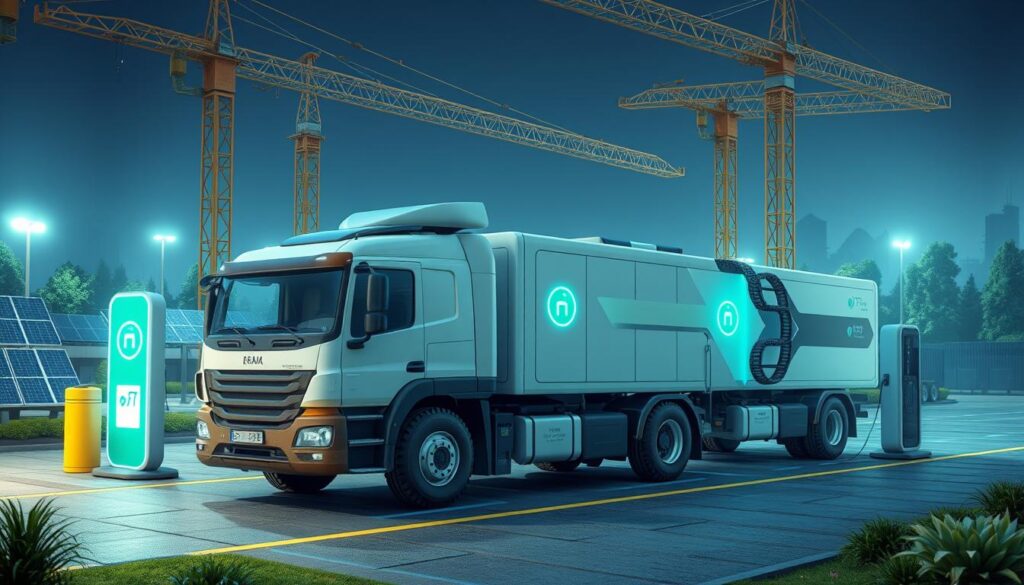
Enhanced electrification in the trucking industry is not only limited to performance improvements. Companies such as Carrier and ThermoKing are offering electric transportation refrigeration units, which are essential for maintaining the integrity of transported materials on construction sites. Moreover, digitization, machine learning, and AI are ushering in a new era of efficiency. These technologies enable real-time analysis of routes, weather conditions, charging strategies, and preventive maintenance, optimizing the operation of electric trucks and reducing downtime.
Electric trucks offer many benefits, including lower emissions and quieter operation, making them particularly appealing for construction in urban areas. The reduction in greenhouse gases and improved public health outcomes are additional incentives driving the adoption of electric trucks. However, the transition is not without its challenges, such as the need for robust charging infrastructure and managing grid demand. Despite these hurdles, the combined efforts of governments, businesses, and technology providers are paving the way for a sustainable future in construction logistics, driven by continuous advancements in electric vehicle technology.
The Economic Viability of Electric Trucks
The transition to electric trucks in construction is not just a technological shift but an economic one. A thorough cost-benefit analysis of electric trucks is crucial to understanding this transformation’s full spectrum of impacts. In 2021 alone, the world witnessed 6.6 million electric vehicle (EV) sales, with significant activity in major markets such as China, Europe, and the United States. Despite the promising uptake, electric vehicles often come with a cost premium, sometimes exceeding 70% compared to their diesel counterparts. This can pose a financial hurdle, especially in developing countries.
However, the economic outlook isn’t as daunting when examining the total cost of ownership (TCO). According to a World Bank report titled “The Economics of Electric Vehicles for Passenger Transportation,” fuel savings and reduced maintenance expenses over an EV’s lifecycle can outweigh the initial purchase price. This positive cost-benefit analysis of electric trucks holds true in approximately half the countries studied, especially when health and environmental benefits are considered.
Government incentives also play a pivotal role in making the transition economically viable. For instance, investing in electric vehicle charging infrastructure is shown to be six times more effective at encouraging EV purchases compared to subsidies alone. This indicates an area where strategic investments can yield substantial benefits. Furthermore, the United States Department of Energy aims to reduce battery pack costs to $125/kWh in the coming years, with long-term expectations set below $100/kWh. Current manufacturing costs for batteries stand at $270/kWh, underlining the potential for significant future savings.
The overall electric vehicle investment scenario looks promising as industry groups use TCO, expressed in $/mile, to compare electric trucks’ ownership costs against conventional trucks. Fuel consumption values and the comparative costs of diesel (ranging from $2.50 to $4.00 per gallon) vs. electricity (ranging from 10 to 30 cents/kWh) also highlight the economic advantages of electric trucks. The modeling in various utility territories, such as Con Edison and CenterPoint Energy Houston, suggests substantial savings, reinforcing the viability of proactive grid-building approaches.
Ultimately, the economic case for electric trucks in construction will likely strengthen as technological advancements continue, costs decrease, and infrastructure improves. The emphasis remains on enabling utilities to anticipate and meet the rising electricity demands from electric trucks efficiently, minimizing risks and optimizing the total cost of ownership for ratepayers.
Performance of Electric Trucks on Construction Sites
The operational efficiency of electric trucks plays a crucial role in determining their success in construction site applications. One of the leading models, Kenworth’s T680E, is built to impress with a range of up to 150 miles and a full charge time of merely 3 hours. Boasting 536 horsepower of continuous power and up to 670 horsepower peak power, this vehicle offers 1,623 pound-feet of torque and a top speed of 70 mph. Its versatility shows in its gross vehicle weight ratings (GVWR) ranging from 54,000 to 82,000 pounds.
Kenworth further pushes boundaries with their electric low-cab-forward models, including the Class 6 K270E and Class 7 K370E. These feature electric motors rated at 355 and 469 horsepower, respectively, and can cover up to 200 miles with a top speed of 65 mph. Such specifications underscore the potential of electric vehicle reliability in rigorous construction site conditions.
Meanwhile, Mack’s LR Electric truck is tailored for refuse collection, demonstrating effective closed-loop application. The California state regulations drive much of this advancement by mandating a percentage of zero-emission vehicles, encouraging companies like Isuzu and Navistar to innovate further. Despite this, the construction industry itself has been slower to implement these technologies, as highlighted by Navistar’s David Hillman, pointing towards gradual adoption in the long term.
| Brand & Model | Max Range (miles) | Charging Time (hours) | Horsepower | Torque (lb-ft) | Top Speed (mph) | GVWR (pounds) |
|---|---|---|---|---|---|---|
| Kenworth T680E | 150 | 3 | 536-670 | 1,623 | 70 | 54,000-82,000 |
| Kenworth K270E | 200 | – | 355 | – | 65 | – |
| Kenworth K370E | 200 | – | 469 | – | 65 | – |
Pioneers in electric construction applications are overcoming challenges from the Covid-19 pandemic affecting supply chains, including delays in parts and availability. Still, the surge in electric truck sales, with a notable increase of 35% in 2023, shows promise for electric vehicle reliability and operational efficiency on job sites. In 2023, Europe saw electric truck sales triple to over 10,000 units, and the U.S. realized a threefold increase, reaching 1,200 units.
As technology evolves, safety features including collision mitigation and advanced driver-assist systems are integrated into electric trucks, enhancing their performance on construction sites. These advancements, coupled with the drive from regulations and market demand, suggest a robust future for electric vehicles in heavy-duty and construction applications.
Case Studies of Electric Truck Deployment
As electric trucks gain traction in the industry, numerous real-world examples of electric trucks demonstrate their growing presence in construction operations. In 2023, over 10,265 electric trucks were deployed across the U.S. in the class 2b-8 fleet segment. This figure marks a significant increase from previous years, reflecting successful electric vehicle implementations by various companies.
Highlighting the journey and outcomes of these integrations, let’s delve into some industry case studies.
The City of Austin, Texas, serves as a prime example. With a municipal fleet size of 6,000 vehicles, including light-, medium-, and heavy-duty trucks, the city’s goal was to convert 10% of eligible vehicles to electric, representing 5.36% of its total fleet. By the end of 2020, they planned to have 330 electric vehicles in their fleet, leveraging telematics data to suggest potential savings of $3.5 million over ten years through fleet electrification.
Another compelling case study involves the broader adoption patterns seen across the U.S. As of 2023, electric truck deployments grew from 80 in 2020 to 1,948 in 2022, culminating in 12,894 medium- and heavy-duty electric trucks on the road over four years. This growth was driven by 204 individual fleets deploying electric trucks since 2020, with an additional 171 fleets placing orders predominantly in 2022 and 2023.
Key statistics showcase this transition:
| Year | Electric Truck Deployments | Number of Fleets Involved |
|---|---|---|
| 2020 | 80 | 204 |
| 2022 | 1,948 | 204 |
| 2023 | 10,265 | 204 + 171 (orders) |
Moreover, projections for 2024 indicate over 15,316 new medium- and heavy-duty electric vehicle (MHDEV) deployments from January to mid-November, further establishing the year as a new record for MHDEV adoptions. By the end of 2024, the total number of electric trucks on the road is anticipated to surpass 29,000.
These industry case studies not only highlight successful electric vehicle implementations but also emphasize the transformative impact and rapid adoption of electric trucks on construction sites and beyond. This growing trend is supported by legislation such as the Inflation Reduction Act, which has funneled $100 billion into new investments in electric vehicle and battery manufacturing, battery components, recycling, and related areas.
As the industry continues to evolve, achieving 100% zero-emission truck sales by 2035 remains the ultimate goal, driving the push towards a nearly zero-emission transportation sector by 2050.
Challenges and Downsides of Electric Trucks
The adoption of electric trucks in the construction industry faces several notable challenges and limitations. Despite making significant strides in technological advances, electric trucks encounter hurdles that hamper their widespread integration.
One of the primary challenges in electric vehicle implementation is their limited range, with many medium- and heavy-duty electric vehicles (MHDEVs) boasting ranges below 200 miles. This pales in comparison to diesel trucks, which often achieve ranges exceeding 1,000 miles.
Moreover, the construction industry has substantial concerns regarding the charging infrastructure requirements. The installation of charging stations for MHDEVs can surpass $100,000, escalating the total cost of ownership (TCO). This expense poses a significant deterrent, especially for small fleets in the secondary market, which might not benefit from new-vehicle incentives.
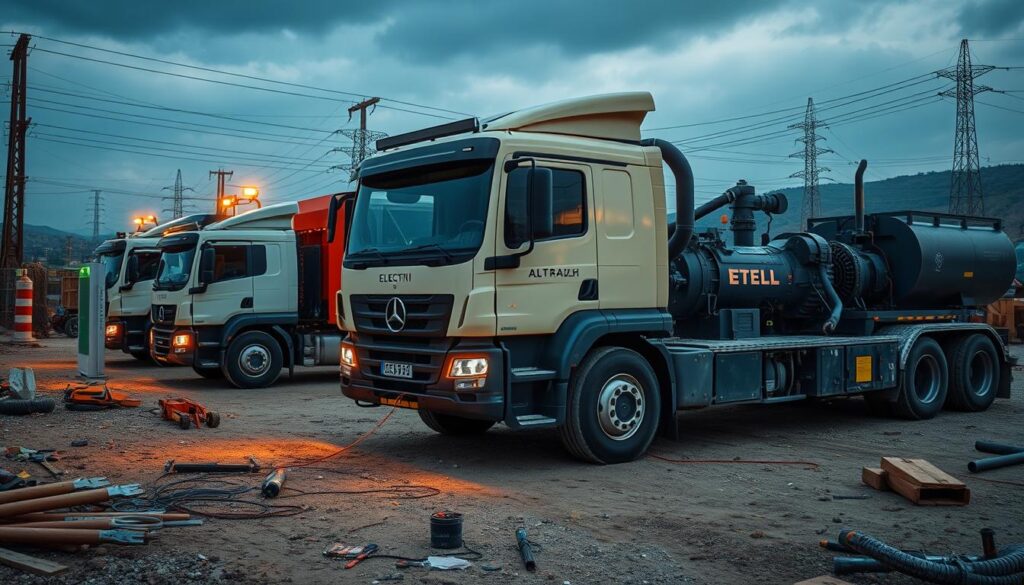
In addition, the stability of electricity distribution systems remains a pressing concern with the adoption of electric trucks. Charging large fleets of MHDEVs can demand several megawatts (MW) of power, potentially destabilizing existing grids and creating further challenges in electric vehicle implementation.
Another key issue lies in the technological and market uncertainties surrounding electric trucks. Manufacturers often face dilemmas related to battery technology improvements and low procurement demand, affecting production and price stability. Additionally, the potential residual value of used electric trucks remains highly unpredictable, casting doubt on long-term financial viability.
To address these limitations of electric trucks, several strategies are being explored. Policies to subsidize upfront costs, manage operating expenses through optimal electricity tariffs, and enhance on-route charging infrastructure are under consideration. Alternative technologies such as hydrogen fuel cells, hybrid systems, and biodiesel are also being evaluated to complement the developing electric trucking ecosystem.
The journey to overcoming these challenges and limitations in the construction industry is undeniably complex and paved with obstacles. Nevertheless, with ongoing innovations and strategic policy implementations, the path toward a more sustainable and electrified future remains a tangible possibility.
Comparison Between Diesel and Electric Machines
The ongoing debate between diesel vs. electric construction equipment is shaping the future of the construction industry. A thorough performance comparison reveals that electric construction machinery, despite its higher upfront purchase price, delivers cost savings over its lifecycle due to reduced fuel and maintenance expenses. Diesel machines have long been trusted for their reliability and familiarity, but electric alternatives are catching up quickly in terms of power and efficiency.
One notable difference is the environmental impact analysis. Electric machines produce zero tailpipe emissions, significantly reducing job site pollution. In comparison, diesel machines contribute to air pollution with harmful emissions, making electric options more attractive in urban and environmentally sensitive areas. For example, the Volvo ECR25 Electric compact excavator operates with a peak electric motor of 24 horsepower and offers instant torque, making it highly efficient for various tasks.
The performance comparison extends to specifications like noise reduction and operating time. Electric machines like the ECR25 Electric excavator have reduced noise levels from 93 dB to 84 dB compared to their diesel counterparts, which benefits tasks in noise-sensitive environments. Although the indicative runtime for electric machines may be around 6,000-7,000 hours, compared to 10,000 hours for diesel machines, the continuous improvement in battery technology is closing this gap.
| Aspect | Diesel Machines | Electric Machines |
|---|---|---|
| Upfront Cost | Lower | Higher |
| Maintenance Costs | Higher | Lower |
| Environmental Impact | High Emissions | Zero Emissions |
| Noise Level | 93 dB | 84 dB |
| Operating Time | 10,000 Hours | 6,000-7,000 Hours |
| Charging Time (L25) | N/A | About 2 Hours |
| Infrastructure Requirements | Fuel Storage Needed | Charging Stations Needed |
| Overall Usability | Reliable and Familiar | Sophisticated HMI and Software |
The shift to electrification is bolstered by regulations and incentives, such as California’s CORE program, offering discounts on electric heavy machinery. Additionally, manufacturers like Volvo are leading the charge with models such as the L25 Electric wheel loader, which features a 39 kWh battery and can run up to eight hours depending on the application.
In conclusion, the diesel vs. electric construction equipment debate hinges on multiple factors, including environmental impact, cost, and performance. While diesel machines maintain their dominance in certain areas, the clear advantages of electric machines point to a promising and sustainable future for the construction industry.
Future Trends in Construction Equipment
The rapid advancement of emerging technologies in construction is reshaping the landscape of the industry. One of the most impactful innovation trends is the shift toward electric construction equipment. This transition is driven by the pressing need to reduce the construction industry’s sizable contribution to global greenhouse gas emissions.
Electric construction machinery offers numerous advantages over traditional diesel-powered machines. Firstly, it produces zero emissions at the point of use, significantly improving air quality on construction sites. Secondly, electric equipment generates substantially less noise, allowing for extended operating hours, particularly in noise-sensitive zones. It also boasts lower operational costs, thanks to fewer moving parts and the elimination of diesel fuel.
While the initial cost of acquisition remains a significant barrier for smaller firms, the global electric construction equipment market is projected to grow at an annual rate of 23.2%, reaching $77.2 billion by 2032. Prominent players like Caterpillar and Volvo are already developing electric excavators, loaders, and compactors, focusing on zero on-site emissions and reduced operating costs.
Autonomous construction machinery stands as another groundbreaking development in the future of construction machinery. These advanced machines improve sustainability by minimizing fuel consumption and material waste through enhanced precision and efficiency. In tandem with this, smart energy management systems are expected to become integral to construction projects by 2025. Utilizing IoT devices, sensors, and data analytics, these systems optimize energy use and reduce waste.
| Technology | Benefit |
|---|---|
| Electric Construction Equipment | Zero emissions, lower noise pollution, reduced operational costs |
| Lithium-ion Batteries | High energy density and durability |
| Smart Energy Management Systems | Optimized energy use and waste reduction |
Looking ahead, the industry is anticipated to witness widespread adoption of fully electric machinery by 2025. This change will be supported by increased on-site charging infrastructure and improved battery life, ensuring uninterrupted work hours. Additionally, integrating renewable energy sources like solar panels and wind turbines through smart energy management systems will help achieve net-zero emissions on construction projects, further underlining the positive trajectory of these innovation trends.
Environmental Benefits of Electric Trucks
The transformation from diesel to electric trucks in the construction industry brings significant environmental advantages. Trucks, including medium- and heavy-duty vehicles, represent approximately 6% of the on-road vehicle fleet as of 2020, yet they generate 59% of on-road vehicle NOx emissions and 55% of particle pollution. Adopting electric trucks holds the promise of reduced emissions and substantial sustainability benefits.
Electric trucks dramatically cut down on NOx and fine particle emissions, making a notable difference. For instance, transitioning to 100% zero-emission trucks by 2040 can avert 66,800 premature deaths, 1.75 million asthma attacks, and prevent 8.5 million lost workdays. Furthermore, according to this source, adopting green construction practices and electric equipment could rise significantly.
The health benefits of reduced emissions are profound. By 2050, applying California’s NOx emissions limits nationally could prevent about 23,000 premature deaths, translating to net health benefits worth approximately $270 billion. Interestingly, shifting just 30% of on-road heavy-duty vehicles in the Chicago region to electric versions is projected to avert 610 deaths caused by reduced NOx and PM2.5 concentrations, despite a minor increase in ground-level ozone levels.
Communities with higher proportions of Black and Hispanic residents stand to benefit the most from the switch to electric trucks. The reduction in pollutants directly correlates with significant public health improvements in these communities, further emphasizing the sustainability benefits of green construction practices.
| Type of Truck | CO2 Emissions During Production (lbs) | Operational CO2 Emissions Over 1 Million Miles (lbs) | Reduction Comparison |
|---|---|---|---|
| Diesel Truck | 75,000 | 3.6 million | N/A |
| Battery-Electric Truck | 500,000 | 2 million | 30% reduction |
| Fuel-Cell Electric Truck | 150,000 | 1.9 million | 44.6% reduction |
| Renewable Diesel Truck | N/A | N/A | Best overall comparison for CO2 emissions reduction |
It’s clear that while the production of battery-electric trucks results in higher CO2 emissions due to the battery’s mining and production process, the operations-related emissions are significantly lower compared to diesel trucks. Over a one-million-mile operational lifecycle, the benefits become even more apparent, with battery-electric trucks producing just over 2 million pounds of CO2 compared to diesel trucks’ 3.6 million pounds.
Although battery-electric trucks generate 22 times more emissions during disposal and battery recycling, they still offer considerable emissions reductions. Fuel-cell electric trucks show a 44.6% reduction in CO2 emissions compared to diesel, while battery-electric trucks see a 30% reduction.
Interestingly, using renewable diesel in traditional diesel engines proves to be the most environmentally friendly option, except in cases where fuel-cell electric trucks are powered by solar energy.
Adoption Rates and Market Readiness
The market adoption of electric trucks is gradually gaining momentum, influenced by several pivotal factors. The U.S. is preparing to support an infrastructure for 30-42 million electric vehicles (EVs) by 2030, showcasing industry’s readiness for electrification. However, significant barriers to adoption remain, including the cost of battery technology and the availability of charging infrastructure.
Federal initiatives like the NEVI Formula Program by the Department of Transportation’s Federal Highway Administration fund the deployment of DC fast charging stations along Alternative Fuel Corridors, aiming to boost the market readiness for electrification in underserved and disadvantaged communities. Further, state EV charging plans and laws, such as Zero Emission Vehicle and Low Emission Vehicle Standards, pave the way for localized and comprehensive electrification.
The Justice40 initiative ensures that 40% of federal investment benefits reach disadvantaged communities, while the EV Charging Forward Toolkit helps rural areas in planning and financing electric mobility infrastructure.
Despite promising advances, the understanding of barriers to adoption is crucial. The high costs associated with battery technology, particularly for heavy-duty trucks, remain a significant obstacle. Moreover, the logistics of charging infrastructure development presents a complex challenge, particularly for long-haul truck applications requiring in-route charging solutions.
A granular assessment by McKinsey indicates that commercial vehicle electrification varies across weight categories. Light- and medium-duty segments exhibit a higher potential for initial adoption, while heavy-duty segments face greater challenges due to battery costs and driving patterns. By 2030, medium- and light-duty battery-electric commercial vehicles could achieve an 8 to 27% sales penetration depending on region and application, reflecting a nuanced approach to market readiness for electrification.
In urban settings, the breakeven point for light-duty applications hinges on minor variations in use-case characteristics and assumptions that drive total cost of ownership (TCO) uncertainties. Ultimately, the transition to eTrucks remains a gradual process, with industry experts emphasizing the timing of TCO parity as a critical factor in driving widespread adoption.
The National Renewable Energy Laboratory’s study suggests that smaller battery-electric trucks could reach cost parity with diesel counterparts by 2030, while heavy-duty trucks traveling under 500 miles per day might achieve this by 2035. Additionally, hydrogen fuel cells are forecasted to become cost-competitive for longer-haul trucks, highlighting diverse pathways to electrification.
On the horizon, more than 100 models of medium- and heavy-duty trucks, vans, and buses are available commercially in the U.S., forecasting a dynamic shift towards electric-powered vehicles. By 2030, electric trucks are anticipated to be cheaper to buy, own, and operate for nearly half of all trucks on the road, expanding to almost the entire truck fleet by 2035. This trend underscores the transformative potential poised by the market adoption of electric trucks.
| Initiative | Impact on Market Readiness |
|---|---|
| 2030 National Charging Network | Infrastructure support for 30-42 million EVs |
| Justice40 Initiative | 40% federal investment benefits to disadvantaged communities |
| NEVI Formula Program | Funding for DC fast charging station deployment |
| Commercial Vehicle Electrification | 8 to 27% sales penetration by 2030 for medium- and light-duty segments |
| Cost Parity Predictions | Battery-electric trucks by 2030, hydrogen fuel cells by 2035 |
Conclusion
As we have explored throughout this article, the future of electric trucks in construction holds substantial promise. The ongoing industry transformation is largely driven by advancements in technology, regulatory support, and collaborative efforts. Significant projects like the Electric Worksite, which included tests on a range of electric-powered machines from wheeled and crawler excavators to load carriers, have indicated the practical viability and success of electric trucks in urban construction sites.
From an economic perspective, electric trucks demonstrate long-term viability and cost savings, despite higher initial purchase prices compared to traditional diesel counterparts. Lawrence-Berkeley National Lab’s 2021 study points to lower ownership costs for electric semi-trucks at $1.51 per mile, compared to $1.72 per mile for diesel-powered ones. This, coupled with various financial incentives and subsidies offered by governments, underscores the economic feasibility of transitioning to electric vehicles.
However, challenges such as infrastructure development, battery range, and charging times need ongoing efforts and investments to overcome. Organizations like Volvo Construction Equipment and NCC Sweden are setting benchmarks in this transformation and showcasing how the sustainable construction future can be achieved with the right commitment and resources.
In conclusion, while there are hurdles to be addressed, the potential for electric trucks to revolutionize the construction industry is undeniable. Continued innovation, strategic investment, and robust regulatory support will be crucial in realizing the full benefits of electrification, paving the way for a more efficient, cost-effective, and sustainable construction future.
FAQ
What are the main benefits of using electric trucks in the construction industry?
How do electric trucks compare to traditional diesel machines in terms of performance?
What are the economic implications of transitioning to electric trucks?
What technological advancements have made electric trucks viable for construction use?
Are there any challenges associated with the adoption of electric trucks in construction?
What are the environmental impacts of using electric trucks compared to diesel machines?
Can you provide examples of successful electric truck deployments in the construction industry?
How do electric trucks perform in real-world construction site applications?
What are the reasons behind the construction industry’s shift towards electrification?
How do diesel and electric machines compare in terms of maintenance needs?
What future developments are anticipated in the realm of electric construction equipment?
How ready is the market for the broader adoption of electric trucks in construction?
