
Battery Enclosure Designs Strengthening Electric Car Safety
Advanced battery enclosure designs strengthening electric car safety represent one of the most critical structural innovations in modern automotive engineering, protecting high-voltage systems against extreme mechanical impacts.
Enclosing high-energy lithium-ion cell packs within crash-resistant, thermally isolated structures protects passengers while maintaining optimal operational conditions across diverse driving environments and collision scenarios.
Automotive engineers continuously refine material choices, internal rib geometries, and bottom-shield armor to absorb mechanical energy during severe side-impact collisions, rollover events, and road debris strikes.
Analyzing structural housing architectures, thermal runaway mitigation strategies, and material compositions demonstrates how sophisticated physical protection systems elevate passenger safety standards across global EV markets.
What structural features define modern battery enclosure architectures?
Modern battery housings function as primary load-bearing structures integrated directly into an electric vehicle’s chassis, significantly enhancing torsional rigidity and side-impact energy absorption capabilities.
Extruded aluminum side sills, high-strength steel cross-members, and honeycomb impact absorbers line outer perimeter zones, decelerating crash forces before kinetic energy reaches sensitive battery modules.
| Enclosure Material / Architecture | Tensile Yield Strength (MPa) | Thermal Resistance Threshold | Primary Safety Advantage |
| High-Strength Aluminum (6000/7000 Series) | 280 – 420 MPa | Up to 600°C (Melting Point) | Optimal strength-to-weight ratio with high crash energy absorption |
| Ultra-High-Strength Steel (UHSS/Boron) | 1,000 – 1,500 MPa | Up to 1,400°C (Melting Point) | Maximum intrusion resistance during high-velocity pole impact tests |
| Fiber-Reinforced Composites (SMC/Carbon) | 300 – 800 MPa | Flame-retardant resins (UL94 V-0) | Superior corrosion resistance and lightweight thermal isolation |
| Cell-to-Pack (CTP) Integrated Frame | 350 – 500 MPa | Integrated phase-change barriers | Higher energy density with direct structural module integration |
Crash test procedures and vehicle safety evaluation criteria are published continuously by the National Highway Traffic Safety Administration, providing trusted public domain safety compliance frameworks.
Innovations in battery enclosure designs strengthening passenger protection focus heavily on bottom-tier underbody shields engineered to withstand high-speed impacts from metallic road debris.
Multi-layered ballistic shields, often incorporating titanium plates or ultra-high-molecular-weight polyethylene layers, prevent sharp objects from puncturing battery casings and initiating internal short circuits.
Integrating structural seals and compression gaskets ensures IP67 and IP69K ingress protection ratings, preventing water and dust contamination from degrading high-voltage electrical insulation over time.
How do enclosure designs prevent thermal runaway propagation?
Containing thermal runaway within individual battery cells represents a fundamental design mandate for automotive engineering teams developing next-generation high-voltage energy storage platforms.
Flame-retardant aerogel insulation blankets, ceramic fiber barriers, and phase-change materials line internal module walls, delaying thermal heat transfer between adjacent battery cell packs.
Intelligent pressure relief valves vent superheated gases safely outward through designated exhaust channels, preventing structural pressure buildup inside the sealed housing during severe cell failures.
Top-cover thermal shields engineered with mica sheets withstand direct flame exposure exceeding one thousand degrees Celsius, shielding the cabin passenger compartment from toxic smoke and extreme heat.
Why is cell-to-pack technology changing structural enclosure design?
Cell-to-Pack architectures eliminate traditional intermediate module housing structures, mounting battery cells directly inside the outer protective chassis enclosure to maximize volumetric energy density.
Eliminating heavy module walls reduces total battery pack weight, allowing engineers to reinforce outer perimeter structural beams without increasing the overall mass of the electric vehicle.
Structural adhesive bonding secures battery cells directly to cooling plates and housing walls, transforming cell arrays into structural load-carrying elements that resist bending moments.
This streamlined structural architecture lowers manufacturing complexity while providing continuous mechanical support across the entire floorboard area during severe multidirectional crash tests.
Which materials offer the best balance of weight and crash protection?
Aluminum alloys dominate current production platforms due to superior extrusion versatility, excellent energy absorption characteristics, and moderate density compared to traditional automotive sheet steel.
Press-hardened boron steel alloys serve in critical perimeter protection zones, offering exceptional tensile yield strength where space limits allow minimal deformation during narrow-pole side impacts.
Thermoset sheet molding compounds reinforced with glass fibers gain market share for top cover assemblies, providing inherent electrical insulation and substantial weight savings over metal sheets.
Carbon-fiber reinforced polymers provide unmatched stiffness-to-weight ratios for high-performance vehicles, though high manufacturing costs limit widespread application across mass-market electric vehicle segments.
When do international safety standards update enclosure requirements?
Global regulatory bodies continuously revise safety testing protocols to address emerging real-world crash data, battery chemistry evolution, and advanced structural manufacturing technologies.
Learn more: Battery Utilization Rates Matter for Electric Motorcycle Swaps
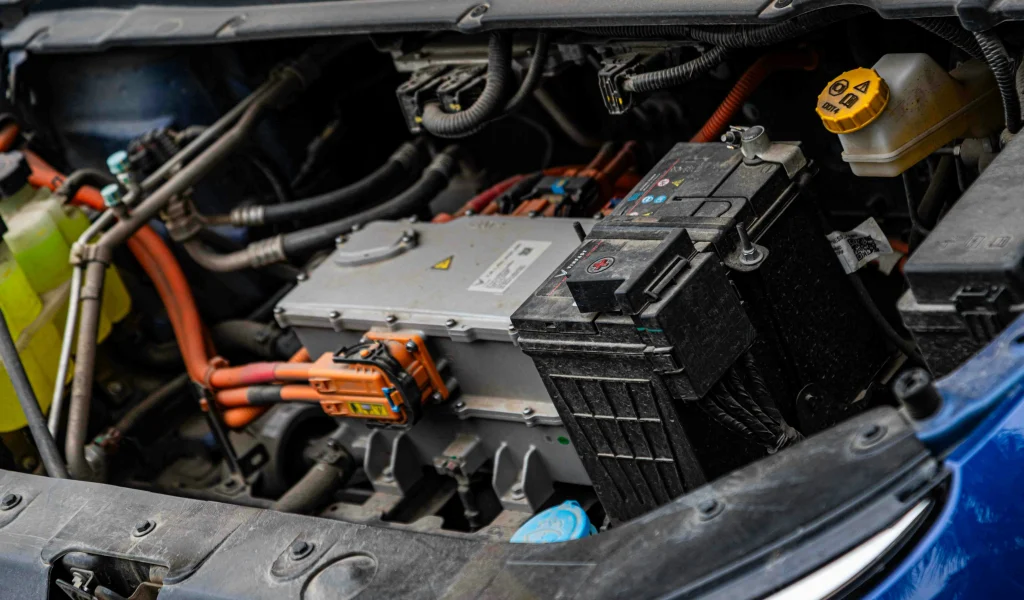
Mandatory thermal propagation testing rules require battery enclosures to prevent visible fire or explosion outside the housing for at least five minutes following thermal runaway initiation.
Mechanical shock and vibration standards subject battery structures to multi-axis sinusoidal sweeps, ensuring structural welds and electrical connections remain fully intact over decades of driving.
Authoritative global transport safety regulations and international electric vehicle guidelines are maintained by the United Nations Economic Commission for Europe, advancing harmonization.
Evaluating battery enclosure designs strengthening overall vehicle integrity highlights how material science advancements continue to make electric mobility safer, more reliable, and increasingly resilient.
Combining advanced metallurgy, fire-retardant composite barriers, and continuous structural simulation allows automotive manufacturers to build electric vehicles that comfortably exceed stringent safety mandates globally.
How do liquid cooling plates integrate into housing safety?
Bottom-mounted cooling plates utilize extruded aluminum channels circulating glycol coolant mixtures to maintain optimal cell operating temperatures between twenty and thirty-five degrees Celsius.
Read more: Universal Battery Standards Could Expand Electric Motorcycle Access
Isolating liquid cooling channels beneath or between structural crash beams prevents coolant leakage into high-voltage electrical compartments during severe road debris impacts or accidents.
Advanced thermal interface materials bond battery cell bases to cooling plates, transferring heat efficiently while providing high dielectric strength to prevent electrical arcing to the housing frame.
Integrated dual-purpose floor plates serve as both structural stiffness members and active liquid heat exchangers, saving vertical packaging space inside dense underbody battery compartments.
Conclusion
Engineering robust battery enclosures remains a cornerstone of electric car safety, ensuring high-voltage systems resist severe mechanical impacts and thermal failure events effectively.
Learn more: Modular Battery Packs Changing Electric Motorcycle Ownership

Combining high-strength aluminum extrusions, boron steel impact beams, advanced composite covers, and intelligent thermal barriers protects vehicle occupants under extreme crash conditions.
Continuous innovation in material science and structural integration will further elevate EV crashworthiness, boosting consumer confidence as global electric transportation adoption continues accelerating.
Frequently Asked Questions (FAQ)
How do battery enclosures withstand severe side impacts?
Enclosures utilize thick extruded aluminum side sills and internal cross-member ribs designed to crush predictably, absorbing kinetic energy before forces deform cell compartments.
Can a damaged battery housing be repaired after a crash?
Minor external shield scratches can be repaired, but structural housing deformation or seal compromise typically requires full enclosure replacement to guarantee safety and ingress protection.
What prevents water from entering the battery pack during flooding?
High-durability compression gaskets, watertight electrical connectors, and sealed structural fasteners maintain IP67 and IP69K ratings, preventing moisture ingress under submerged conditions.
