
Electric trolleys: Reviving historic transit with modern tech
The introduction of the cable car system by Andrew Hallidie in San Francisco in 1873 marked the beginning of electric trolleys in urban transportation.
Over the years, electric trolleys have evolved to become a crucial part of modern transit systems, providing efficient and sustainable transportation solutions for cities.
The decline of streetcars in the mid-20th century was largely due to the rise of private transportation, but in recent years, there has been a resurgence of interest in electric trolleys as a means of reducing traffic congestion and promoting environmentally friendly transportation.
Today, electric trolleys are being revitalized with modern technology, making them an attractive option for cities looking to improve their urban transportation systems. The use of electric trolleys in modern transit systems has numerous benefits, including reduced emissions and increased efficiency.
As cities continue to grow and develop, the need for efficient and sustainable transportation solutions has become increasingly important, and electric trolleys are playing a key role in meeting this need.
The integration of electric trolleys into modern transit systems is a complex process that requires careful planning and coordination. However, the benefits of electric trolleys make them an essential component of urban transportation systems.
With their rich history and modern technological advancements, electric trolleys are poised to play a major role in shaping the future of urban transportation, and cities are taking notice of the potential of electric trolleys to improve their transportation systems and reduce their environmental impact.
The Legacy of Electric Trolleys in Urban Transportation
Electric trolleys have played a significant role in shaping the transportation history of many cities. With the introduction of electric motors, the development of cable cars, and the expansion of streetcar systems, public transit became more efficient and accessible. The impact of electric trolleys on urban transportation was profound, providing a cleaner alternative to horse-drawn carriages and facilitating the growth of suburbs.
The legacy of electric trolleys can be seen in the many cities that have revived their streetcar systems in recent years. For example, seven major cities in the United States have installed modern streetcar systems since 2000, including Seattle, Portland, and Washington. These systems have not only improved public transit but also spurred economic development and urban renewal. The use of electric vehicles in these systems has also contributed to a reduction in greenhouse gas emissions, making them a more sustainable option for transportation.
Some notable examples of successful streetcar systems include the Portland Streetcar, which has hosted an average ridership of 15,000 passengers per week, and the DC Streetcar, which has seen an average weekday ridership of 2,285 passengers. These systems demonstrate the potential of electric trolleys to transform urban transportation and promote more sustainable and efficient public transit options.
| City | Streetcar System | Average Ridership |
|---|---|---|
| Portland | Portland Streetcar | 15,000 passengers/week |
| Washington | DC Streetcar | 2,285 passengers/weekday |
Modern Electric Trolleys: A Technological Renaissance
As cities around the world invest in sustainable transport solutions, modern electric trolleys have become a popular choice for modern transit systems. With advancements in transportation technology, these vehicles have become more efficient, environmentally friendly, and appealing to commuters. Cities like Tacoma, Washington, and Mulhouse, France, have already invested in streetcar systems, with new vehicles costing between $3.5 and $4.5 million.
The benefits of modern electric trolleys are numerous. They can accommodate a higher number of passengers, with capacities ranging from 88 to 178 passengers, and have a lifespan of up to 30 years. This is significantly longer than the average diesel transit bus, which has a lifespan of around 17 years. Additionally, modern streetcar vehicles are designed to meet Buy America regulations, providing a new array of choices for urban transportation systems.
Some notable examples of cities embracing modern electric trolleys include Toronto, which is purchasing over 200 new low-floor streetcars from Bombardier, and Portland, Oregon, which has built both modern light rail and modern streetcar systems. These investments in modern transit systems demonstrate a commitment to sustainable transport and a desire to reduce the environmental impact of urban transportation. With the integration of transportation technology, modern electric trolleys are poised to play a major role in shaping the future of urban transportation.
Smart Integration: How Electric Trolleys Modern Transit Systems Work
Electric trolleys are being integrated into mass transit systems to create efficient and sustainable transportation networks. This integration is crucial for urban planning, as it helps to reduce traffic congestion and promote cleaner environments. In smart cities, electric trolleys are designed to work seamlessly with existing infrastructure, including roads, bike lanes, and pedestrian paths.
A key aspect of this integration is the use of technology to enhance the passenger experience. For example, electric motorcycles are being used to improve traffic flow and reduce emissions. Additionally, features like GPS tracking and Wi-Fi connectivity are being implemented to provide passengers with real-time information and convenient access to amenities.
Some notable examples of successful integration include:
- Arnhem’s trolleybuses, which can operate autonomously for at least 10 kilometers outside the city
- Eberswalde’s conversion of a diesel-powered regional bus line into a battery electric trolleybus line
- Gdynia’s expansion of trolleybus lines and development of new midi trolleybuses based on batteries
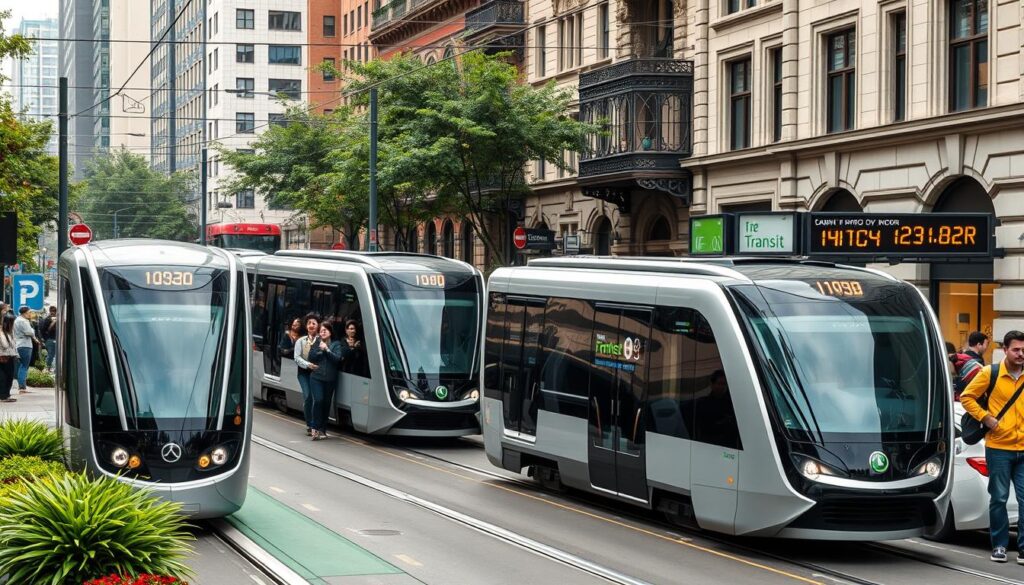
These initiatives demonstrate the potential for electric trolleys to transform mass transit systems and contribute to the development of smart cities. By prioritizing urban planning and investing in sustainable transportation solutions, cities can create more efficient, environmentally friendly, and livable spaces for their citizens.
Environmental Benefits of Electric Trolley Networks
Electric trolley networks offer numerous environmental benefits, making them an attractive option for cities looking to reduce their carbon footprint. By investing in electric trolley systems, cities can significantly decrease their greenhouse gas emissions and improve air quality. For instance, the use of biofuels in mass transit vehicles can provide a reduction in greenhouse gas emissions of at least 50% compared to fossil fuels.
Many cities have already adopted electric trolley systems, with notable examples including Tallinn, Estonia, and Vilnius, Lithuania. In these cities, the municipal governments have invested in battery-powered trolleybuses, resulting in reduced carbon emissions and improved air quality. The environmental benefits of electric trolley networks are clear, and their adoption is a key step towards creating more sustainable transport systems.
Some of the key environmental benefits of electric trolley networks include:
- Reduced greenhouse gas emissions
- Improved air quality
- Lower operating costs
These benefits make electric trolley networks an attractive option for cities looking to reduce their environmental impact. As the world continues to urbanize, the adoption ofgreen initiativeslike electric trolley networks will be crucial in creating moresustainable transportsystems.
The use of electric trolley networks is part of a broader shift towards more environmental benefits and sustainable transport systems. As cities continue to invest in these systems, we can expect to see significant reductions in greenhouse gas emissions and improvements in air quality. The future of transportation is electric, and electric trolley networks are leading the way.
| City | Number of Trolleybuses | Environmental Benefits |
|---|---|---|
| Tallinn, Estonia | 40 | Reduced carbon emissions, improved air quality |
| Vilnius, Lithuania | 91 | Lower operating costs, reduced greenhouse gas emissions |
| Vancouver | 262 | Improved air quality, reduced carbon footprint |
Infrastructure Requirements and Urban Planning
When it comes to implementing electric trolley systems, infrastructure requirements play a crucial role. This includes the need for dedicated lanes, power supply systems, and maintenance facilities. Effective urban planning is essential to ensure the successful integration of electric trolleys into existing transportation infrastructure.
A well-planned urban planning strategy can help create a more sustainable and efficient transportation system. For example, cities can incorporate infrastructure requirements such as charging stations and marked lanes for electric trolleys, promoting a greener and more connected urban environment. As noted in a study on electric buses and public transit, the adoption of electric vehicles can contribute to quieter, greener neighborhoods and enhance the quality of life for urban residents.
Some key considerations for infrastructure requirements include:
- Dedicated lanes for electric trolleys
- Power supply systems and charging stations
- Maintenance facilities and repair services
By prioritizing urban planning and infrastructure requirements, cities can create a more efficient and sustainable transportation infrastructure that supports the growth of electric trolley systems.
| City | Electric Trolley System | Infrastructure Requirements |
|---|---|---|
| New York | Yes | Dedicated lanes, power supply systems |
| Los Angeles | No | Planned implementation of electric trolleys |
Success Stories: Cities Embracing Electric Trolleys
Several cities have successfully implemented electric trolley systems, serving as success stories for urban transportation and public transit. For instance, Vancouver achieved an incredible milestone of 75 years of clean electric transit buses, highlighting the city’s commitment to sustainable public transit. The city introduced electric trolley buses in 1948 and has since continued to upgrade its fleet, with the current fleet of E40LFR and E60LFR electric buses contributing significantly to reducing CO2 emissions.
Another example is the City of Charleston, which hired transportation consultant Gabe Klein in 2014 to assess traffic and recommend improvements. The proposal involves a fleet of 60-80 emission-free, electric trolleys at a cost of $80 million. Each trolley can cover up to 140 miles on a single charge, making them an efficient option for urban transportation.
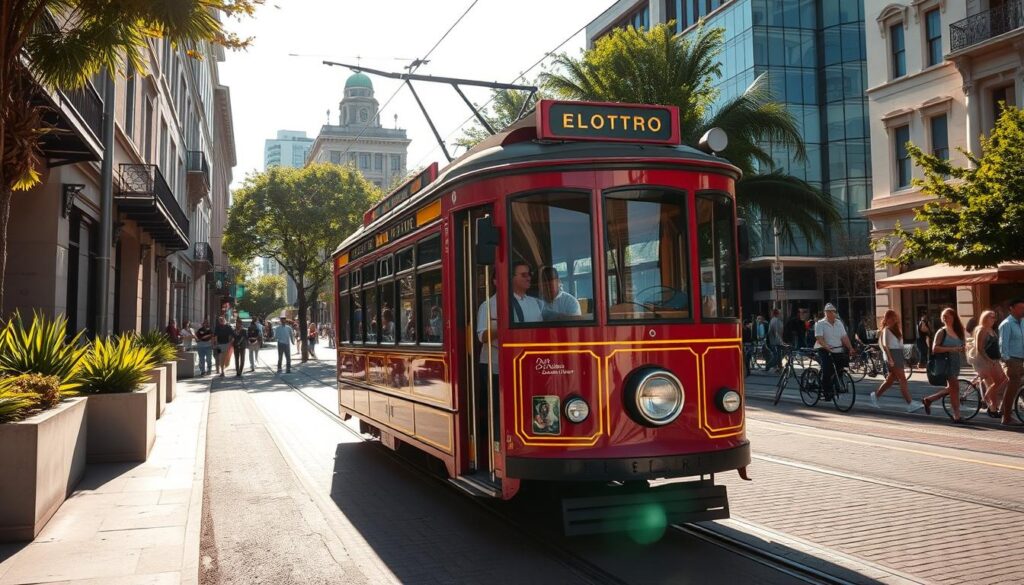
Some key features of the proposed electric trolley system in Charleston include:
- 60-80 emission-free, electric trolleys
- Each trolley can cover up to 140 miles on a single charge
- Five routes collectively known as “The Brain Train” connecting various city landmarks and institutions
These success stories demonstrate the potential of electric trolleys to transform public transit in cities, providing a sustainable and efficient solution for urban transportation.
| City | Electric Trolley System | Year Introduced |
|---|---|---|
| Vancouver | E40LFR and E60LFR electric buses | 1948 |
| Charleston | 60-80 emission-free, electric trolleys | Proposed |
Economic Advantages of Modern Trolley Systems
Modern electric trolley systems offer numerous economic advantages, including cost-effectiveness and job creation. By investing in these systems, cities can stimulate economic growth and improve the quality of life for residents. For instance, cities like Portland, Memphis, and Tampa have reported strong developer interest along streetcar lines, with approximately $800 million in new development underway.
The economic benefits of modern electric trolley systems can be seen in the increased ridership and revenue they generate. According to data, electric streetcars provide economic benefits beyond transportation, acting as an economic development catalyst that can significantly boost local businesses and attract investments. Some of the key economic advantages of modern trolley systems include:
- Increased property values along the trolley route
- Job creation in the transportation and tourism sectors
- Stimulated economic growth and development
- Improved quality of life for residents
Additionally, modern electric trolley systems are a cost-effective means of demonstrating the viability of urban rail for potential light rail expansion. With the cost of fuel for streetcars being more predictable due to their reliance on electricity, transportation systems can enjoy more stable operating expenses. As Mayor Jenny Durkan from Seattle notes, “Investing in modern electric trolley systems can have a significant impact on the local economy, from creating jobs to stimulating economic growth.”
In conclusion, modern electric trolley systems offer a range of economic advantages, from cost-effectiveness and job creation to stimulated economic growth and improved quality of life. By investing in these systems, cities can reap the rewards of a thriving local economy and a reliable, efficient transportation network.
| City | Investment in Modern Electric Trolley System | Economic Benefits |
|---|---|---|
| Portland | $100 million | Increased property values, job creation, stimulated economic growth |
| Memphis | $50 million | Improved quality of life, increased ridership, revenue generation |
| Tampa | $200 million | Stimulated economic growth, job creation, increased property values |
Overcoming Implementation Challenges
When implementing electric trolley systems, cities often face implementation challenges that can hinder the success of the project. These challenges can range from public perception issues to technical issues with the infrastructure. To overcome these challenges, it is essential to engage with the public and address their concerns.
A key aspect of addressing public perception is to provide education and awareness about the benefits of electric trolley systems. This can be achieved through community outreach programs and public events. Additionally, cities can work with local stakeholders to address technical issues and ensure a smooth implementation process.
Some of the common implementation challenges faced by cities include:
- Upgrading existing infrastructure to support electric trolley systems
- Managing the cost of implementation and maintenance
- Addressing public perception and awareness about the benefits of electric trolley systems
By understanding and addressing these implementation challenges, cities can ensure a successful transition to electric trolley systems, which can have a significant impact on reducing carbon emissions and improving air quality.
Conclusion: The Future of Electric Trolley Transportation
As we’ve explored, electric trolleys are poised to play a pivotal role in the future of urban transportation. With their blend of historic charm and modern technological advancements, these systems offer a sustainable and efficient solution to the transportation challenges cities face.
The future of transportation lies in innovative, sustainable solutions that can meet the needs of growing populations while minimizing environmental impact. Electric trolleys, with their ability to integrate seamlessly into existing transit networks and deliver a clean, reliable commute, are well-positioned to be a cornerstone of this sustainable future.
From reducing greenhouse gas emissions to alleviating congestion, electric trolleys demonstrate the power of embracing advanced technologies to reinvent historic modes of transportation. As cities continue to explore and implement these systems, we can expect to see a profound transformation in the way people move through urban centers, ultimately leading to a more livable, environmentally conscious, and connected future.
FAQ
What is the historical significance of electric trolleys?
How have electric trolleys evolved with modern technology?
How do electric trolleys integrate with existing transit infrastructure?
What are the environmental benefits of electric trolley networks?
What infrastructure is required for electric trolley systems?
What are the economic advantages of modern electric trolley systems?
How can cities overcome challenges when implementing electric trolley systems?
