
Agrivoltaics Creating New Opportunities for Renewable Energy
Discovering how Agrivoltaics Creating New Opportunities transforms rural economies shows how co-locating solar panels with agriculture solves critical land-use conflicts while driving clean energy expansion worldwide.
Integrating photovoltaic modules directly over croplands, orchards, and livestock pastures allows farmers to harvest renewable electricity without sacrificing arable soil required for essential food production.
This dual-use land strategy optimizes resource utilization, creating secondary revenue streams for agricultural producers while providing clean power to regional electrical grids needing rapid decarbonization.
Understanding the engineering frameworks, microclimate benefits, and financial returns of dual systems reveals why forward-thinking energy developers view agricultural integration as a vital market opportunity.
What is agrivoltaics and how does dual-use solar technology function?
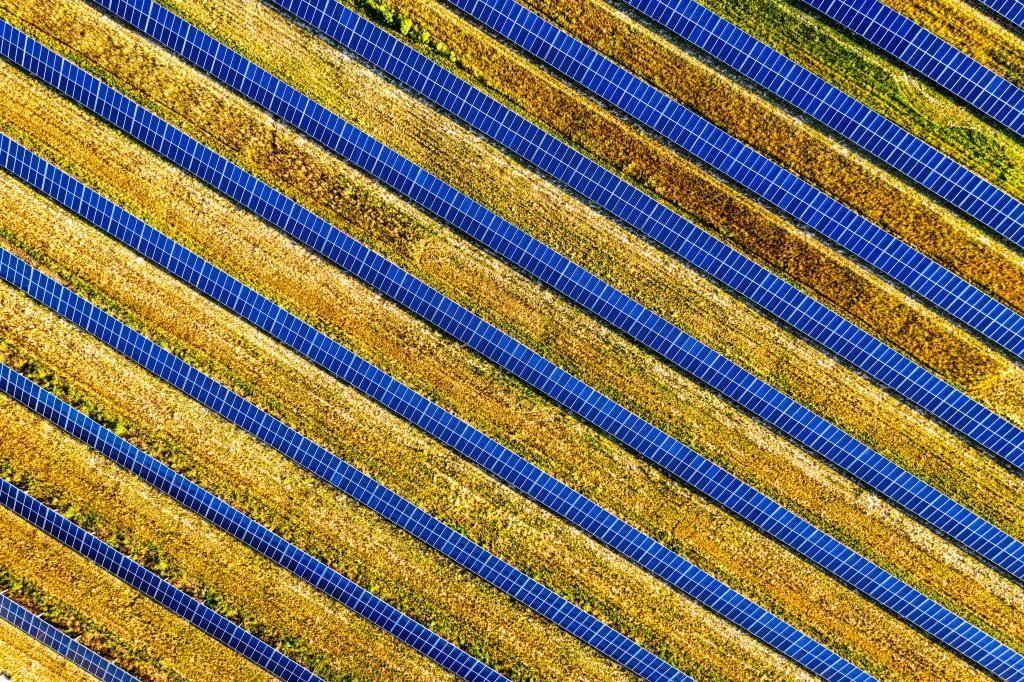
Agrivoltaic technology elevates solar panels on specialized racking systems to permit agricultural machinery, livestock grazing, or crop cultivation beneath elevated photovoltaic arrays.
Unlike traditional ground-mounted solar farms that scrape topsoil and displace agriculture, dual systems maintain active farming operations directly underneath light-transmitting solar panels.
Engineers adjust panel spacing, tilt angles, and height clearances to optimize light distribution, balancing crop photosynthesis requirements with maximum solar power output capacity.
Deploying Agrivoltaics Creating New Opportunities bridges sustainable farming and clean power generation, maximizing land productivity metrics across diverse geographical regions globally.
How do solar arrays improve crop yields and soil moisture retention?
Shading provided by solar panels reduces ground temperature spikes during peak summer months, significantly lowering soil water evaporation rates across cultivated fields.
This sheltered microclimate protects sensitive crops from extreme heat stress, reducing irrigation water requirements by substantial margins in arid and drought-prone regions.
Crops such as leafy greens, berries, root vegetables, and shade-tolerant herbs thrive under partial solar shade, producing higher quality yields during hot growing seasons.
Additionally, plant transpiration cools the undersides of nearby photovoltaic modules, improving panel conversion efficiency and overall electrical power generation output.
Performance Comparison: Dual-Use Systems vs Traditional Practices
| Operational Metric | Standard Ground Solar Farm | Conventional Open Agriculture | Integrated Agrivoltaic System |
| Land Equivalent Ratio (LER) | 1.0 (Single Utility Output) | 1.0 (Single Crop Output) | 1.35 to 1.60 (Dual Utility Output) |
| Water Efficiency | Baseline Runoff Rates | Baseline Irrigation Use | 15% to 30% Reduction in Water Loss |
| Economic Diversification | Energy Revenue Only | Crop Sales Revenue Only | Dual Revenue: Power + Harvest |
| Soil Protection | High Topsoil Disturbance | Standard Erosion Exposure | Reduced Wind & Thermal Erosion |
Why are agricultural communities embracing dual-use clean energy projects?
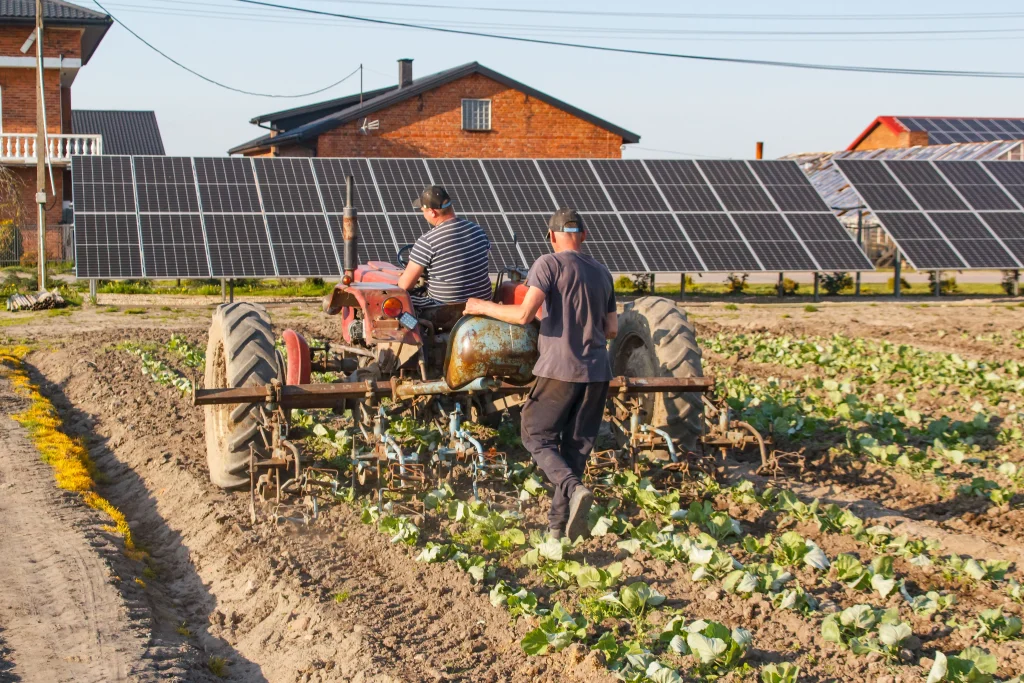
Landowners face growing economic pressures from climate volatility, rising input costs, and shifting global commodity prices that impact seasonal crop profit margins.
Leasing land rights to solar developers delivers predictable, long-term rental income that stabilizes family farm operations during low-yield growing seasons.
Learn more: Debunking the Myths About Renewable Energy
Simultaneously, local electrical utilities gain access to prime rural interconnection points without facing community pushback against removing prime farmland from production.
Examine technical research programs and farm integration guides published by the U.S. Department of Energy to understand federal dual-use solar initiatives.
Which agricultural practices pair best with elevated photovoltaic systems?
Sheep grazing offers an ideal pairing with solar installations, as livestock maintain vegetation height beneath panels without risking damage to electrical wiring equipment.
Cattle operations utilize higher racking structures that provide shade for herds, reducing heat stress while allowing large machinery to maneuver safely between row gaps.
Read more: Renewable Energy Thermodynamic Solar Storage Comeback
Specialized specialty crops like tomatoes, peppers, grapes, and forage grasses benefit immensely from moderated light levels and protected microclimates under trackers.
Investigating Agrivoltaics Creating New Opportunities reveals tailored mounting hardware designed specifically for tractor clearance, automated irrigation access, and specialized harvesting machinery.
When should developers choose single-axis trackers for farm installations?
Single-axis tracking systems adjust panel angles throughout the day, enabling operators to control light exposure reaching crops planted beneath the arrays.
During periods of intense solar radiation, trackers tilt to shade sensitive plants, while flattening during cloudy conditions to maximize ambient sunlight reaching crops.
Learn more: How to Stay Updated on Renewable Energy Trends
This dynamic shading capability allows farmers to fine-tune crop environments, mitigating extreme weather impacts like hail or excessive UV exposure on delicate produce.
Review international sustainable development benchmarks and renewable energy guidelines established by the International Renewable Energy Agency (IRENA) for global energy data.
Frequently Asked Questions (FAQ)
Does solar panel shading reduce overall crop growth?
Shade-intolerant crops like corn may experience reduced yields, but shade-tolerant crops like lettuce, berries, and pasture grasses thrive or show stable production.
How high are solar panels raised for agrivoltaic installations?
Racking heights typically range from eight to fourteen feet above ground level, allowing standard tractors, equipment, or grazing livestock to move safely underneath.
What is the Land Equivalent Ratio (LER) in dual-use farming?
The Land Equivalent Ratio measures total land productivity; an LER above 1.0 indicates that dual-use farming produces more combined energy and crops than single-use land.
Are agrivoltaic systems more expensive to install than standard solar?
Initial capital costs are higher due to elevated steel racking structures, but dual revenue streams from electricity and farming offset the upfront investment over time.
Advancing Agrivoltaics Creating New Opportunities demonstrates that clean energy development and food production can thrive synergistically on shared land.
Deploying elevated solar technology protects water resources, stabilizes farm income, and accelerates the global transition toward sustainable, resilient renewable energy infrastructure.
