
Dynamic Wireless Charging Lanes: Why Trucks Benefit More Than Cars or Bikes
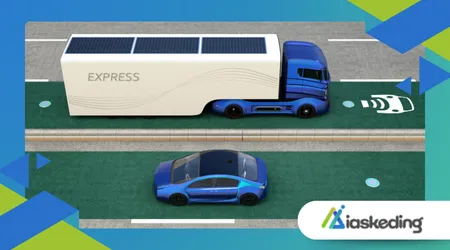
Dynamic Wireless Charging Lanes represent the most significant leap in sustainable infrastructure, offering a transformative solution for the future of heavy-duty transportation.
Modern logistics faces a massive hurdle: the weight of lithium-ion batteries often reduces the amount of cargo a truck can carry, creating a direct conflict between green energy and profitability.
Summary of Key Insights
- Payload Efficiency: Continuous power delivery allows trucks to utilize smaller batteries, significantly increasing the weight capacity available for actual freight and commercial goods.
- Operational Uptime: Eliminating stationary charging stops ensures that long-haul fleets remain in motion, maximizing driver hours and streamlining the entire global supply chain.
- Infrastructure ROI: While passenger cars benefit from convenience, the high cost of inductive roads yields much faster financial returns when serving high-frequency commercial trucking routes.
What is dynamic wireless power transfer technology?
Inductive power transfer utilizes electromagnetic fields to send energy across an air gap between two copper coils, one buried in the pavement and one attached to the vehicle.
Engineers design these systems to work seamlessly at highway speeds, ensuring that energy flows efficiently even as a vehicle moves rapidly over successive underground charging segments.
Management software coordinates the power distribution, activating only the specific coils located directly beneath a moving vehicle to minimize energy waste and ensure maximum public safety.
Recent breakthroughs in 2025 have pushed system efficiency toward 92%, making wireless induction nearly as effective as traditional plug-in cables for high-capacity energy needs.
How do dynamic wireless charging lanes work for heavy-duty vehicles?
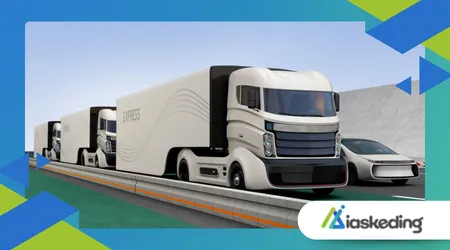
Underground power units convert alternating current from the electrical grid into high-frequency electricity, which then feeds into primary induction coils embedded within the road surface.
Secondary receivers mounted to the truck’s chassis capture this magnetic energy, converting it back into direct current to power the motor or replenish the onboard battery reserves.
Sophisticated sensors detect the approaching vehicle, triggering a millisecond-fast handshake that authenticates the truck and initiates the billing process for the energy consumed during transit.
Hardware durability remains a priority, as these charging pads must withstand the immense weight of Class 8 trucks while resisting extreme weather conditions like snow and heat.
Why do trucks benefit more from wireless roads than passenger cars?
Battery weight creates a severe penalty for electric trucks, as every pound of battery replaces a pound of potential revenue-generating cargo that a company could otherwise transport.
Passenger cars rarely hit their maximum weight limits, meaning the extra mass of a large battery pack is mostly a cost and range issue rather than a payload restriction.
Commercial fleets operate on razor-thin margins where every minute spent at a stationary charger represents lost income and delayed deliveries for retailers and consumers alike.
Dynamic charging allows fleet managers to specify smaller, lighter batteries that only need to bridge the gaps between wireless highway segments, effectively decoupling range from battery size.
According to research from the U.S. Department of Energy, reducing battery mass is the single most effective way to make heavy-duty electrification economically viable for long-haul routes.
Trucks follow predictable, high-volume routes, which allows planners to install charging infrastructure on specific corridors where it will see the highest possible utilization and fastest ROI.
Small vehicles like e-bikes or compact cars require significantly less energy, making the massive investment in road-integrated coils harder to justify compared to the impact on trucking.
What is the impact of dynamic charging on the logistics industry’s bottom line?
Fuel represents the second-largest operating expense for trucking firms, and switching to electricity via dynamic roads can slash these costs by over 40% in many regions.
Labor productivity improves because drivers do not have to plan their mandatory rest breaks around the availability of high-speed charging pedestals or wait in long queues.
Maintenance costs also decrease, as continuous power delivery reduces the deep discharge cycles that typically shorten the lifespan of expensive lithium-ion battery packs in heavy vehicles.
Insurance premiums may even stabilize, as the integration of smart road technology often accompanies advanced driver-assistance systems that improve overall safety for all highway users.
Which cities are already implementing dynamic wireless charging lanes?
Detroit successfully launched a one-mile pilot program near the Michigan Central innovation district, proving that wireless technology can coexist with standard urban infrastructure and heavy traffic.
France recently completed a milestone test on the A10 highway near Paris, where heavy-duty electric trucks maintained highway speeds while gaining more charge than they consumed.
Sweden leads the world in electric road systems, having tested various technologies including conductive rails and inductive pads to determine the most reliable solution for the Nordic climate.
Germany is currently evaluating “eHighways” for heavy transport, focusing on major industrial arteries where traditional overhead catenary lines might be too restrictive for varied vehicle heights.
Technical Performance Comparison (2025 Data)
| Vehicle Category | Typical Battery Weight (kg) | Payload Loss Impact | Charging ROI Rank |
| Heavy-Duty Truck | 4,500 – 8,000 | Critical (High) | 1 (Highest) |
| Delivery Van | 600 – 1,200 | Moderate | 2 |
| Passenger Car | 300 – 700 | Low | 3 |
| Electric Bike | 3 – 10 | Negligible | 4 |
When will wireless charging roads become a standard for American highways?
State departments of transportation are currently transitioning from small-scale pilots to regional corridors, with significant expansion expected as federal infrastructure funding becomes more accessible.
Standardization bodies like SAE International have finalized the J2954 protocols, ensuring that receivers from different manufacturers can all draw power from the same public road segments.
Widespread adoption depends on the “chicken and egg” problem, where carriers wait for roads to be built while states wait for enough trucks to justify the construction.
Market analysts predict that by 2030, primary freight routes connecting major ports to distribution hubs will feature the first commercial-grade Dynamic Wireless Charging Lanes in the country.
Investors are looking toward “Charging as a Service” models, where private companies fund the road upgrades in exchange for a share of the energy revenue from passing fleets.
Conclusion
The shift toward Dynamic Wireless Charging Lanes offers the most practical path to decarbonizing the heavy-duty transport sector without compromising the efficiency of our modern logistics networks.
While cars and bikes find convenience in this technology, the economic and physical realities of trucking make it the primary beneficiary of a wireless, electrified highway system.
As we move toward 2030, the integration of power directly into our pavement will likely define the next era of American industrial strength and environmental responsibility.
You can find more detailed analysis on the global transition to sustainable freight in the latest reports from the International Energy Agency.
FAQ: Frequently Asked Questions
Is dynamic wireless charging safe for humans and animals?
The electromagnetic fields are highly localized and shielded, meeting all international safety standards for human exposure and preventing any interference with pacemakers or other medical devices.
Does the system still work in rain or snow?
Inductive charging functions perfectly through water, ice, and snow, as magnetic fields are not obstructed by non-metallic materials commonly found on winter roadways.
Can any electric vehicle use these lanes?
Vehicles must be equipped with a specific receiver pad and compatible software to interact with the road, though retrofitting kits are becoming more common for existing fleets.
What happens if the truck moves out of alignment?
Sophisticated alignment assistants help drivers stay centered, but even if a truck drifts, the system adjusts power delivery or shuts down to prevent energy loss.
