
What Makes an Electric Truck More Expensive Than a Diesel Today?
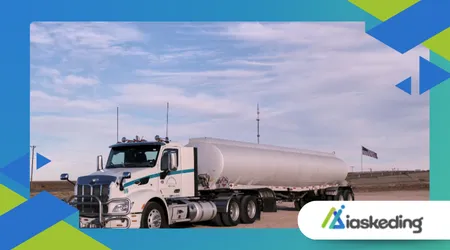
When we think about the future of transportation, the image of a silent, electric truck comes to mind. Yet, a crucial question lingers: What Makes an Electric Truck More Expensive than its diesel counterpart?
The immediate answer often points to the battery, but the reality is a complex web of technological, economic, and logistical factors.
This isn’t just a simple case of paying more for a cleaner ride; it’s about investing in a fundamentally different kind of vehicle and ecosystem.
The Battery: A High-Tech Powerhouse
The most significant contributor to the high cost of electric trucks is undoubtedly the battery pack.
Unlike a simple fuel tank, the battery is the heart of the vehicle’s propulsion and a marvel of chemical engineering.
The raw materials—lithium, cobalt, and nickel—are expensive and subject to volatile market prices.
The manufacturing process itself is intricate and requires specialized facilities, driving up production costs.
A battery pack for a long-haul truck can weigh thousands of pounds and cost as much as a new diesel truck on its own.
Think of it like this: a diesel engine is a mature, mass-produced technology refined over a century. An electric truck battery, however, is closer to a high-end, custom-built supercomputer.
Each cell must be meticulously crafted, monitored, and integrated into a complex thermal management system.
++The Future of Wind Energy: Trends and Innovations
This system is essential for maintaining optimal performance and safety, adding another layer of cost and complexity.
The Technology Gap: Beyond the Battery

Beyond the battery, the entire electric drivetrain is a new and sophisticated system.
The electric motors, power electronics, and sophisticated software that manage everything from charging to regenerative braking add to the overall price.
These components are not yet produced at the same scale as diesel engines, so they lack the cost-saving benefits of mass production.
++The Impact of Electric Trucks on Urban Noise Pollution
This contrasts sharply with the mature supply chain for internal combustion engine (ICE) vehicles.
The parts for a diesel truck—from the engine block to the exhaust system—are produced by countless suppliers, all competing on price and efficiency.
In contrast, the electric truck supply chain is still developing. Manufacturers often rely on a smaller pool of specialized suppliers for critical components, which limits competition and keeps prices high.
For example, a diesel truck’s fuel injection system has been optimized for decades, making it a relatively inexpensive component.
The equivalent for an electric truck—the sophisticated power inverter and control unit—is a far more complex and costly piece of technology.
++How Cold Storage Freight Companies Are Using Electric Trucks
This is a fundamental reason what makes an electric truck more expensive.
Economies of Scale: A Future Promise, Not a Present Reality
The cost of any new technology decreases with increased production.
This is the simple principle of economies of scale. Today, diesel trucks are sold in the millions globally, leading to significant cost savings at every stage of the manufacturing process.
Electric trucks, while gaining traction, are still a niche market.
This lower production volume means that the research and development costs for each vehicle are spread across fewer units, resulting in a higher sticker price.
It’s a classic chicken-and-egg problem. Until demand increases, production costs remain high.
Charging Infrastructure: An Additional Investment
The cost of an electric truck extends beyond the vehicle itself. A fleet must also invest in charging infrastructure, a significant capital expenditure.
For a single depot with a handful of trucks, this could mean installing several high-powered charging stations and upgrading the facility’s electrical grid.
For a national fleet, the costs can be staggering, including a network of strategically placed charging depots.
Read more: Electric trucks are already more economical than diesel ones in some countries, study says
This is an expense a diesel fleet simply doesn’t have. They rely on an existing, widespread, and mature fueling infrastructure.
Consider the example of a regional delivery company. They need to acquire ten electric box trucks. The initial cost of the vehicles is already higher.
On top of that, they must invest in a dozen Level 2 or DC fast chargers and potentially a new electrical transformer to handle the load.
This upfront infrastructure cost is a major hurdle. The cost of a diesel fuel pump, by comparison, is negligible.
Government Incentives: An Attempt to Bridge the Gap
Governments worldwide are trying to bridge this price gap with various incentives and tax credits.
For instance, the Inflation Reduction Act in the United States offers significant tax credits for the purchase of clean commercial vehicles.
These incentives are crucial for making electric trucks financially viable in the short term. However, they are not a permanent solution and often don’t fully offset the cost difference.
They serve as a temporary bridge until the industry achieves the necessary economies of scale. These incentives are a recognition from policymakers of what makes an electric truck more expensive.
The Total Cost of Ownership: A Different Equation
While the upfront cost is higher, the total cost of ownership (TCO) for electric trucks tells a different story.
According to a 2024 report by the North American Council for Freight Efficiency (NACFE), electric trucks can achieve a lower TCO over their lifetime due to reduced fuel and maintenance costs.
An electric truck has fewer moving parts, eliminating the need for oil changes, fuel filters, and other routine maintenance common in diesel engines.
This lower operational cost helps to amortize the higher initial purchase price over the life of the vehicle.
| Component | Diesel Truck (Cost/Mile) | Electric Truck (Cost/Mile) |
| Fuel/Energy | $0.50 – $0.70 | $0.20 – $0.40 |
| Maintenance | $0.15 – $0.25 | $0.05 – $0.10 |
| Total (Estimated) | $0.65 – $0.95 | $0.25 – $0.50 |
Note: These are illustrative estimates based on current market trends and can vary widely.
So, if the TCO is lower, why do people hesitate? The upfront capital required is a significant barrier, especially for smaller companies.
Securing financing for a higher-priced asset is more difficult, even with the promise of future savings.
This financial hurdle is yet another factor contributing to what makes an electric truck more expensive to acquire.
Conclusion: A Transformative, Not Incremental, Shift
The high price of electric trucks today isn’t a flaw; it’s a reflection of a technological and industrial transition. It’s the cost of moving from a century-old, mature technology to a new paradigm.
As battery technology improves, production scales up, and the supply chain matures, these costs will inevitably decrease.
The current price is a down payment on a future with cleaner air, quieter cities, and a more sustainable logistics industry.
The question isn’t whether electric trucks will become the norm but how quickly we can overcome these initial financial hurdles.
It is this complex landscape that defines what makes an electric truck more expensive today.
Frequently Asked Questions
Q: Will the price of electric trucks ever be comparable to diesel trucks?
A: Yes. As battery costs continue to fall and manufacturing scales up, the upfront cost of electric trucks is expected to approach parity with diesel trucks in the coming years.
Most experts predict this will happen sometime in the early 2030s.
Q: How does the range of an electric truck affect its cost?
A: A truck’s range directly correlates with the size and cost of its battery. A longer range requires a larger, more expensive battery pack, which is a major factor in what makes an electric truck more expensive.
Q: Are there different types of electric trucks?
A: Yes, there are battery-electric trucks (BEV), which run solely on a battery, and hydrogen fuel cell electric trucks (FCEV), which use hydrogen to generate electricity. Each has different costs and applications.
