
How Cold Storage Freight Companies Are Using Electric Trucks

The logistics industry is undergoing a seismic shift, and cold storage freight companies are using electric trucks to lead the charge.
No longer confined to short-haul deliveries, electric refrigerated trucks now handle cross-country routes, thanks to advancements in battery technology and charging infrastructure.
But how did we get here, and what does this mean for the future of perishable goods transportation? The answer lies in a combination of regulatory pressure, economic incentives, and technological breakthroughs.
Governments worldwide are tightening emissions standards, pushing freight companies to adopt cleaner alternatives.
Meanwhile, falling battery costs and improved energy density make electric trucks a viable option even for energy-intensive cold storage operations.
The transition isn’t just about compliance—it’s a strategic move. Early adopters are already seeing lower operational costs, enhanced brand reputation, and resilience against future fuel price volatility.
The Electric Revolution in Cold Chain Logistics
Cold storage freight demands precision. Temperature-sensitive cargo—pharmaceuticals, fresh produce, frozen foods—cannot afford delays or energy failures.
Traditional diesel-powered refrigeration units are notorious for high emissions and operational costs. Their inefficiency stems from constant idling and energy waste through heat dissipation.
Enter electric trucks: silent, efficient, and increasingly capable. Unlike diesel engines, which waste energy through heat and friction, electric refrigeration systems use precise thermal management, reducing energy waste.
++How to Plan an EV Road Trip Without Stress (With Real Map Examples)
A 2024 report by the International Energy Agency (IEA) revealed that electric heavy-duty vehicles could reduce supply chain emissions by up to 45% by 2030.
Cold storage freight companies are using electric trucks not just for sustainability but for long-term economic gains.
Why Electric Trucks Make Sense for Cold Storage
- Energy Efficiency – Electric refrigeration systems waste less energy than diesel-powered ones. Advanced heat pumps and phase-change materials maintain temperatures with minimal power draw.
- Lower Total Cost of Ownership – Fewer moving parts mean reduced maintenance. No oil changes, no exhaust system repairs—just battery checks and software updates.
- Regulatory Compliance – Stricter emissions laws push companies toward cleaner alternatives. Cities like London and Los Angeles are imposing low-emission zones, penalizing diesel trucks.
Take Example 1: Nordic Cold Chain Solutions—a European leader in frozen logistics. They replaced 30% of their diesel fleet with electric trucks, cutting fuel costs by 40% within two years.
++Battery Swapping for Electric Trucks: Does It Make Sense?
Another case is Example 2: Lineage Logistics, a U.S.-based cold storage giant. Their pilot program with Volvo electric trucks showed a 30% reduction in energy consumption per mile compared to diesel equivalents.
Battery Tech: The Game Changer
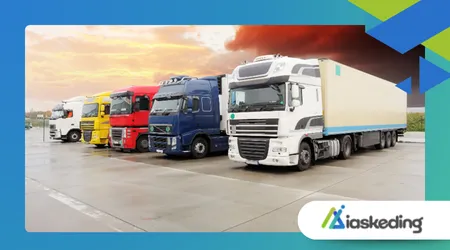
Early electric trucks struggled with range anxiety, especially when powering refrigeration. The dual demand of propulsion and cooling drained batteries quickly, limiting their practicality for long-haul cold storage freight.
Modern solid-state batteries, however, offer 600+ miles per charge. Companies like QuantumScape and Samsung SDI are developing cells that perform efficiently even in sub-zero temperatures.
Read more: Innovations in Electric Truck Batteries: What’s Next for Long-Haul Transportation?
Cold storage freight companies are using electric trucks equipped with advanced thermal management to maintain consistent temperatures without draining power.
Some models now feature separate battery systems for propulsion and refrigeration.
Example: Tesla Semi in Action
Walmart’s refrigerated Tesla Semi fleet now transports groceries across the U.S. Southwest. Real-world data shows a 25% reduction in energy use compared to diesel equivalents.
Another breakthrough is bidirectional charging, where trucks can power refrigeration units while parked, reducing idle energy consumption. This is a game-changer for multi-stop delivery routes.
Charging Infrastructure: The Missing Link
Fast-charging networks are expanding, but cold storage operators need specialized solutions.
Depot-based overnight charging works for local deliveries, but long-haul routes require megawatt-level chargers for quick top-ups during loading.
Read more: Fresh delivery, cleaner future – electric trucks for food and beverage
Companies like Electrify America and ChargePoint are rolling out high-power charging stations along major freight corridors.
These stations can deliver 80% charge in under 30 minutes—crucial for time-sensitive cold chain logistics.
Meanwhile, solar-powered cold storage hubs are emerging, allowing trucks to recharge using on-site renewable energy. This creates a closed-loop system where transportation and storage share clean energy resources.
| Factor | Diesel Trucks | Electric Trucks |
|---|---|---|
| Fuel Cost/Mile | $0.45 | $0.18 |
| Maintenance Cost | High | Low |
| Carbon Emissions | 2.7 kg CO2/mile | 0 kg (grid-dependent) |
Overcoming Skepticism: Are Electric Trucks Reliable?
Critics argue that extreme weather affects battery performance. Cold temperatures can reduce range, while constant refrigeration demands strain power reserves.
Yet, pre-conditioning technology—like Tesla’s battery heating system—ensures reliability even in sub-zero conditions. Some fleets use auxiliary battery packs dedicated solely to refrigeration, eliminating range trade-offs.
Norwegian logistics company Bring Frigo successfully operates electric refrigerated trucks in Arctic conditions. Their secret? Battery insulation and smart routing that accounts for temperature fluctuations.
Transitioning to electric trucks is like melting an iceberg—slow at first, but unstoppable once momentum builds. Early adopters gain a competitive edge, while laggards risk obsolescence.
Government Incentives and Industry Trends
Governments are accelerating the shift. The U.S. Inflation Reduction Act offers tax credits of up to $40,000 per electric truck. Similar programs exist in the EU and China.
The EU’s Green Deal mandates a 55% CO2 reduction by 2030, pushing cold storage freight companies to use electric trucks. Non-compliance could mean hefty fines or operational restrictions.
Meanwhile, industry collaborations are rising. DHL and Mercedes-Benz recently partnered to deploy 2,000 electric trucks for temperature-sensitive logistics by 2026.
Operational Challenges and Innovative Solutions
One of the biggest hurdles for cold storage freight companies using electric trucks has been maintaining consistent temperatures during long charging stops.
Traditional diesel units could keep refrigeration running indefinitely while refueling, but electric systems face battery drain concerns.
Innovators have responded with creative solutions like mobile battery buffers – portable power banks that attach to trucks during charging.
Companies like Carrier Transicold now offer hybrid systems that use small diesel generators solely for refrigeration during charging, creating a bridge technology while full electrification matures.
The Future of Autonomous Electric Cold Transport
Looking ahead, the convergence of electrification and automation promises to revolutionize cold chain logistics even further.
Cold storage freight companies are using electric trucks as the foundation for autonomous platooning systems, where multiple refrigerated trailers travel in close formation to reduce wind resistance.
Early tests by Einride and Maersk show these autonomous electric platoons could reduce energy consumption by up to 20% compared to solo trucks.
When combined with AI-powered route optimization that accounts for weather, traffic, and charging station availability, the potential for efficiency gains becomes enormous.
The next five years will likely see the first fully autonomous electric refrigerated trucks operating on dedicated freight corridors, fundamentally changing how we think about temperature-controlled logistics.
Frequently Asked Questions
Q: How do electric trucks handle long-haul cold storage routes?
A: Advances in solid-state batteries and fast-charging networks now enable 600+ mile ranges, making cross-country electric cold storage freight feasible.
Q: Are electric refrigeration units as reliable as diesel ones?
A: Yes. Modern thermal management systems maintain consistent temperatures with lower energy waste compared to diesel units.
Q: What’s the biggest challenge for electric cold storage trucks?
A: Charging infrastructure in remote areas remains a hurdle, but megawatt-level chargers are rapidly expanding.
The revolution is here. The question is: Are you ready to adapt?
