
Electric Truck Depot Charging Infrastructure Limits
The global transition to heavy-duty fleet electrification reveals that Depot Charging Infrastructure Limits are becoming the primary bottleneck for logistics companies aiming to scale their zero-emission operations in 2026.
While vehicle technology has matured rapidly, the physical and electrical constraints of existing facilities often dictate the pace of adoption.
It is a frustrating irony: the trucks are ready for the road, but the buildings meant to house them simply cannot keep up with the demand.
Understanding these boundaries is essential for any strategic planning. The widening gap between vehicle delivery and energized chargers is creating a new kind of supply chain crisis across major industrial corridors.
This article examines the technical and regulatory ceilings that define today’s charging landscape, offering a realistic perspective on how to navigate these systemic barriers without stalling your operations.
What is a depot charging infrastructure limit and why does it occur?
A charging limit is essentially the maximum capacity of a facility to deliver electricity to a fleet without causing a local blackout.
These boundaries exist because most industrial depots were originally designed for diesel storage and a few office lights, not for the megawatt-level loads required by heavy-duty chargers.
It is like trying to run a high-speed data center on the wiring of a 1950s house.
When a fleet manager attempts to install multiple 350 kW or megawatt charging systems (MCS), the existing transformer often hits its thermal ceiling immediately.
Upgrading this equipment isn’t just about writing a check; it requires intense coordination with utilities that may not have any surplus capacity available at that specific substation.
Physical geography also plays a silent, punishing role. Many depots are tucked into dense urban areas where expanding the footprint for massive transformers is practically impossible.
Thus, Depot Charging Infrastructure Limits are frequently a combination of invisible electrical bottlenecks and tangible real estate shortages that hinder large-scale electrification efforts.
How does power demand vary between different electric truck classes?
Class 8 tractors require significantly more energy than medium-duty delivery vans, necessitating a tier of infrastructure that stresses the depot environment.
A single long-haul electric truck can consume as much energy in one charge as a small apartment complex does in an entire day.
It’s a massive concentration of power that most municipal grids were never built to handle.
Managing these loads requires sophisticated load-balancing software to prevent peak demand charges, which can quickly make electricity more expensive than diesel.
Operators must calculate their “base load” versus their “peak load” to understand exactly where their specific infrastructure will eventually buckle under the pressure of a growing fleet.
To gain deeper technical insights into the high-power charging standards, the CharIN e.V. association provides authoritative documentation on the Megawatt Charging System (MCS).
Their work is pivotal in defining how these high-energy transfers can occur safely within the tight constraints of existing facility footprints.
Which physical constraints most impact depot retrofitting?
Retrofitting an active warehouse often reveals that the underground conduit capacity is insufficient for the heavy cabling required by high-output DC fast chargers.
Digging up concrete to lay new lines disrupts daily operations, creating a hidden cost and a logistical headache that many fleet owners overlook during the honeymoon phase of planning.
Spacing between parking stalls also limits where you can actually put a charging pedestal.
Class 8 trucks require wide turning radii, and if a charger is placed incorrectly, it becomes a magnet for accidental collisions.
A broken charger isn’t just an equipment loss; it’s a sidelined truck that isn’t moving freight.
Furthermore, the sheer weight of the hardware and cooling systems often requires reinforced concrete pads.
These physical Depot Charging Infrastructure Limits often force companies to make a hard choice: settle for a smaller electric fleet or face the staggering cost of a complete facility relocation.
Comparison of Charging Technologies and Grid Impact (2026)
| Charging Tier | Typical Output | Primary Use Case | Estimated Grid Impact per 10 Units |
| Level 2 AC | 19.2 kW | Overnight / Medium Duty | 0.2 MW (Minimal) |
| DC Fast Charge | 150 – 350 kW | Regional Haul / Class 8 | 1.5 – 3.5 MW (Significant) |
| Megawatt (MCS) | 1,000 kW + | Long Haul / Quick Turn | 10 MW + (Extreme) |
| Opportunity | 500 kW | Port / Terminal Tractors | 5 MW (Localized) |
Why are utility interconnection timelines the biggest hurdle?
Even with the capital ready, companies remain at the mercy of utility interconnection queues, which can stretch for years.
In many jurisdictions, the time required to upgrade a substation or run a new high-voltage line far exceeds the production time of the trucks themselves.
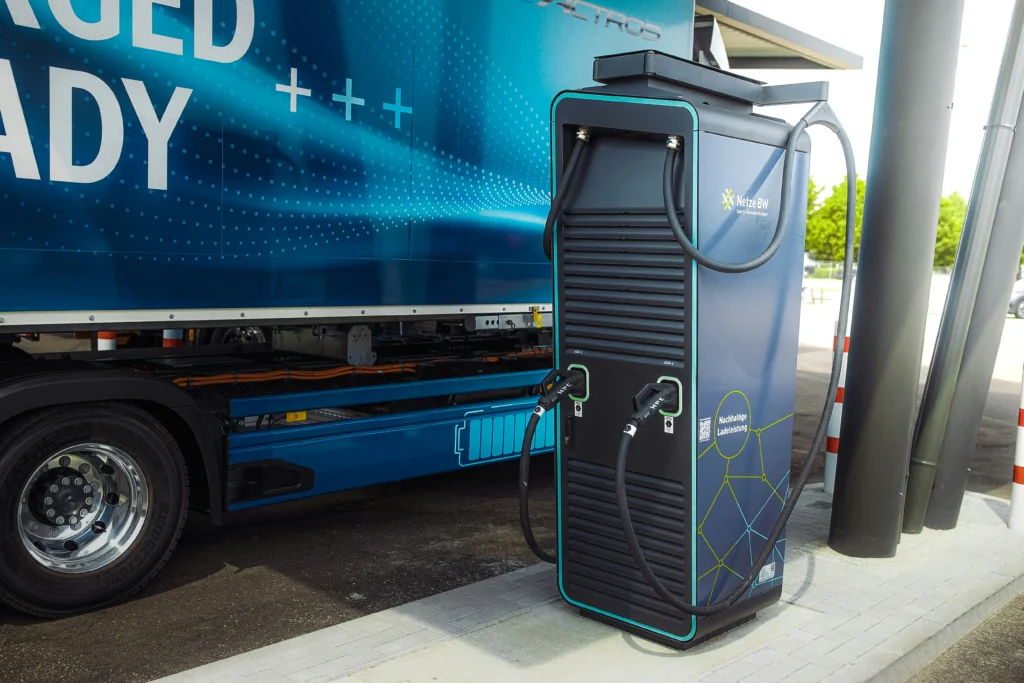
It’s a bizarre reality where you can have the vehicles but no way to “fuel” them.
Learn more: Electric Truck Megawatt Charging System MCS Explained
Utilities are currently struggling to balance this sudden influx of high-load requests with the need to maintain stability for residential customers.
This misalignment creates a “chicken-and-egg” scenario that can stall a company’s decarbonization goals indefinitely.
Strategic planning must involve the utility during the pre-acquisition phase. Ignoring these Depot Charging Infrastructure Limits until the trucks are sitting in the lot results in “stranded assets”, expensive equipment that cannot generate revenue because the power hasn’t been authorized yet.
What are the most effective ways to mitigate infrastructure limits?
On-site energy storage acts as a much-needed buffer. Large-scale battery systems allow for “peak shaving,” charging slowly during low-demand periods and discharging rapidly when the fleet docks.
This reduces the immediate stress on the grid and can bypass the need for some massive utility upgrades.
Solar canopies also provide a supplemental energy source, though they rarely meet the full demand of a heavy-duty fleet. The real hero is intelligent energy management software.
Learn more: Renewable Energy Long Duration Storage Beyond Lithium
By prioritizing charging for trucks with the earliest departure times, you can maximize your current power allotment without blowing a fuse.
Staggering the charge cycles throughout the night is the most cost-effective way to bypass traditional Depot Charging Infrastructure Limits.
This software-driven approach allows you to support more vehicles with the hardware you already have, rather than waiting years for a grid expansion that might never come.
How does the “Managed Charging” approach improve depot efficiency?
Managed charging uses real-time data to adjust power flow based on battery states, route requirements, and current electricity prices.
Instead of every truck drawing maximum power at 8:00 PM when rates are high and the grid is stressed, the system distributes the load evenly over an eight-hour window.
Read more: The Hidden Weak Point in Electric Transport: Depot-Level Energy Management Systems (EMS)
This prevents the facility from hitting its main breaker limit and avoids the exorbitant “demand charges” that utilities levy.

For a fleet of 50 trucks, managed charging is often the only thing standing between a sustainable operating budget and a massive monthly loss.
For further reading on the economic viability of heavy-duty fleet electrification, the International Council on Clean Transportation (ICCT) offers comprehensive reports on global trucking trends.
Their data highlights why infrastructure policy must evolve to support the decarbonization goals we’ve set for ourselves.
FAQ: Navigating Depot Charging Constraints
How much power does a typical Class 8 electric truck depot need?
A mid-sized depot with 20 heavy-duty trucks can easily require 3 to 7 megawatts. To put that in perspective, it’s roughly the peak demand of a large shopping mall or a local hospital.
Can I use existing mobile chargers to avoid infrastructure upgrades?
Mobile chargers are great for pilots or small tests, but they lack the efficiency and raw power required for 24/7 industrial operations. They are a bridge, not a permanent solution.
What is the “Soft Cost” of depot charging infrastructure?
Soft costs include permitting, utility design fees, and project management. These can account for up to 30% of your total budget and often grow if the site faces unexpected civil engineering challenges.
Is Megawatt Charging (MCS) necessary for all depots?
Not at all. MCS is for long-haul operations that need a “splash and go” fast turnaround. For regional models where trucks stay at the depot overnight, standard 150-350 kW DC fast chargers are usually sufficient.
The road to a fully electrified heavy-duty sector is paved with more than just batteries; it requires a fundamental redesign of our energy hubs.
While Depot Charging Infrastructure Limits present a formidable challenge, they also represent a shift toward more intelligent, resilient logistics networks.
Companies that prioritize early utility engagement and invest in smart energy management will find themselves at a significant competitive advantage.
Success in 2026 will be measured not by the number of trucks on the road, but by the strength of the infrastructure supporting them.
Overcoming these limits is a marathon, requiring cooperation between private fleets and public utilities to ensure the power is there when the wheels need to turn.
