
Payload Weight Challenges Facing Electric Truck Adoption
Evaluating the structural shift from diesel engines to zero-emission powertrains requires a deep technical understanding of the core operational trade-offs involved.
The most prominent barrier to widespread commercial implementation stems directly from the Payload Weight Challenges Facing fleet managers who are seeking to maintain their historic freight volumes.
Because electric heavy goods vehicles rely on heavy energy storage systems to achieve practical driving ranges, their unladen weight increases dramatically.
This physical reality forces logistics companies to make a difficult choice between sacrificing essential cargo space or operating fewer miles per route.
What causes the immense weight penalty in electric semi-trucks?
The fundamental limitation of current battery technologies lies in their gravimetric energy density, which remains substantially lower than that of conventional fossil fuels.
To propel a forty-four-tonne articulated vehicle over long distances, manufacturers must install massive battery packs that alter the vehicle’s weight distribution.
These industrial power systems, often ranging from four hundred to over seven hundred kilowatt-hours, add thousands of kilograms to the truck chassis.
Consequently, every kilogram of battery weight added to the tractor unit directly subtracts from the legal amount of commercial freight the vehicle can transport.
While a traditional diesel tractor unit benefits from a lightweight fuel tank that empties during transit, an electric vehicle carries its full battery weight constantly.
Managing the Payload Weight Challenges Facing heavy-duty hauliers requires recognizing that these battery systems cannot be downsized without sacrificing the range needed for long-haul operations.
How do regional gross vehicle weight regulations penalize fleet operators?
Transportation laws globally dictate strict maximum gross vehicle weight (GVW) limits and single-axle weight thresholds to protect public road infrastructure from excessive wear.
In regions like the United Kingdom and Europe, standard six-axle articulated configurations are traditionally legally restricted to a maximum of forty-four tonnes.
Because an electric equivalent can weigh up to four tonnes more than a diesel counterpart due to its batteries, its legal payload drops proportionally.
This regulatory bottleneck reduces transport efficiency, forcing companies to deploy additional vehicles and drivers simply to move the exact same volume of goods.
To analyze corporate transport compliance metrics, review global commercial vehicle safety research, and examine evolving logistical decarbonization policies across major international shipping corridors, the European Automobile Manufacturers’ Association (acea.auto) serves as a vital statistical and regulatory repository for the industry.
| Heavy Truck Configuration Type | Total Installed Battery Capacity | Approximate Battery Weight | Maximum Legal Freight Payload | Average Payload Reduction Penalty |
| Standard Diesel 6×2 Tractor | Not Applicable (Diesel Fuel) | 0 kg (Dry Tank Baseline) | Up to 29.0 Tonnes | 0% (Industry Reference) |
| Medium-Range EV 6×2 (e.g., Scania) | 416 kWh Lithium-Ion | 2,300 kg | Up to 26.7 Tonnes | 7.9% Cargo Loss |
| Long-Haul EV 6×2 (e.g., Mercedes) | 600 kWh LFP Battery | 3,500 kg | Up to 25.5 Tonnes | 12.0% Cargo Loss |
| Extended-Range EV (e.g., Volvo FH) | 728 kWh High-Density | 4,160 kg | Up to 24.8 Tonnes | 14.4% Cargo Loss |
Why do weight constraints impact specific commodity sectors more than others?
The commercial severity of payload loss depends heavily on the volumetric density of the specific goods being transported across the supply chain.
Hauliers moving lightweight, high-volume items like consumer electronics or packaged parcels usually fill their trailers completely before hitting maximum weight limits.
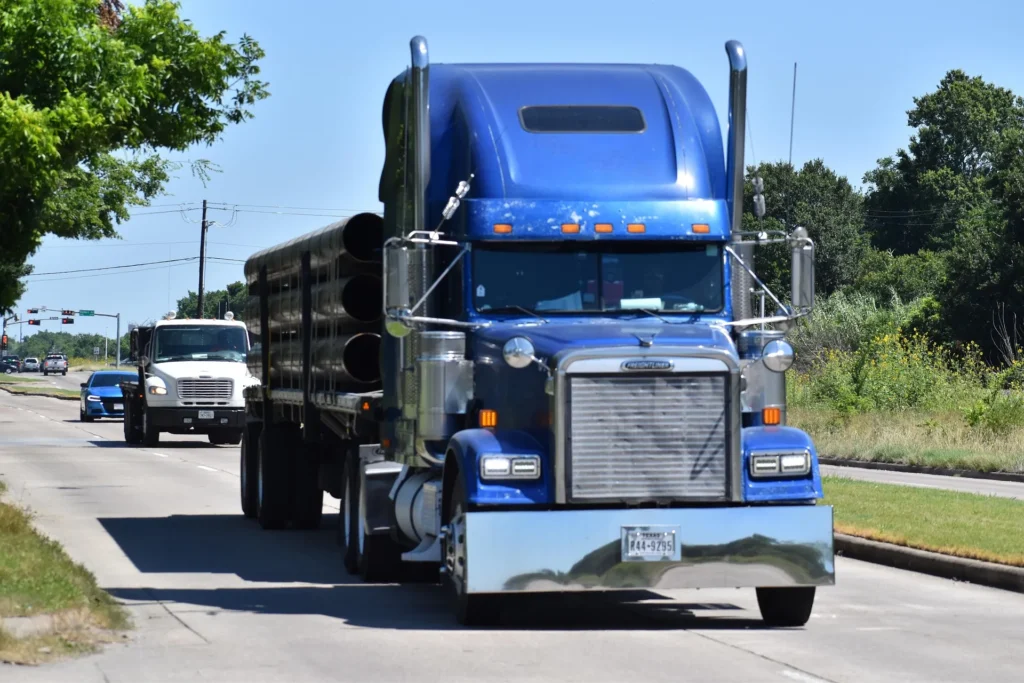
Conversely, industrial sectors dealing with heavy, low-volume materials such as aggregates, agricultural products, or liquid chemicals hit legal weight ceilings rapidly.
Learn more: The Hidden Cost of Payload Reduction in Electric Freight Vehicles
For these operators, the Payload Weight Challenges Facing fleet integration present an immediate threat to profit margins, as fewer tonnes delivered means reduced revenue per trip.
Haulage associations worldwide are actively lobbying governments to grant permanent weight derogations of at least two to four tonnes for zero-emission vehicles.
Without these structural regulatory changes, the higher upfront capital investment of electric trucks becomes almost impossible to recoup through daily operations.
Which technological advancements could mitigate freight capacity losses by 2030?
Sustained investment in alternative battery chemistry and structural integration methods holds the key to restoring freight capacity parity with conventional diesel vehicles.
Semicondutor innovations and the gradual commercialization of solid-state cells promise to double energy density while dropping total pack weights significantly.
Read more: Why Lightweight Composite Chassis Matter More in Electric Trucks Than in Diesel Ones
Furthermore, integrating the cells directly into the truck’s ladder frame or utilizing advanced e-axles eliminates heavy separate structural enclosures.
These engineering refinements maximize chassis space, lower the vehicle’s center of gravity, and reclaim hundreds of kilograms for commercial cargo capacity.
To evaluate global energy transition pathways, download comprehensive international electric vehicle outlooks, and check verified clean energy adoption datasets across multiple industrial sectors, the International Energy Agency (iea.org) provides high-level macro-economic modeling and policy recommendations.
Balancing technological potential with immediate logistics realities
Overcoming the operational obstacles of heavy-duty fleet electrification requires balancing long-term environmental targets with the pragmatic demands of transport economics.
As battery densities improve and infrastructure matures, the structural barriers inhibiting widespread commercial integration will gradually dissolve across global markets.

Learn more: How AI-Based Energy Forecasting Is Optimizing Electric Truck Fleet Scheduling
Review the battery weights and payload thresholds structured within our technical alignment matrix, evaluate your specific commodity routing parameters, and track regulatory updates.
By thoroughly analyzing the Payload Weight Challenges Facing modern freight, fleet directors can execute data-driven procurement strategies that protect operational efficiency.
Frequently Asked Questions about Electric Truck Payloads
Why do LFP batteries weigh more than NMC alternatives in electric trucks?
Lithium iron phosphate (LFP) chemistry offers superior thermal stability and structural durability but possesses a lower energy density, requiring more physical mass to achieve identical range targets.
Are there any current weight exemptions for electric heavy goods vehicles?
Several European nations and US states allow a temporary two-tonne allowance for zero-emission trucks, though transport groups argue this remains insufficient for long-haul parity.
How does winter weather alter the weight-to-range calculation of an EV truck?
Low temperatures reduce battery efficiency, requiring vehicles to consume more energy for cabin and component heating, which effectively penalizes the available operational range per charge cycle.
Can hydrogen fuel cell trucks completely bypass these payload issues?
Hydrogen systems feature a much higher gravimetric density than batteries, offering long ranges with minimal weight penalties, though high fuel costs and scarce infrastructure currently limit adoption.
