
Are Electric Skateboards Legal in Your City?
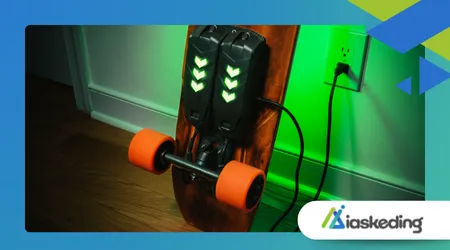
The question “are electric skateboards legal in your city?” is more pressing than ever as urban mobility evolves.
With congestion worsening and eco-conscious commuting on the rise, electric skateboards (e-skateboards) have surged in popularity.
Yet, their legal status remains a tangled web of local ordinances, state laws, and inconsistent enforcement.
Some cities, like Portland and Barcelona, have embraced them as legitimate last-mile transport solutions. Others, such as London and Sydney, impose strict bans, leaving riders in legal limbo.
Why does such disparity exist? And what does it mean for the future of urban mobility?
This guide dives deep into the complex landscape of e-skateboard legality, exploring regional differences, enforcement realities, safety debates, and economic impacts.
Whether you’re a daily rider, a policymaker, or just curious, understanding these nuances is crucial in 2025.
The Global Patchwork of E-Skateboard Laws
Electric skateboard regulations vary wildly across the globe, reflecting broader cultural attitudes toward micromobility.
In the U.S., the federal government classifies them as “personal electric mobility devices,” but cities and states set their own rules.
For instance, California permits e-skateboards on roads with speed limits under 35 mph, while New York City only allows them in bike lanes.
Meanwhile, in Germany, they must have handlebars to qualify as street-legal—rendering most traditional e-skateboards illegal.
++Understanding the Charging Curve of Commercial E-Truck Batteries
Asia presents another contrast. Tokyo tolerates them in practice, despite ambiguous laws, while Singapore enforces a zero-tolerance policy.
This inconsistency forces riders to navigate a legal minefield simply by crossing municipal lines.

Why Such Inconsistency?
The lack of uniformity stems from differing priorities. Some governments prioritize pedestrian safety, fearing collisions on sidewalks.
Others see e-skateboards as a sustainable alternative to cars and actively encourage their use.
++How to Choose the Right Electric Bike for Your Needs
A 2024 report by the International Transport Forum found that 43% of major cities still lack clear e-skateboard regulations, leading to confusion among riders and law enforcement alike.
Without standardized laws, enforcement becomes arbitrary—some officers issue warnings, while others impose fines.
The Role of Speed and Motor Power: electric skateboards legal in your city
Many cities base legality on motor wattage and top speed. For example:
- Under 250W & 15 mph (24 km/h): Often treated like bicycles (e.g., Amsterdam).
- 250W–1000W & 20 mph (32 km/h): May require registration (e.g., parts of Australia).
- Over 1000W or 25 mph (40 km/h): Frequently banned (e.g., Dubai).
This tiered approach attempts to balance innovation with safety, but riders often find themselves unintentionally breaking laws due to vague classifications.
How Cities Classify Electric Skateboards
Are they toys? Vehicles? Or something entirely new? This classification dilemma lies at the heart of the legal confusion.
++The Cost of Charging vs Fueling Non-Car EVs
The U.S. Approach: A State-by-State Puzzle
The U.S. Department of Transportation broadly categorizes e-skateboards under “low-speed electric vehicles,” but states interpret this differently.
- California: Legal on roads under 35 mph if under 1,000W.
- Florida: Banned on sidewalks but allowed on streets.
- Illinois: No explicit laws, leaving enforcement to local police discretion.
This inconsistency means a rider could be legal in Chicago but fined across state lines in Indiana.
Europe’s Strict Technical Requirements
The EU’s Machinery Directive imposes strict safety standards, requiring:
- UL2272 certification (fire safety).
- Maximum speed limits (often 15.5 mph / 25 km/h).
- Lighting and braking systems for night use.
Countries like France and Sweden enforce these rigorously, while others, like Italy, turn a blind eye to non-compliant models.
The Gray Market Problem
Many riders unknowingly purchase uncertified boards online, only to discover they’re illegal in their city.
Amazon and AliExpress listings rarely clarify regional restrictions, leaving buyers at risk of fines or confiscation.
Safety vs. Innovation: The Regulatory Tug-of-War
Cities fear accidents, but heavy-handed bans may do more harm than good.
The Pedestrian Safety Debate
Opponents argue e-skateboards endanger walkers, especially on crowded sidewalks. However, data from Copenhagen—where e-skateboards share bike lanes—shows a 62% reduction in accidents compared to mixed-use pathways.
The real issue may not be the boards themselves, but where they’re permitted to ride.
The Case for Dedicated Micromobility Lanes
Cities like Oslo and Austin have invested in protected bike/skate lanes, significantly reducing conflicts. If more urban centers followed suit, would bans still be necessary?
Meanwhile, outright prohibitions push riders onto unsafe roads or into illegal behavior, increasing risks rather than mitigating them.
Enforcement Realities: Who Actually Gets Ticketed?
Laws exist, but enforcement is wildly inconsistent.
Selective Policing: A Global Trend
- Tokyo: Rarely enforced unless a rider is reckless.
- Dubai: Heavy fines (up to $1,000) for unregistered boards.
- Berlin: A 2024 survey found 78% of riders ignored local laws, yet few faced penalties.
This inconsistency undermines respect for regulations, creating a cycle of noncompliance.
The Rise of “Under-the-Radar” Riding
Many commuters simply avoid high-visibility areas, knowing enforcement is sporadic. But is this a sustainable solution, or does it delay meaningful policy reform?
The Economic Impact of Restrictive Laws
Bans don’t just frustrate riders—they hurt businesses.
How Legal Clarity Boosts Local Economies
A 2025 Micromobility Industries report found cities with clear e-skateboard laws saw a 31% increase in related retail sales. Conversely, restrictive policies drive buyers to unregulated online markets.
The Black Market Risk
Strict bans encourage underground modifications, leading to unsafe, overpowered boards with no safety certifications. Is prohibition truly the best way to protect riders?
What’s Next? Advocacy and Smarter Policies
Grassroots movements are pushing for change.
San Francisco’s “Right to Ride” Success
After a two-year campaign, the city legalized e-skateboards in 2024, proving organized advocacy works. Could your city be next?
How to Get Involved
- Join local micromobility groups.
- Petition city councils for clearer laws.
- Push for infrastructure improvements, not just bans.
Final Thoughts: The Road Ahead
The core question isn’t just “are electric skateboards legal in your city?” but whether urban planning will adapt to new transportation realities.
Blanket bans are a short-sighted solution—smart policies and infrastructure investments are the future.
For further reading, explore:
- International Transport Forum’s latest micromobility report
- Electric Skateboard Legality: Are They Legal in Your State?
Ride responsibly. Advocate wisely. The streets of 2025 should welcome innovation, not fear it.
Frequently Asked Questions (FAQs)
Q: Can I ride my electric skateboard on sidewalks?
A: It depends. Most cities ban sidewalk riding, but some allow it under speed limits (e.g., under 10 mph). Always check local laws.
Q: Do I need a license for an e-skateboard?
A: Rarely. However, high-power boards (over 1000W) may require registration in certain regions (e.g., parts of Australia).
Q: What happens if I’m caught riding illegally?
A: Penalties range from warnings (common in Tokyo) to heavy fines (up to $1,000 in Dubai). Confiscation is possible in strict jurisdictions.
Q: Are there any upcoming law changes in 2025?
A: The EU is reviewing its micromobility regulations, and several U.S. states are considering clearer e-skateboard laws. Stay updated via local advocacy groups.
Q: How can I check if my board is street-legal?
A: Look for UL2272 certification (fire safety) and compare its specs (wattage, speed) against local regulations. When in doubt, contact your city’s transportation department.
This guide provides a comprehensive, up-to-date look at e-skateboard legality in 2025. Laws shift frequently, so always verify local rules before riding. Stay safe, stay legal, and keep pushing for smarter urban mobility policies.
