
Offshore Wind Farms: Challenges and Opportunities
The quest for clean energy solutions has led us to the vast expanse of our oceans. Offshore wind farms stand as beacons of hope in the renewable energy landscape. These towering turbines, anchored in the sea, harness the power of wind to generate electricity without harmful emissions.
As the world shifts towards sustainable development, offshore wind power emerges as a promising frontier. The potential for clean energy production is immense, with steady winds and ample space at sea offering ideal conditions for large-scale wind farms.
Yet, this journey isn’t without its hurdles. From technical challenges to environmental concerns, the offshore wind industry faces a unique set of obstacles. But with these challenges come opportunities for innovation and growth, paving the way for a greener future powered by the winds of change.
Understanding Offshore Wind Energy: A Comprehensive Overview
Offshore wind energy harnesses the power of ocean breezes to generate clean electricity. Wind turbines, towering structures with massive blades, capture wind energy and convert it into usable power. These offshore installations are placed in bodies of water, typically oceans or large lakes, where winds are stronger and more consistent than on land.
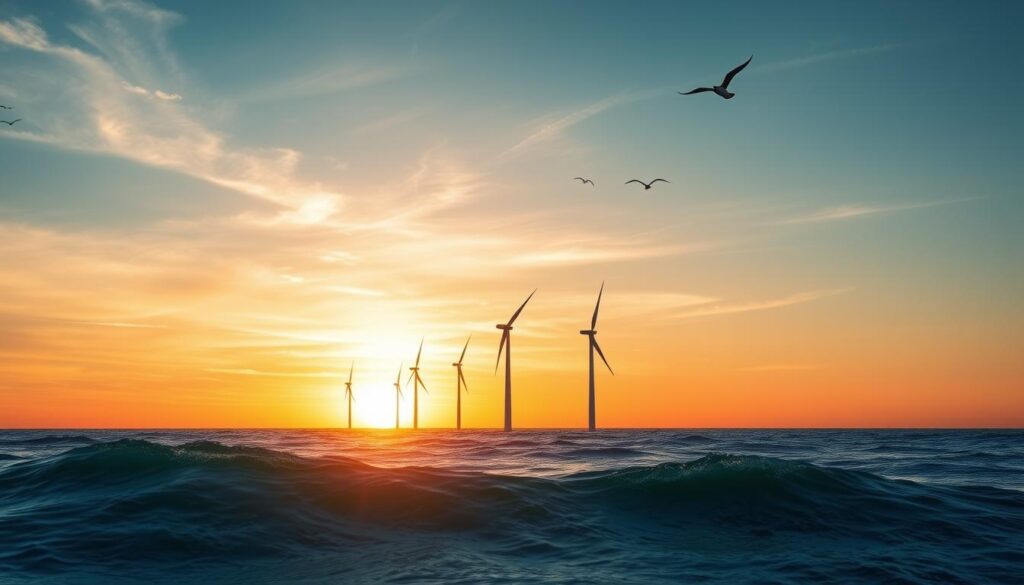
Wind farm technology has advanced rapidly in recent years. Modern offshore wind turbines can reach heights of over 250 meters and generate up to 15 megawatts of power each. This is enough to supply electricity to thousands of homes. The process of electricity generation begins when wind spins the turbine blades, which turn a shaft connected to a generator.
Offshore wind farms offer several advantages over their onshore counterparts. They can be built larger, capture stronger winds, and don’t compete for land use. Offshore wind power is a renewable and infinite energy source that creates no harmful greenhouse gas emissions, making it vital for future electricity generation to combat climate change.
“Offshore wind energy is a game-changer in our fight against climate change, offering clean, reliable power on a massive scale.”
Let’s compare offshore wind farms to other renewable energy sources:
| Energy Source | Space Efficiency | Power Output | Environmental Impact |
|---|---|---|---|
| Offshore Wind | High | Very High | Low |
| Onshore Wind | Medium | High | Low |
| Solar | Low | Medium | Very Low |
| Hydroelectric | Low | High | Medium |
Environmental Impact and Sustainability Benefits
Offshore wind farms play a crucial role in carbon emissions reduction and climate change mitigation. These massive turbines harness the power of ocean winds to generate clean electricity, significantly reducing our reliance on fossil fuels. By displacing conventional energy sources, offshore wind contributes to a substantial decrease in greenhouse gas emissions.
The impact of offshore wind farms on marine ecosystems is a topic of ongoing research. While concerns exist about potential disturbances to sea life during construction, studies suggest that these structures can actually enhance marine biodiversity. The turbine foundations act as artificial reefs, attracting various species and promoting fish populations.
Offshore wind farms can serve as sanctuaries for marine life, offering protection from commercial fishing activities and creating new habitats for diverse species.
Wildlife conservation efforts are integral to offshore wind development. Developers implement strategies to minimize risks to birds and marine mammals. These include careful site selection, seasonal construction restrictions, and the use of advanced monitoring technologies to detect and avoid wildlife collisions.
| Environmental Aspect | Positive Impact | Mitigation Strategy |
|---|---|---|
| Carbon Emissions | Significant reduction | Replacing fossil fuel power generation |
| Marine Ecosystem | Creation of artificial reefs | Careful site selection and monitoring |
| Bird Population | Minimal impact with proper planning | Advanced radar systems for collision avoidance |
| Marine Mammals | Potential sanctuary areas | Noise reduction during construction |
The sustainability benefits of offshore wind extend beyond environmental considerations. These projects create green jobs, stimulate local economies, and contribute to energy security. As technology advances and costs decrease, offshore wind is poised to become a cornerstone of sustainable energy portfolios worldwide.
Economic Aspects of Offshore Wind Development
Offshore wind farms present significant economic opportunities in the energy market. The initial investment costs for these projects are substantial, ranging from $2 to $4 billion for a typical 500-megawatt farm. These costs cover turbine manufacturing, installation, and grid connection.
Despite high upfront expenses, offshore wind projects offer long-term financial benefits. As technology improves and economies of scale kick in, the cost of offshore wind energy is decreasing. This trend is making it increasingly competitive with traditional energy sources.
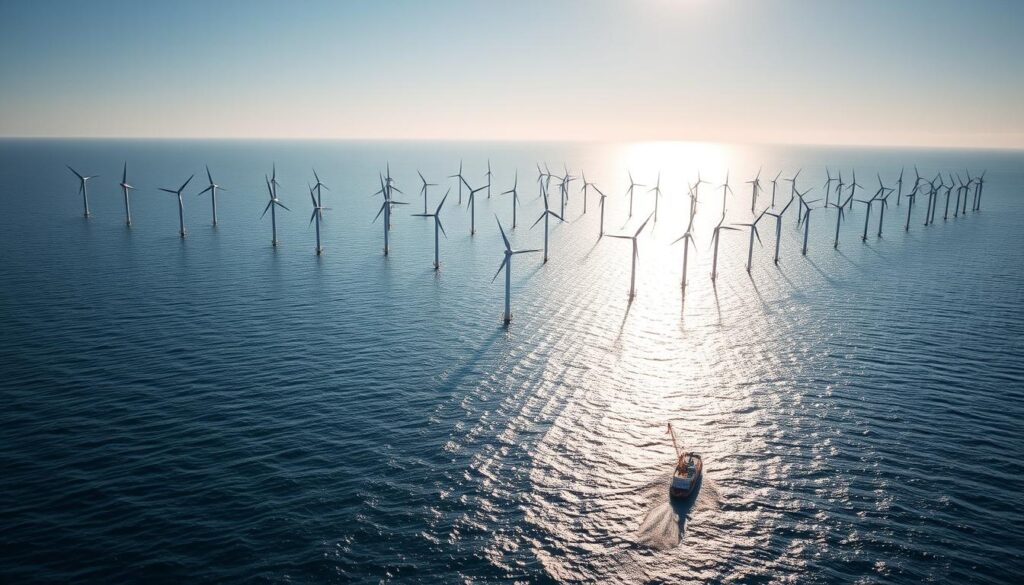
Job creation is a significant advantage of offshore wind development. These projects generate employment across various sectors, including manufacturing, construction, and maintenance. A single offshore wind farm can create up to 2,500 jobs during its construction phase and 100 permanent positions for ongoing operations.
Government incentives play a crucial role in promoting offshore wind development. These may include tax credits, grants, and favorable regulatory frameworks. Such support helps offset initial investment costs and encourages private sector participation in the industry.
| Economic Aspect | Impact |
|---|---|
| Investment Costs | $2-4 billion for 500MW farm |
| Job Creation | Up to 2,500 construction jobs, 100 permanent |
| Energy Market Impact | Increasing competitiveness |
| Government Incentives | Tax credits, grants, favorable regulations |
The economic ripple effects of offshore wind projects extend to local economies. They stimulate growth in related industries such as shipbuilding, port services, and specialized equipment manufacturing. This diversification strengthens regional economic resilience and fosters innovation in the renewable energy sector.
Technological Innovations in Offshore Wind Energy
Offshore wind energy is rapidly evolving with groundbreaking technologies. Floating wind turbines are revolutionizing deep-water installations, enabling wind farms in areas previously thought impossible. These innovative platforms can be anchored in waters exceeding 60 meters depth, vastly expanding potential sites for wind energy production.
Energy storage solutions are addressing the intermittent nature of wind power. Advanced battery systems and hydrogen production facilities are being integrated with offshore wind farms. This integration allows excess energy to be stored during peak production times and released when demand is high, ensuring a stable power supply.
Grid integration technologies are crucial for efficiently transmitting offshore wind power to onshore networks. High-voltage direct current (HVDC) transmission systems minimize energy losses over long distances, making it feasible to locate wind farms further from shore.
Maintenance technology for offshore wind farms has seen significant advancements. Robotic systems and drones now perform routine inspections and minor repairs, reducing the need for human intervention in hazardous offshore environments. These innovations cut maintenance costs and improve turbine uptime.
| Innovation | Benefits | Challenges |
|---|---|---|
| Floating Wind Turbines | Deep-water installation, larger wind farm potential | Complex mooring systems, higher initial costs |
| Energy Storage | Stable power supply, grid balancing | Technology scalability, integration costs |
| Grid Integration | Efficient power transmission, reduced losses | Infrastructure upgrades, regulatory challenges |
| Maintenance Technology | Reduced costs, improved safety | Initial investment, technology reliability |
These technological advancements are driving the offshore wind sector forward, promising a future of cleaner, more efficient energy production. As research continues, we can expect even more innovative solutions to emerge, further solidifying offshore wind’s role in the global energy landscape.
Conclusion
Offshore wind farms are set to play a major role in the global energy transition. These powerful sources of clean energy offer a sustainable future for our planet. As technology advances, we’re seeing more efficient turbines and improved installation methods. This progress is driving down costs and boosting the appeal of offshore wind.
The future outlook for offshore wind is bright. Many countries are adopting this technology as part of their renewable energy plans. From Europe to Asia and North America, offshore wind projects are popping up along coastlines. This global adoption shows a strong commitment to fighting climate change.
Offshore wind farms bring both challenges and opportunities. They require careful planning to protect marine life and coastal communities. Yet, they also create jobs and stimulate local economies. As we move towards a cleaner energy mix, offshore wind will be a key piece of the puzzle. It’s an exciting time for renewable energy, with offshore wind leading the charge towards a sustainable future.
FAQ
What are offshore wind farms?
How do offshore wind turbines work?
What are the environmental benefits of offshore wind farms?
Are offshore wind farms more expensive than onshore wind farms?
What are floating wind turbines?
How do offshore wind farms impact marine life?
What role do government incentives play in offshore wind development?
How does offshore wind energy contribute to job creation?
