
Electric Motorcycles and the Law: Regulations and Licensing
The world of two-wheeled transport is changing fast. Electric motorcycles are zooming onto our roads, bringing new questions about e-motorcycle regulations. As these eco-friendly rides gain traction, it’s key to grasp the electric bike laws that govern them.
In the United States, the legal landscape for electric motorcycles is still taking shape. From city streets to highway cruising, riders need to know the legal requirements for electric motorcycles. Let’s dive into the exciting realm of e-bikes and the rules that keep us safe on the road.
Understanding Electric Motorcycle Laws and Regulations
Electric motorcycles are gaining popularity, but navigating the legal landscape can be tricky. Federal e-bike laws don’t always apply to electric motorcycles, creating confusion for riders. Each state sets its own electric motorcycle regulations, leading to a patchwork of rules across the country.
The e-motorcycle classification system varies by state. Some classify them as regular motorcycles, while others create separate categories. This impacts licensing, registration, and where you can ride.
In California, electric motorcycles are treated like their gas-powered counterparts. You need a motorcycle license, registration, and insurance. New York takes a different approach, allowing some low-speed electric motorcycles to be ridden without a license.
Federal laws focus more on safety standards and emissions. The National Highway Traffic Safety Administration sets requirements for lights, brakes, and other equipment. The Environmental Protection Agency regulates emissions, though electric motorcycles have an advantage here.
“The varied state regulations can be confusing for riders, especially those traveling across state lines. It’s crucial to research local laws before hitting the road.”
To stay compliant, check your state’s Department of Motor Vehicles website for specific electric motorcycle regulations. Remember, laws can change, so stay informed to ride safely and legally.
Licensing Requirements for Electric Motorcycle Riders
Getting an e-motorcycle license involves specific steps. Riders need to meet age requirements, which vary by state. Most states set the minimum age at 16 or 18 for operating electric motorcycles on public roads.
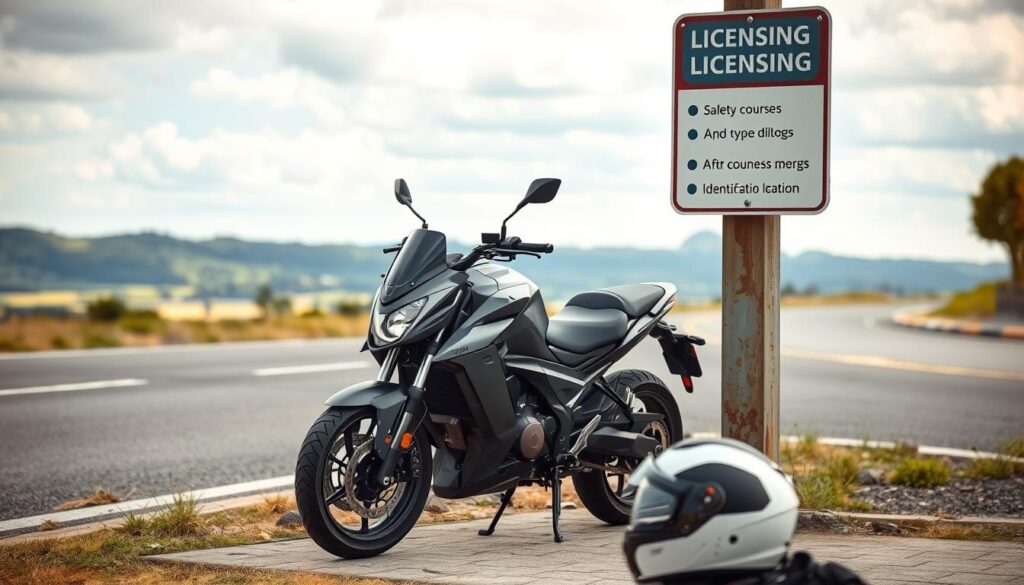
Training courses play a crucial role in obtaining an electric bike permit. These courses cover essential skills like balance, braking, and traffic rules. Many states offer specialized courses for e-motorcycles, focusing on their unique features and handling characteristics.
Rider certification typically involves both written and practical tests. The written exam assesses knowledge of traffic laws and safety practices. The practical test evaluates riding skills on an electric motorcycle.
“E-motorcycle licenses ensure riders are equipped with the necessary skills to safely operate these vehicles on public roads.”
Licensing requirements for electric motorcycles often mirror those for traditional motorcycles. Some states may have additional regulations specific to e-bikes, such as power output restrictions or special endorsements on regular driver’s licenses.
| Requirement | E-Motorcycle | Traditional Motorcycle |
|---|---|---|
| Age Restriction | 16-18 years | 16-18 years |
| Training Course | Required | Required |
| Written Test | Yes | Yes |
| Practical Test | Yes | Yes |
| Special Endorsement | Sometimes | Yes |
Check your local DMV for specific e-motorcycle license requirements in your area. Remember, proper licensing ensures safe and legal operation of your electric motorcycle.
Safety Standards and Equipment Regulations
Riding an electric motorcycle requires proper safety gear and compliance with regulations. E-motorcycle safety gear plays a crucial role in protecting riders from potential injuries. The most important piece of equipment is the helmet.
Electric bike helmets must meet specific safety standards set by regulatory bodies. These helmets undergo rigorous testing to ensure they provide adequate protection in case of accidents. When choosing a helmet, look for certifications from recognized organizations.
Safety compliance extends beyond helmets. Riders should wear protective clothing such as jackets, gloves, and boots designed for motorcycle use. These items help reduce the risk of road rash and other injuries in the event of a fall.
- Reflective gear for increased visibility
- Reinforced jackets with padding
- Gloves with impact protection
- Boots that cover the ankles
Electric motorcycles must also meet specific safety standards. They require working lights, including headlights, taillights, and turn signals. Braking systems should be in good condition and responsive. Some regions may have additional requirements for e-motorcycles, such as noise-emitting devices to alert pedestrians of their presence.
“Safety is not just about following rules; it’s about protecting yourself and others on the road.”
By adhering to safety standards and using proper e-motorcycle safety gear, riders can enjoy their electric bikes while minimizing risks. Remember, safety compliance is not just a legal requirement but a personal responsibility for every rider.
Registration and Documentation Process
Registering your electric motorcycle is a crucial step in legally riding on public roads. The e-motorcycle registration process varies by state but generally follows similar steps. First, gather your electric bike documentation, including proof of ownership, bill of sale, and manufacturer’s certificate of origin.
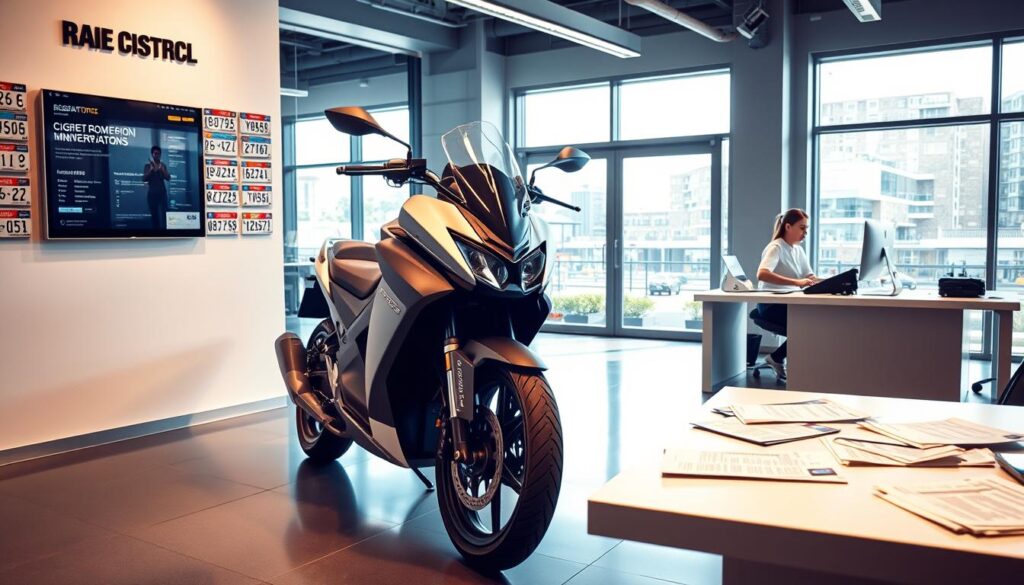
Next, visit your local Department of Motor Vehicles (DMV) with your paperwork and the vehicle for inspection. The DMV will verify the vehicle identification number and ensure your e-bike meets safety standards. You’ll need to pay registration fees, which may differ from traditional motorcycles due to their eco-friendly nature.
Some states offer incentives for electric motorcycle owners, such as reduced registration fees or tax credits. Ask about these benefits when registering your bike. Remember to renew your registration annually and keep your documentation up-to-date.
“Proper registration not only keeps you legal but also helps law enforcement and emergency services identify your vehicle if needed,” says Officer Sarah Thompson of the Highway Patrol.
To simplify the process, follow this checklist:
- Gather all necessary electric bike documentation
- Schedule an appointment with your local DMV
- Bring your e-motorcycle for inspection
- Pay required fees
- Obtain your registration and license plate
By following these steps, you’ll ensure your e-motorcycle is properly registered and ready for the road.
Environmental Regulations and Incentives
Governments worldwide are pushing for cleaner transportation options. This drive has led to a surge in eco-friendly e-bikes and electric motorcycles. These vehicles offer a greener alternative to traditional gas-powered bikes, producing zero emissions during operation.
To encourage adoption, many countries have introduced green vehicle incentives. These include electric motorcycle tax credits, which can significantly reduce the purchase price. Some regions offer rebates or grants for buying electric two-wheelers, making them more affordable for consumers.
Emissions standards for motorcycles have become stricter in recent years. While traditional bikes struggle to meet these requirements, electric motorcycles easily comply. This compliance gives e-bikes a clear advantage in urban areas with tight air quality regulations.
| Incentive Type | Benefit |
|---|---|
| Tax Credits | Up to $2,500 off purchase price |
| Rebates | $500 – $1,000 cash back |
| Reduced Registration Fees | 50% discount on annual fees |
The environmental impact of electric motorcycles is significantly lower than their gas-powered counterparts. They produce no tailpipe emissions and have a smaller carbon footprint over their lifecycle. As power grids incorporate more renewable energy, the environmental benefits of e-bikes will only increase.
“Electric motorcycles represent a crucial step towards sustainable urban mobility. They combine the convenience of personal transport with minimal environmental impact.”
With these regulations and incentives in place, the future looks bright for eco-friendly e-bikes. As technology improves and costs decrease, we can expect to see more electric motorcycles on our roads, contributing to cleaner air and quieter cities.
Conclusion
As electric motorcycles gain popularity, riders must stay up-to-date with laws and regulations. The electric motorcycle future looks bright, but it comes with new responsibilities. Understanding licensing, safety standards, and registration is key for a smooth ride.
E-bike law compliance varies by state, so it’s crucial to check local rules before hitting the road. Rider responsibilities go beyond just following traffic laws. They include proper maintenance, using required safety gear, and respecting environmental regulations.
The world of electric motorcycles is evolving fast. Staying informed about changing laws and incentives helps riders make the most of this exciting technology. By embracing these changes and following the rules, we can all contribute to a safer, greener future on two wheels.
FAQ
What’s the difference between an electric motorcycle and an e-bike?
Do I need a special license to ride an electric motorcycle?
Are there any age restrictions for riding an electric motorcycle?
Do I need to register my electric motorcycle?
Are there any specific safety gear requirements for electric motorcycles?
Are there any tax incentives for purchasing an electric motorcycle?
How do environmental regulations affect electric motorcycles?
Can I modify my electric motorcycle?
Are there specific insurance requirements for electric motorcycles?
How do I stay up-to-date with changing electric motorcycle laws?
