
Infrastructure needs for electric public transportation
As the world shifts towards sustainable transportation, electric public transportation infrastructure is becoming increasingly important.
The U.S. Department of Transportation’s electric vehicle charging infrastructure playbook provides valuable guidance for communities planning to deploy EV infrastructure, supporting the growth of sustainable transportation.
With California aiming for all in-state sales of new passenger vehicles to be zero-emission by 2035, and a goal of 100% medium- and heavy-duty vehicles being zero-emission by 2045, the need for electric public transportation infrastructure is clear.
Electric public transportation infrastructure is crucial for the widespread adoption of electric vehicles, with the target of having five million zero-emission vehicles on the road by 2030. The development of public EV charging stations, including fast chargers, is essential to support this growth. As the Edison Electric Institute’s 2022 report forecasts an increase in the number of EVs on U.S. roads, it’s essential to focus on building a comprehensive electric public transportation infrastructure to support sustainable transportation.
The current statistics show that the U.S. has approximately 161,562 public and private EV charging ports, with only around 6,409 being DC fast charging stations. To support the projected number of EVs by 2030, the country will require 12.9 million charge ports and around 140,000 DC fast charging ports. As electric public transportation infrastructure continues to evolve, it’s essential to address the concerns of consumers, including charging logistics and range, to ensure a smooth transition to sustainable transportation.
Understanding Electric Public Transportation Infrastructure
As cities transition to electric bus fleet and adopt transportation electrification, it’s essential to understand the benefits and challenges of this shift. The Joint Office of Energy and Transportation provides resources on how to effectively engage community members and stakeholders around EV infrastructure plans, making it easier for cities to make informed decisions.
One of the significant advantages of electric buses is their reduced environmental impact. They contribute to reductions in greenhouse gas emissions, fossil fuel dependency, and air and noise pollution, improving urban livability. Additionally, electric buses can reduce electricity consumption by up to 40% with smart charging technology, making them a cost-effective option in the long run.
For more information on the future of electric car charging infrastructure, visit electric car charging infrastructure to learn about the latest advancements and innovations in the field.
- Lower operating costs compared to diesel buses
- Reduced maintenance expenses
- Improved energy efficiency with smart charging technology
As cities continue to adopt electric bus fleets and invest in transportation electrification, it’s crucial to consider the infrastructure needs and community engagement required to support this transition.
Power Grid Requirements and Modifications
Supporting electric public transportation requires evaluating power grid requirements and modifications. Tools like the Climate and Economic Justice Screening Tool (CJEST) help utilities identify disadvantaged communities and assess infrastructure needs. Electric vehicle (EV) charging infrastructure is vital for transitioning public transportation systems to electric.
Switching public buses to electric vehicles can significantly cut CO2 emissions, but the increased power demand from bus depots can strain local grids. Installing chargers at every parking slot is impractical due to space constraints, and inadequate planning can lead to high costs and delays. Fleet managers must integrate EV charging systems with existing infrastructure, while additional feeder lines may be needed to meet charging demands.
Utilities like DTE Energy, PG&E, and SMUD are addressing grid upgrades to support EV load growth. SMUD, for instance, is shifting its budget toward electrification programs and promoting energy efficiency through strategies like smart circuit breakers and “watt diets.” Modifying service upgrade policies will also be crucial for equitable EV adoption.
Collaboration among utilities, regulators, and fleet managers is essential to manage demand, incentivize efficient electrification, and ensure cost-effective scaling. Detailed transportation electrification plans must address public transit systems’ needs, focusing on reducing emissions and fostering sustainable transportation. This coordinated approach can enable a seamless transition to electric public transportation while supporting environmental and social goals.
Charging Station Networks and Implementation
As the world shifts towards green transportation, the development of charging infrastructure becomes crucial. The Public Electric Vehicle (EV) Charging Infrastructure Playbook provides a comprehensive guide for communities to plan and deploy EV charging infrastructure. This playbook offers a template for creating a planning process and timeline, ensuring a smooth transition to electric public transportation.
A key aspect of charging infrastructure is the type of charging equipment used. There are three main levels of charging: Level 1, Level 2, and DC fast charging. Level 1 charging provides approximately 5 miles of range per 1 hour of charging, while Level 2 offers approximately 25 miles of range per 1 hour of charging. DC fast charging, on the other hand, can provide approximately 100 to 200+ miles of range per 30 minutes of charging.
The cost of installing charging infrastructure varies depending on the type of charger and the location. Level 1 residential chargers can cost between $0 to $900, while Level 2 chargers cost between $380 to $690. Public charger costs are approximately $3,500 per connector for Level 2 and $38,000 to $90,000 per connector for DC fast chargers. Federal, state, local, and utility incentives may be available to offset these costs.
As the demand for green transportation continues to grow, the development of charging infrastructure must keep pace. By creating a comprehensive plan and timeline, communities can ensure a smooth transition to electric public transportation, reducing our reliance on fossil fuels and promoting a more sustainable future.
Depot and Maintenance Facility Adaptations
As the transportation sector shifts towards electric vehicles, depot and maintenance facility adaptations are crucial to support electric vehicle charging infrastructure. The Joint Office of Energy and Transportation provides valuable resources to help communities engage with utilities and plan for future transportation needs, emphasizing environmental sustainability.
When adapting depots and maintenance facilities, several factors must be considered, including:
- Proximity to the high voltage grid
- Cabling costs and available surface area
- Placement of transformers and substations
- Depot size and grid sharing
- Accessibility and risk assessment
According to the UITP Field Study Bus Depot from 2013, understanding these factors is essential for successful depot and maintenance facility adaptations. By prioritizing electric vehicle charging and environmental sustainability, communities can create efficient and eco-friendly transportation systems.
By working together with utilities and considering these factors, communities can ensure a smooth transition to electric vehicles, supporting both electric vehicle charging and environmental sustainability goals.
| Project | Estimated Total SGR Allocation Amount |
|---|---|
| San Joaquin Council of Governments project | $256,937 |
| Golden Gate Bridge Highway and Transportation District Marin Ferry Boat Repower and Dry Dock project | $1,249,984 |
| Napa County Transportation and Planning Agency Vine Transit Bus Maintenance Facility project | $16,396 |
Smart Technology Integration for Electric Transit Systems
As cities continue to adopt sustainable transportation options, the integration of smart technology into electric transit systems is becoming increasingly important. This includes the implementation of smart charging software and networking, which can help optimize charging infrastructure and reduce costs. For instance, the National Renewable Energy Laboratory provides tools and resources, such as EVI-Pro Lite, to help calculate the number of chargers necessary for a community, making public transportation systems more efficient.
The use of data and analytics is crucial in optimizing charging infrastructure and reducing costs. By analyzing data on energy consumption and charging patterns, cities can identify areas for improvement and make informed decisions about their sustainable transportation systems. Additionally, the integration of smart technology can help improve the overall efficiency of public transportation systems, making them more attractive to commuters and reducing their environmental impact.
- Optimized charging infrastructure
- Reduced energy consumption
- Improved fleet management
- Enhanced passenger experience
By adopting smart technology, cities can create more efficient, sustainable, and passenger-friendlypublic transportation systems, which is essential for promotingsustainable transportationand reducing our reliance on fossil fuels.
| City | Number of Electric Buses | Reduction in CO2 Emissions |
|---|---|---|
| St. Louis | 24 | 200,000 liters of diesel annually |
| Zurich | 100 | 50,000 tons of CO2 annually |
Cost Analysis and Financial Planning
When it comes to transitioning to an electric bus fleet, cost analysis and financial planning are crucial. The cost of investing in electric buses can be significant, but it’s essential to consider the long-term benefits of transportation electrification. According to a study, the baseline scenario of investing in four Battery Electric Buses (BEBs) and four depot chargers resulted in a net present value (NPV) of $785,000 over the 12-year bus life.
The cost-effectiveness of electric buses depends on various factors, including purchase prices, maintenance costs, and electricity demand charges. Fleet managers and grant administrators need to prioritize key parameters to ensure cost-effective investment in electric buses. For example, choosing between fast and depot chargers, considering charger power, and facility electric load patterns can significantly impact the cost-effectiveness of electric bus projects.
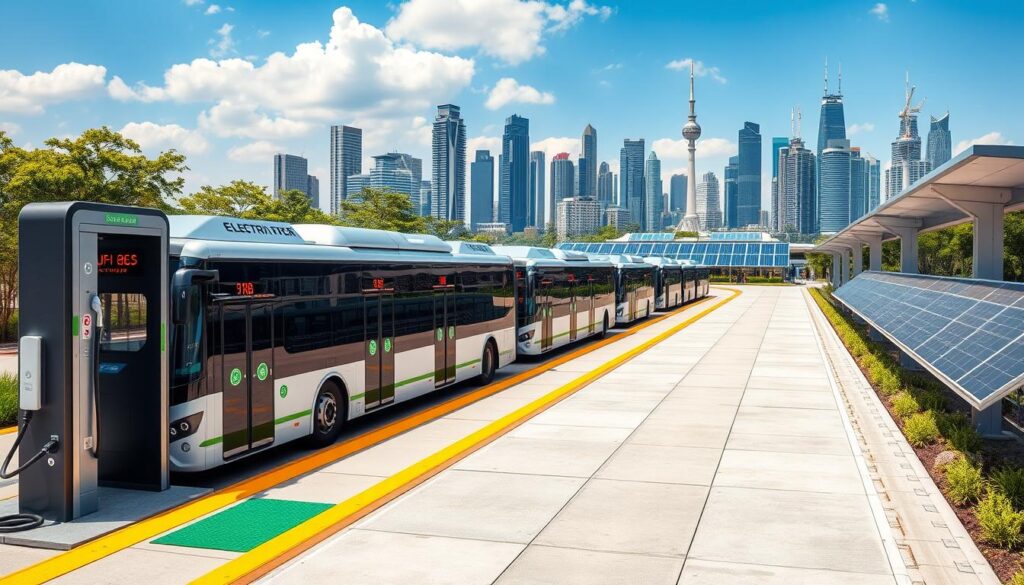
A study by the Niagara Frontier Transportation Authority (NFTA) found that transitioning their diesel bus fleet to zero-emission electric buses can have economic and environmental benefits. The report recommends phasing out the oldest diesel buses and replacing them with electric buses. To learn more about the environmental benefits of electric vehicles, visit this website for more information.
Some of the key factors to consider when investing in electric buses include:
* Purchase price of electric buses
* Maintenance costs
* Electricity demand charges
* Charger prices
* Facility electric load patterns
By carefully evaluating these factors and prioritizing key parameters, fleet managers can ensure a cost-effective investment in electric buses and contribute to a more sustainable transportation electrification future.
Environmental Impact Assessment and Sustainability Measures
As the world shifts towards green transportation, it’s essential to assess the environmental impact of electric public transportation infrastructure. The U.S. Environmental Protection Agency provides valuable resources on smart growth strategies for transportation electrification, helping communities plan and deploy EV infrastructure. By adopting environmental sustainability measures, we can significantly reduce greenhouse gas emissions and promote sustainable transportation.
Approximately 85% of greenhouse gas emissions in the transportation sector are linked to the surface transportation system. Transitioning to public transportation can lead to a reduction of 20 pounds of CO2 emissions per day, which translates to a 10% cut in all greenhouse gas produced by a typical two-adult, two-car household. Moreover, eliminating one car and opting for public transportation can result in a 30% reduction in carbon dioxide emissions.
Some notable examples of green transportation initiatives include RideKC buses in Kansas City, which have utilized around 1,000,000 diesel gallon equivalents of compressed natural gas, leading to a reduction of 1,870 metric tons of greenhouse gas emissions. U.S. public transportation saves 37 million metric tons of carbon dioxide each year, equivalent to the emissions produced from generating electricity for 4.9 million households.
To further promote environmental sustainability, it’s crucial to invest in intelligent route optimization and velocity control, which can achieve energy savings. According to research, automated technologies contribute around 5% of total energy use, and near-future use cases suggest that 59% of automated minibuses’ impact stems from the use phase. By adopting these measures, we can create a more sustainable and environmentally friendly transportation system.
Urban Planning and Route Optimization
Effective urban planning and route optimization are crucial for supporting public transportation systems, particularly those that incorporate electric vehicle charging infrastructure. By strategically planning and optimizing routes, cities can reduce costs and improve the efficiency of their transportation networks.
The Transportation Research Board provides valuable resources on urban planning and route optimization for electric bus fleets, helping communities to plan and deploy EV infrastructure effectively. Some key considerations for urban planning and route optimization include:
- Integrating electric vehicle charging stations into existing transportation infrastructure
- Optimizing routes to minimize energy consumption and reduce emissions
- Improving public transportation systems to encourage the use of shared transportation and reduce private vehicle ownership
By prioritizing urban planning and route optimization, cities can create more sustainable, efficient, and environmentally friendly transportation systems. This, in turn, can help to reduce range anxiety and increase the adoption of electric vehicles, supporting a cleaner and healthier environment for future generations.
Implementation Timeline and Phasing Strategies
Implementing a comprehensive plan for electric public transportation infrastructure requires a well-structured timeline and phasing strategy. This involves creating a detailed schedule for the deployment of sustainable transportation systems, including the integration of an electric bus fleet. The Joint Office of Energy and Transportation provides valuable resources to help communities plan and deploy EV infrastructure, ensuring a smooth transition to sustainable transportation systems.
A key aspect of the implementation timeline is engaging with stakeholders and utilities to ensure that the necessary infrastructure is in place to support the electric bus fleet. This includes upgrading power grids and installing charging stations. By phasing the implementation, communities can prioritize the most critical projects and allocate resources effectively, ultimately leading to a successful transition to sustainable transportation systems.

Some of the benefits of a well-planned implementation timeline and phasing strategy include:
- Reduced greenhouse gas emissions
- Improved air quality
- Enhanced reliability and efficiency of public transportation systems
- Increased adoption of sustainable transportation options
By following a structured approach to implementation, communities can ensure a successful transition to sustainable transportation systems, including the integration of an electric bus fleet, and reap the benefits of a more efficient and environmentally friendly transportation network.
Conclusion: Future-Proofing Electric Public Transportation Infrastructure
As the global market for electric public transportation continues to grow, it’s crucial to future-proof the necessary infrastructure to support this transition. The transportation electrification movement has gained significant momentum, driven by increasing consumer demand for eco-friendly mobility options and supportive government policies.
However, the challenge lies in ensuring that the charging infrastructure can keep pace with the rapid adoption of electric vehicles (EVs). Existing networks often face limitations, such as insufficient charging stations, particularly in rural and underserved areas. To address this, strategic planning and the implementation of smart, integrated charging solutions are essential.
The U.S. Department of Transportation offers valuable resources to help communities plan and deploy EV infrastructure that is sustainable, efficient, and aligned with renewable energy sources. By leveraging these resources, cities and municipalities can future-proof their transportation systems, providing reliable and accessible charging options for all residents.
FAQ
What are the essential requirements for sustainable transit?
What is the current state of electric public transportation?
What are the benefits and challenges of electric bus fleets?
What power grid requirements and modifications are needed to support electric public transportation infrastructure?
How should communities plan and deploy EV charging infrastructure?
What adaptations are needed for depot and maintenance facilities to support electric public transportation infrastructure?
How can smart technology be integrated into electric transit systems?
What cost analysis and financial planning is needed to support electric public transportation infrastructure?
What environmental impact assessment and sustainability measures are needed to support electric public transportation infrastructure?
How should urban planning and route optimization be considered for electric public transportation infrastructure?
What implementation timeline and phasing strategies are needed for electric public transportation infrastructure?
