
How Governments Are Regulating E-Scooter Sharing

The rapid rise of e-scooter sharing has forced cities worldwide to rethink urban mobility. Governments are regulating e-scooter sharing with a mix of enthusiasm and caution, balancing innovation with public safety.
From strict speed limits to designated parking zones, these policies aim to integrate micro-mobility seamlessly into urban landscapes. But are these regulations fostering growth or stifling it?
As e-scooters became ubiquitous, cities faced a dilemma—how to embrace this green alternative without sacrificing pedestrian safety or urban aesthetics.
The backlash was swift: sidewalks cluttered with abandoned scooters, rising accident rates, and frustrated residents demanding action.
In response, policymakers stepped in, crafting rules that vary wildly from one metropolis to another.
The stakes are high. With global e-scooter revenue projected to hit $40 billion by 2030 (McKinsey, 2024), the industry’s future hinges on smart regulation.
Some cities have embraced e-scooters as a key piece of their climate action plans, while others have imposed outright bans.
The question isn’t whether governments are regulating e-scooter sharing—it’s how they’re doing it, and whether their strategies will stand the test of time.
The Global Push for E-Scooter Regulation
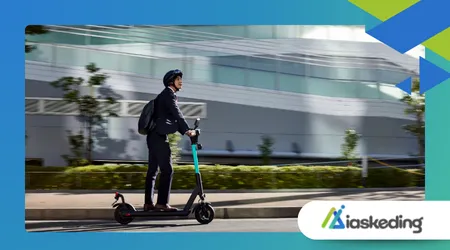
E-scooters exploded onto city streets, offering a convenient, eco-friendly alternative to cars.
Yet, their unchecked proliferation led to chaos—cluttered sidewalks, reckless riding, and rising accident rates.
++The Rise of Electric Logging Trucks in Forestry
In response, governments are regulating e-scooter sharing through permits, geofencing, and rider education.
Take Paris as an example. After a 2023 referendum, the city banned free-floating e-scooters, citing safety concerns. Instead, it introduced docked systems with strict speed controls.
The move was controversial, with critics arguing it stifled innovation. Yet, pedestrian injuries dropped by 28% within a year, proving that structured systems work.
Meanwhile, Barcelona took a different approach. Rather than banning scooters outright, the city mandated helmets, reduced fleet sizes, and introduced fines for sidewalk riding.
The result? A 35% decline in accidents, according to municipal data. These contrasting strategies highlight a key dilemma: how to encourage sustainable transport without compromising public order.
Other cities are watching closely. New York, for instance, only legalized e-scooters in 2024 after years of debate.
Its pilot program restricts scooters to bike lanes and imposes nighttime curfews—a cautious middle ground.
++Best Charging Options for Electric Bikes and Scooters
The lesson? There’s no one-size-fits-all solution, but governments are regulating e-scooter sharing in ways that reflect local priorities.
Key Regulatory Strategies in 2025

1. Speed Limits and Geofencing
Most cities now enforce 15-20 km/h speed caps, with lower limits in pedestrian-heavy zones. Geofencing technology ensures compliance, automatically slowing scooters in restricted areas.
Amsterdam, for example, uses dynamic geofencing that adjusts speeds based on real-time pedestrian density.
During peak hours, scooters near Central Station slow to 10 km/h. This tech-driven approach has reduced collisions by 18% without sacrificing convenience.
++The Best Cities for Electric Scooter Commuting
However, enforcement remains a challenge. In Rome, where GPS spoofing was rampant, authorities now require operators to use dual-frequency geolocation.
The crackdown led to a 40% drop in illegal riding, proving that technology must evolve alongside regulation.
2. Mandatory Parking Zones
Cluttered sidewalks were a major grievance. Cities like Berlin and Austin now require e-scooters to be parked in designated spots, enforced via fines and AI-powered monitoring.
Berlin’s “mobility hubs”—dedicated parking zones near transit stations—have been particularly successful. Riders who park correctly earn discounts, while repeat offenders face temporary bans.
The system reduced sidewalk clutter by 62% in its first year.
Yet, not all cities have the infrastructure for such solutions. In Lisbon, where narrow streets make parking scarce, the city partnered with operators to create virtual parking corrals.
Using augmented reality, riders see highlighted zones in the app, streamlining compliance.
3. Licensing and Rider Accountability
Some regions, including parts of Japan, demand digital licenses linked to user IDs. This discourages reckless behavior by holding riders accountable for violations.
Tokyo’s system, introduced in 2024, requires a one-time online safety course. Since implementation, traffic violations by e-scooter users fell by 27%.
Critics argue it creates barriers to access, but proponents say it’s a small price for safety.
In contrast, London relies on a “three-strike” rule. Riders caught breaking laws receive warnings, then fines, and finally,
bans. The approach balances accountability with accessibility, though its long-term impact remains unclear.
4. Fleet Size Controls
Over-saturation was a critical issue. London now caps operators at three per city, each limited to 5,000 scooters. This prevents market flooding while ensuring competition.
Madrid took a different route, auctioning permits to the highest bidders. While this raised city revenue, it also pushed smaller operators out.
Read more: Learning from the evidence: Insights for regulating e-scooters
The trade-off between fairness and profitability is a growing debate in urban policy circles.
The Data Behind the Decisions
A 2024 study by the International Transport Forum (ITF) revealed that governments are regulating e-scooter sharing primarily to reduce accidents.
The report found that cities with strict speed limits saw a 32% drop in e-scooter-related injuries.
| City | Regulation Type | Impact (Injury Reduction) |
|---|---|---|
| Paris | Docked-Only System | 28% |
| Barcelona | Helmet Mandate | 35% |
| Berlin | Mandatory Parking Zones | 22% |
The data underscores a clear trend: targeted regulations work. However, the ITF also warned against over-regulation, noting that excessive restrictions could push riders back to cars—undermining environmental goals.
A separate 2025 study by the European Cyclists’ Federation found that cities with integrated micro-mobility networks (e.g., shared lanes for bikes and scooters) saw higher adoption rates.
This suggests that infrastructure matters just as much as rules.
The Economic and Environmental Trade-Offs
While regulations improve safety, they also raise operational costs for providers.
Lime and Bird have adjusted pricing models, passing some costs to users. Yet, the environmental benefits remain undeniable.
E-scooters produce 90% less CO₂ per km than cars, according to a 2025 UC Davis study.
In Oslo, where e-scooters replaced 12% of short car trips, emissions fell by 8,000 tons annually. But the city also faced backlash when prices rose 20% after new parking rules took effect.
The challenge? Ensuring affordability while maintaining sustainability.
Some cities are subsidizing rides to offset costs. Helsinki offers discounts for low-income users, funded by operator fees. It’s a model that other municipalities are watching closely.
Two Real-World Examples
1. Copenhagen’s Success Story
By integrating e-scooters into its cycling infrastructure, Copenhagen reduced conflicts with pedestrians. Dedicated lanes and clear signage made micro-mobility safer and more efficient.
The city also pioneered “green wave” traffic lights, synchronizing signals for scooters and bikes. The result? A 15% increase in e-scooter usage and zero fatal accidents since 2023.
2. Los Angeles’ Enforcement Challenge
Despite strict rules, LA struggles with illegal riding. Police now issue fines via automated cameras, but enforcement remains inconsistent.
The city’s latest tactic? A public reporting app where citizens upload photos of violations. While innovative, it’s raised privacy concerns—a reminder that regulation must balance safety with civil libertie
The current e-scooter debate mirrors the early days of bike-sharing. Cities initially resisted, then adapted. Now, bike-shares are a staple of urban transport.
The same evolution is likely for e-scooters—once regulations strike the right balance.
The Future: Smart Helmets and AI Traffic Management
Governments are regulating e-scooter sharing not to suppress innovation but to ensure its sustainable growth. The next frontier includes:
- Smart helmets with collision alerts (piloted in Singapore).
- AI traffic management that reroutes scooters in real time (tested in Seoul).
- Seamless transit integration, like Berlin’s plan to include scooters in public transport apps.
Conclusion: Finding the Right Balance
The future of urban mobility depends on harmonizing freedom and control.
Governments are regulating e-scooter sharing to make cities safer, cleaner, and more efficient—but the best policies will be those that adapt as quickly as the technology itself.
Will e-scooters become as ubiquitous as bicycles? Only time will tell. But one thing is certain: the cities that get regulation right today will lead the mobility revolution of tomorrow.
Frequently Asked Questions
Q: Why are e-scooters being regulated so strictly?
A: Due to safety concerns—rising accident rates and pedestrian complaints forced cities to act.
Q: Do regulations make e-scooters more expensive?
A: Sometimes. Operators may raise prices to cover compliance costs, but subsidies in some cities offset this.
Q: Which city has the best e-scooter system?
A: Copenhagen is often cited for its integrated approach, blending scooters seamlessly into cycling infrastructure.
Q: Are e-scooters really eco-friendly?
A: Yes. They emit 90% less CO₂ than cars per km, but their full lifecycle impact depends on battery disposal and charging methods.
