
How Electric Trucks Are Reshaping Emission Zones in Europe
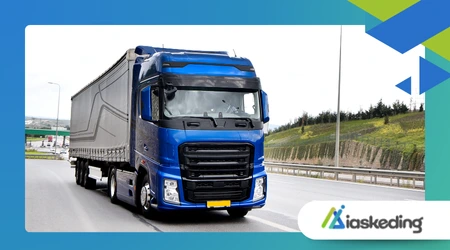
The rise of electric trucks is fundamentally transforming emission zones in Europe, compelling cities to overhaul urban mobility strategies and redefine sustainability standards.
With air pollution remaining a critical public health concern, governments are enforcing stricter regulations, and electric trucks have emerged as the most viable solution.
Unlike traditional diesel vehicles, which face increasing restrictions, electric freight transport seamlessly integrates into low-emission urban policies, offering a cleaner, quieter, and more efficient alternative.
But this shift isn’t just about compliance—it’s a complete reimagining of logistics, infrastructure, and environmental policy.
From Amsterdam’s zero-emission delivery corridors to Berlin’s electrified freight networks, Europe is setting a global benchmark.
How did we get here, and what does this mean for the future of transportation?
The Evolution of Emission Control in European Cities
Europe’s battle against urban pollution has been decades in the making.
Cities like London and Paris pioneered low-emission zones (LEZs) in the early 2000s, but diesel trucks remained a persistent challenge.
The introduction of emission zones in Europe marked a turning point, forcing logistics companies to either upgrade fleets or face steep penalties.
Today, over 320 European cities enforce some form of LEZ, with targets growing stricter each year.
Electric trucks, once a niche experiment, are now central to this transition.
Take Stuttgart, Germany—once notorious for nitrogen dioxide levels, now deploying electric municipal fleets to meet EU air quality standards.
The shift isn’t just regulatory; it’s economic. Fleet operators recognize that long-term savings on fuel and maintenance outweigh initial investment costs.
++EV Charging Etiquette: What Most New Drivers Get Wrong
Still, challenges like charging infrastructure and grid capacity remain.
Why Electric Trucks Are the Ultimate Game Changer
Diesel trucks have dominated freight transport for a century, but their reign is ending.
Electric trucks eliminate tailpipe emissions entirely, making them the ideal fit for emission zones in Europe.
Beyond environmental benefits, they offer superior energy efficiency—converting over 75% of grid power to motion, compared to diesel’s 30-40%.
Major corporations are leading the charge. Amazon’s European fleet now includes over 1,000 electric delivery trucks, reducing urban emissions significantly.
Meanwhile, Volvo’s heavy-duty electric trucks are proving that even long-haul routes can be decarbonized.
++Electric trucks in cold climates: How temperature affects performance and range
But the real breakthrough lies in policy alignment.
The EU’s “Fit for 55” package mandates a 55% CO₂ reduction by 2030, pushing manufacturers toward electrification.
Is this the end of diesel dominance? The numbers suggest so.
The Infrastructure Challenge: Emission zones in Europe
While electric trucks promise a cleaner future, infrastructure gaps threaten to slow progress.
Europe currently has around 5,000 public charging points suitable for heavy-duty vehicles—far below projected demand.
Germany leads with 1,200 high-capacity chargers, but rural areas lag behind.
The solution? Fast-charging corridors along major transport routes, similar to Tesla’s Megacharger network for the Semi.
Sweden’s “Electric Highway” project, which uses overhead catenary wires for hybrid trucks, offers another innovative approach.
Read more: The Rise of Electric Semi-Trucks: How Companies Like Tesla and Volvo Are Leading the Charge
Yet, grid capacity remains a bottleneck.
A single electric truck depot can demand as much power as a small town, requiring massive energy infrastructure upgrades.
Without urgent investment, the transition could stall.
Amsterdam’s Zero-Emission Logistics Revolution
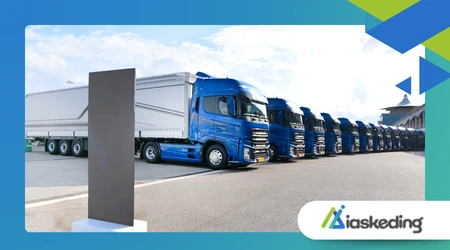
Amsterdam provides a blueprint for successful urban electrification.
Since 2025, only zero-emission trucks have been permitted in the city center.
Companies like DHL and UPS have adapted swiftly, deploying fleets of electric vans and trucks.
The results? A 40% drop in nitrogen oxide levels within two years.
Key to this success was early collaboration between policymakers and businesses.
Subsidies for electric fleets, coupled with strict deadlines, created a clear roadmap.
Other cities are now replicating this model.
The Ripple Effect on Policy and Industry
Governments aren’t just regulating—they’re incentivizing.
France offers up to €50,000 per electric truck purchased, while Spain waives road taxes for zero-emission freight.
Automakers are responding. Daimler plans to phase out diesel truck production by 2030, focusing solely on electric and hydrogen models.
Even smaller logistics firms are pivoting, recognizing that early adopters gain competitive advantages in emission zones in Europe.
But challenges persist, particularly in battery supply chains and recycling.
The EU’s new Battery Regulation aims to address this, enforcing strict sustainability standards.
Debunking Myths: Are Electric Trucks Truly Cleaner?
Critics argue that battery production offsets emission savings.
However, a 2024 study by the International Council on Clean Transportation (ICCT) found that, even accounting for manufacturing, electric trucks cut lifetime emissions by 60-70%.
As renewable energy expands, this figure will only improve.
The debate isn’t about feasibility—it’s about speed of adoption.
Emission zones in Europe: The Smartphone Revolution of Freight
Electric trucks are to logistics what smartphones were to communication.
Just as mobiles rendered landlines obsolete, electric freight is making diesel trucks archaic.
The shift feels sudden, but the groundwork took years.
What’s Next for Emission Zones and Electric Freight?
The future is electric, but not without hurdles.
Battery technology must advance further to support long-haul routes.
Governments must accelerate charging infrastructure investments.
And industries must adapt to new supply chain realities.
Yet, the momentum is unstoppable.
By 2030, analysts predict that 50% of new trucks sold in Europe will be electric.
For further reading, explore Transport & Environment’s latest report and EU’s Green Truck Initiative.
Conclusion: A Silent Revolution on Europe’s Roads
The transformation of emission zones in Europe is no longer a distant vision—it’s happening now.
Electric trucks are at the heart of this shift, delivering cleaner air, quieter streets, and smarter logistics.
While challenges remain, the direction is clear: combustion engines are fading into history.
Will other continents follow Europe’s lead? The answer may define the next decade of global transport.
Frequently Asked Questions
1. Which European cities have the strictest emission zones?
London, Amsterdam, and Berlin enforce some of the toughest restrictions, banning non-electric commercial vehicles in city centers.
2. How much does an electric truck cost compared to diesel?
While upfront costs are higher (€300,000 vs. €200,000), lower fuel and maintenance expenses make them cheaper long-term.
3. Can electric trucks handle long-distance routes?
New models like the Tesla Semi (800 km range) are making this possible, though charging infrastructure remains a hurdle.
4. What happens to old diesel trucks?
Many are being retrofitted with electric drivetrains or phased out via scrappage schemes.
5. Are hydrogen trucks a better alternative?
For some heavy-duty applications, yes—but battery-electric trucks currently dominate urban logistics.
