
Electric Trucks in Mining: A Greener Approach to Heavy Industry
Mining is going green! Electric trucks are changing the game in heavy industry. These zero-emission vehicles are paving the way for eco-friendly mining operations. Big mining companies are swapping their old diesel trucks for new electric ones.
Why? It’s simple. Electric trucks cut down on pollution and save money. They’re quieter, cleaner, and cheaper to run. This shift is making sustainable mining a reality. It’s good for the planet and good for business.
Let’s dig into how these electric giants are reshaping the mining world. We’ll look at their benefits, challenges, and what’s next for this exciting technology.
The Evolution of Mining Transportation
Mining transportation has come a long way since the early days of the industry. In the past, miners relied on manual labor and basic tools to move ore and minerals. As technology advanced, so did the methods of transporting materials in mines.
The introduction of steam-powered engines in the 19th century marked a significant shift in mining equipment history. These machines revolutionized the industry, allowing for more efficient extraction and transportation of resources.
The real game-changer came with the advent of diesel trucks in the early 20th century. These powerful vehicles quickly became the backbone of mining operations, offering increased capacity and mobility compared to their predecessors.
“Diesel trucks transformed the mining landscape, enabling operations to reach new depths and scales previously unimaginable.”
Traditional mining vehicles, particularly diesel trucks, have dominated the industry for decades. Their reliability and performance in harsh conditions made them indispensable. Yet, as environmental concerns grow and fuel costs rise, the limitations of these vehicles have become apparent.
| Era | Primary Transportation Method | Key Advantages | Limitations |
|---|---|---|---|
| Pre-19th Century | Manual Labor | Low initial cost | Slow, labor-intensive |
| 19th Century | Steam-powered Engines | Increased efficiency | Limited mobility |
| 20th Century – Present | Diesel Trucks | High power, versatility | Environmental impact, fuel costs |
The mining industry now stands at a crossroads, seeking more sustainable alternatives to traditional mining vehicles. This shift towards greener technologies promises to reshape the future of mining transportation once again.
Mining with Electric Trucks: Understanding the Basics
Electric haul trucks are revolutionizing the mining industry. These powerful machines use advanced battery technology to move massive loads of ore and waste rock. EV mining trucks operate without traditional combustion engines, relying instead on electric motors for propulsion.
Battery-electric vehicles in mining feature large battery packs that can be swapped out or recharged at dedicated stations. This allows for continuous operation in demanding environments. The electric transmission system eliminates the need for complex gearboxes, reducing maintenance costs and improving reliability.
Electric haul trucks offer several key advantages over diesel counterparts:
- Zero tailpipe emissions
- Quieter operation
- Improved energy efficiency
- Lower operating costs
To support these vehicles, mines must invest in charging infrastructure and train personnel on new maintenance procedures. While the upfront costs can be significant, the long-term benefits make electric trucks an attractive option for modern mining operations.
| Feature | Diesel Truck | Electric Truck |
|---|---|---|
| Emissions | High | Zero |
| Noise Level | Loud | Quiet |
| Maintenance | Complex | Simplified |
| Energy Efficiency | Lower | Higher |
Electric trucks are transforming mining operations, offering cleaner, more efficient, and cost-effective solutions for material transport.
Environmental Benefits of Electric Mining Vehicles
Electric trucks in mining bring a wave of positive change for our planet. These vehicles slash carbon emissions, making a big dent in the industry’s carbon footprint. Mining companies switching to electric fleets see a dramatic drop in greenhouse gases, helping combat climate change.
Air quality improvement is another key advantage. Unlike diesel trucks, electric vehicles don’t spew harmful pollutants. This means cleaner air for miners and nearby communities. The absence of exhaust fumes creates a healthier work environment and reduces respiratory issues.
Noise pollution reduction is a game-changer in mining operations. Electric trucks run much quieter than their diesel counterparts. This creates a more pleasant work environment and minimizes disturbance to local wildlife and communities.
“The shift to electric mining vehicles is not just about efficiency; it’s about creating a sustainable future for our industry and our planet.”
Let’s look at the environmental impact of electric mining vehicles compared to traditional diesel trucks:
| Environmental Factor | Electric Trucks | Diesel Trucks |
|---|---|---|
| Carbon Emissions | Near-zero | High |
| Air Quality Impact | Minimal | Significant pollution |
| Noise Levels | Low | High |
| Ecosystem Impact | Low | Moderate to high |
The environmental benefits of electric mining vehicles extend beyond the mine site. They contribute to preserving local ecosystems and improving the quality of life in surrounding areas. As more mining companies adopt this technology, we can expect to see a significant positive impact on our environment.
Economic Advantages of Electric Mining Fleets
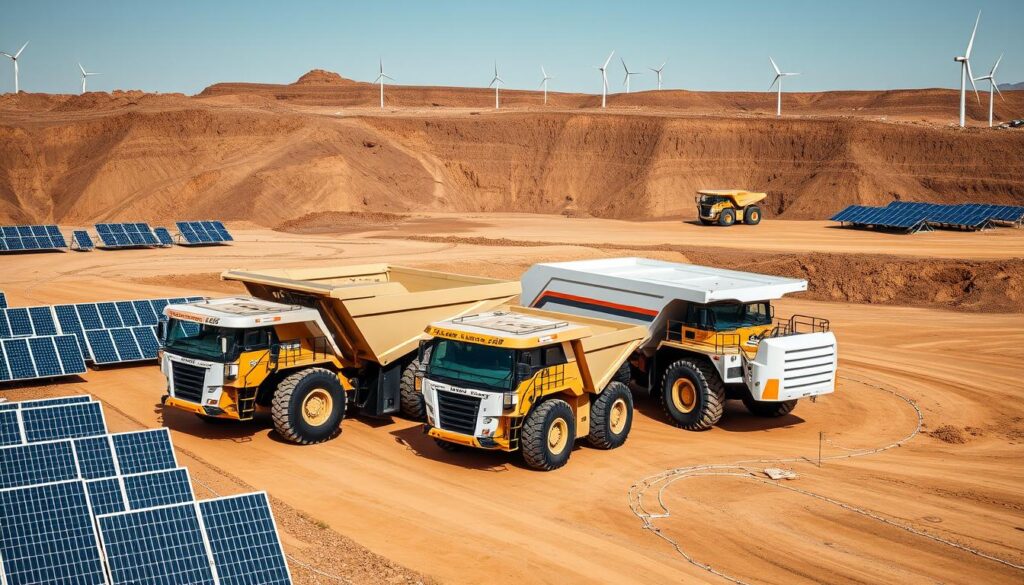
Electric mining trucks offer significant economic advantages for mining operations. The shift to electric fleets brings substantial operational cost reduction, primarily through fuel savings and maintenance benefits. Mining companies can expect to see a notable decrease in their overall expenses by adopting this green technology.
Fuel costs make up a large portion of mining expenses. Electric trucks eliminate the need for diesel, resulting in immediate and long-term fuel savings. As electricity prices are often more stable than fluctuating oil prices, companies can better predict and manage their energy costs.
Maintenance benefits of electric trucks are equally impressive. With fewer moving parts than traditional diesel engines, electric vehicles require less frequent servicing. This translates to reduced downtime and lower maintenance costs over the lifespan of the vehicle.
| Cost Category | Diesel Trucks | Electric Trucks |
|---|---|---|
| Fuel Costs | High and variable | Low and stable |
| Maintenance Frequency | Regular and extensive | Minimal and infrequent |
| Operational Downtime | Frequent | Rare |
Government incentives further enhance the economic appeal of electric mining fleets. Many countries offer tax breaks or grants for companies adopting clean energy solutions, improving the return on investment. While the initial cost of electric trucks may be higher, the long-term savings make them a sound financial decision for forward-thinking mining operations.
Operational Performance and Capabilities
Electric trucks are revolutionizing mining operations with impressive performance metrics. These vehicles boast remarkable electric truck power output, often surpassing their diesel counterparts. With instant torque delivery, they excel in acceleration and hill-climbing tasks, crucial for navigating challenging mine terrains.
The hauling capacity of electric mining trucks matches or exceeds traditional models. Recent studies show that 150-ton payload electric trucks are cost-effective and efficient alternatives to diesel versions. These behemoths can transport massive loads while maintaining optimal performance levels throughout their shifts.
Battery life remains a key consideration in mining operations. Modern electric trucks feature advanced lithium-ion batteries, offering extended operational hours. Rapid charging technologies allow for quick power-ups during breaks, minimizing downtime. The durability of these batteries in extreme mining conditions continues to improve, addressing initial concerns about their longevity in harsh environments.
| Feature | Electric Trucks | Diesel Trucks |
|---|---|---|
| Power Delivery | Instant torque | Gradual power buildup |
| Operational Noise | Low | High |
| Emissions | Zero on-site | Significant |
| Maintenance | Less frequent | Regular |
As battery technology advances, we can expect further improvements in electric truck performance, solidifying their position as the future of mining transportation.
Implementation Challenges and Solutions
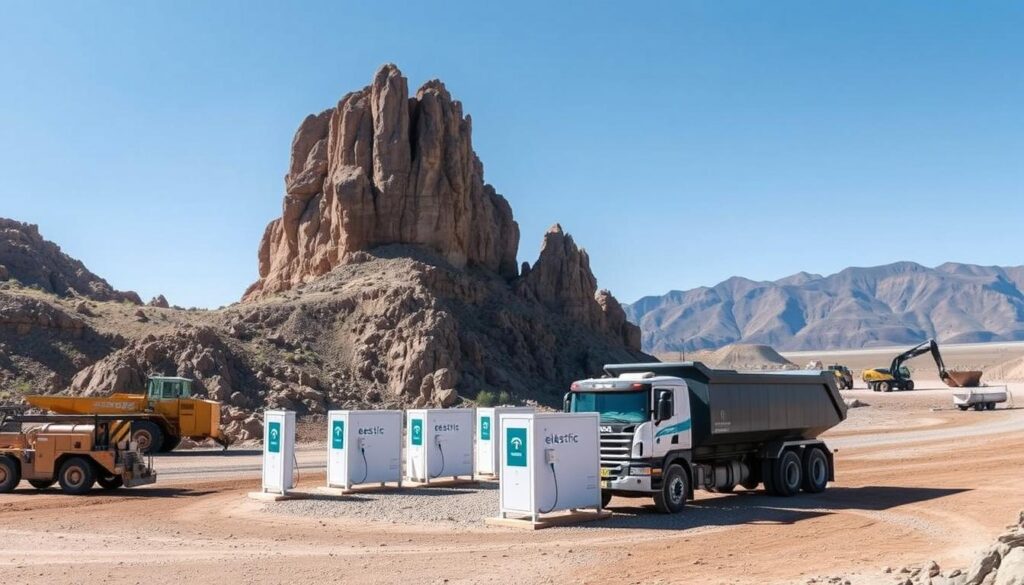
Introducing electric trucks to mining operations comes with unique challenges. One major hurdle is developing adequate charging infrastructure. Mining sites often span vast areas, requiring strategic placement of charging stations to keep vehicles operational throughout shifts.
Battery technology limitations pose another obstacle. Current batteries may struggle to meet the demands of heavy-duty mining tasks, especially in extreme conditions. Researchers are working on more robust and efficient battery designs to address this issue.
Mining site adaptations are crucial for successful implementation. This includes redesigning haul roads, modifying loading and dumping areas, and installing safety systems tailored to electric vehicles.
| Challenge | Solution |
|---|---|
| Limited charging infrastructure | Install strategically placed fast-charging stations |
| Battery technology limitations | Invest in research for improved battery capacity and durability |
| Mining site adaptations | Redesign roads and operational areas for electric vehicle compatibility |
| Workforce training | Implement comprehensive training programs for operators and maintenance staff |
Despite these challenges, mining companies are finding innovative solutions. Some are partnering with tech firms to develop custom charging systems. Others are exploring battery swapping techniques to minimize downtime. With ongoing advancements, the transition to electric mining fleets is becoming increasingly feasible.
Future Innovations and Technologies
The mining industry is on the brink of a technological revolution. Autonomous electric trucks are set to transform operations, offering increased safety and efficiency. These vehicles navigate complex mining environments without human intervention, reducing accidents and optimizing routes.
Wireless charging is another game-changing innovation. This technology allows electric trucks to recharge without stopping, maximizing uptime and productivity. Imagine a fleet of trucks that never need to pause for refueling!
Advanced battery technology is pushing the boundaries of what’s possible in electric mining vehicles. New chemistries and designs are increasing energy density, extending range, and improving durability. These innovations will enable electric trucks to handle longer shifts and tougher conditions.
“The future of mining is electric, autonomous, and connected,” says a leading industry expert.
Let’s look at some key innovations shaping the future of electric mining trucks:
| Innovation | Benefits | Challenges |
|---|---|---|
| Autonomous operation | Increased safety, 24/7 operation | High initial costs, system reliability |
| Wireless charging | Continuous operation, simplified infrastructure | Power transfer efficiency, installation costs |
| Solid-state batteries | Higher energy density, faster charging | Manufacturing scalability, thermal management |
These advancements promise to make electric mining trucks more efficient, safer, and environmentally friendly than ever before. As technology continues to evolve, we can expect even more exciting developments in this field.
Conclusion
Electric trucks are changing the game in mining. They’re not just a trend, but a key part of a sustainable mining future. These vehicles cut down on noise and air pollution, making mines cleaner and safer for workers. They also help mining companies save money in the long run, despite higher upfront costs.
The mining industry transformation is well underway with electric vehicle adoption. Companies like Komatsu and Caterpillar are leading the charge, creating powerful electric trucks that can handle tough mining jobs. As battery tech gets better, we’ll see even more capable electric vehicles in mines around the world.
There are still hurdles to overcome, like building charging stations and training workers. But the benefits of electric trucks in mining are clear. They’re good for the planet and good for business. As more mining companies switch to electric, we’re moving towards a greener, more efficient future in heavy industry.
FAQ
What are the main benefits of using electric trucks in mining?
How do electric mining trucks compare to traditional diesel trucks in terms of performance?
What are the challenges of implementing electric trucks in mining operations?
Are electric mining trucks suitable for all types of mining operations?
How do electric trucks contribute to improved air quality in mines?
What is the expected lifespan of batteries in electric mining trucks?
Are there any government incentives for mining companies to switch to electric trucks?
How do maintenance requirements differ between electric and diesel mining trucks?
