
Electric Car Charging Infrastructure: Challenges and Solutions
The rise of electric vehicles (EVs) marks a turning point in sustainable transportation. As more drivers switch to EVs, the need for robust charging infrastructure grows. This shift brings both excitement and hurdles.
EV charging stations are popping up in cities and along highways. Yet, their numbers still fall short of demand. This gap slows electric vehicle adoption and makes long trips tricky for EV owners.
The road ahead for EV charging looks promising. New tech and smart policies aim to solve current issues. From ultra-fast chargers to wireless systems, innovations are set to transform how we power our cars.
Let’s explore the world of EV charging. We’ll look at where we stand, the bumps in the road, and the bright ideas driving us forward.
Current State of Electric Car Charging Infrastructure
The electric vehicle (EV) market is experiencing rapid growth, driving the expansion of charging networks worldwide. As more drivers embrace EVs, the demand for accessible and efficient charging stations continues to rise. Charging station types vary to meet diverse needs, from residential to public spaces.
Level 1 chargers, commonly found in homes, provide slow charging suitable for overnight use. Level 2 chargers offer faster charging speeds and are popular in workplaces and public areas. DC fast chargers, the quickest option, are ideal for long-distance travel and high-traffic locations.
The distribution of charging networks varies globally. Some regions boast extensive infrastructure, while others lag behind. This disparity impacts EV adoption rates and highlights the need for continued investment in charging facilities.
“The growth of charging infrastructure is crucial for the widespread adoption of electric vehicles.”
Current limitations include insufficient charging stations in rural areas and apartment complexes. As the EV market growth accelerates, addressing these gaps becomes increasingly important to support the transition to electric mobility.
| Charging Type | Charging Speed | Typical Location |
|---|---|---|
| Level 1 | Slow (2-5 miles/hour) | Residential |
| Level 2 | Medium (10-20 miles/hour) | Workplace, Public |
| DC Fast | Fast (60-80 miles/20 minutes) | Highway Corridors |
Electric Car Charging Infrastructure: Major Challenges
Electric car adoption faces significant hurdles due to charging infrastructure limitations. Range anxiety tops the list of concerns for potential buyers. This fear of running out of power before reaching a charging station deters many from making the switch to electric vehicles.
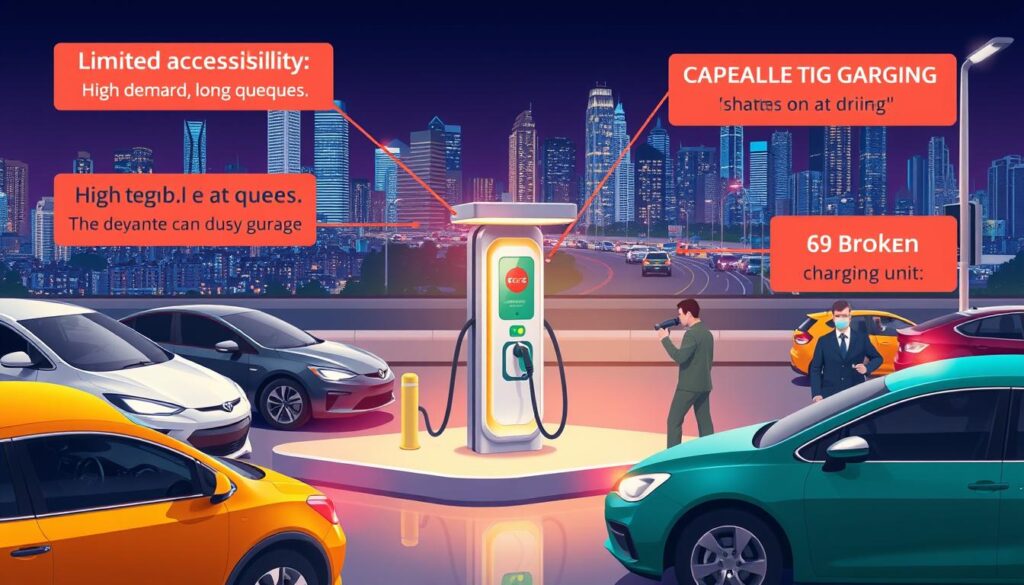
Charging speed remains a crucial issue. While gas-powered cars refuel in minutes, electric vehicles often require hours to fully charge. This time constraint can be a dealbreaker for drivers who need quick turnaround times.
Grid capacity poses another challenge. As more electric cars hit the roads, power grids struggle to meet the increased demand. This strain on the electrical infrastructure can lead to blackouts and slower charging times during peak hours.
- Limited charging stations in rural areas
- Inconsistent pricing models across networks
- Compatibility issues between different charging connectors
Standardization is a pressing need in the electric vehicle industry. The lack of uniform charging protocols and connectors creates confusion and inconvenience for drivers. This inconsistency hampers the growth of a cohesive charging network.
“The future of electric mobility hinges on overcoming these infrastructure challenges. We need innovative solutions to build a reliable, accessible, and standardized charging network.”
Addressing these obstacles is crucial for the widespread adoption of electric vehicles. As the industry evolves, finding solutions to these challenges will pave the way for a more sustainable transportation future.
Technological Innovations in EV Charging
Electric vehicle charging is evolving rapidly. Fast-charging technology leads the way, slashing charging times to minutes. These powerful chargers deliver high-voltage DC power straight to the car’s battery. Some can add 200 miles of range in just 15 minutes.
Wireless charging eliminates the need for cables. Drivers simply park over charging pads embedded in the ground. The convenience factor is huge, especially for fleet vehicles that make frequent stops.
Smart grid integration is making EV charging more efficient. Chargers communicate with the grid to optimize power usage. They can even send excess power back during peak demand times. This two-way flow helps balance the grid and reduces strain on infrastructure.
Battery swapping offers another solution for quick “refueling”. Drivers pull into a station and a robotic system swaps their depleted battery for a fully charged one. It’s faster than even the speediest chargers, taking just minutes to complete.
- Fast-charging: 200 miles in 15 minutes
- Wireless: No cables needed
- Smart grid: Optimizes power use
- Battery swapping: Instant “refuel”
These innovations are transforming EV charging. They’re making electric cars more practical and appealing to a wider audience. As technology continues to advance, we can expect even more exciting developments in this field.
Policy and Investment Framework
The growth of electric car charging infrastructure relies on a robust policy and investment framework. Government incentives play a crucial role in encouraging the adoption of electric vehicles and supporting charging infrastructure development. These incentives can take various forms, such as tax credits, grants, or subsidies for installing charging stations.
Private sector investment is equally important in expanding the charging network. Companies are increasingly recognizing the potential of the EV market and are allocating resources to build and operate charging stations. This collaboration between public and private entities is essential for creating a comprehensive charging infrastructure.
Charging infrastructure funding comes from multiple sources. While government programs provide significant support, private investors and utility companies are also contributing substantial amounts. This diverse funding approach ensures a more rapid and widespread deployment of charging stations.
“The future of electric mobility depends on our ability to create a robust charging infrastructure. It’s a collective effort that requires both public and private investment.”
Regulatory support is crucial for streamlining the process of installing and operating charging stations. Governments are working to simplify permitting procedures, establish safety standards, and create guidelines for charging station placement. These measures help accelerate the development of charging infrastructure while ensuring safety and accessibility for all users.
| Policy Measure | Impact on Charging Infrastructure |
|---|---|
| Tax Incentives | Encourages private investment in charging stations |
| Grants for Installation | Accelerates deployment of public charging points |
| Simplified Permitting | Reduces barriers to charging station installation |
| Utility Programs | Supports grid integration of charging infrastructure |
Conclusion
The future of EV charging is bright, but it requires a coordinated effort from all stakeholders. As we’ve seen, the current state of electric car charging infrastructure faces several challenges. These include limited charging stations, long charging times, and grid capacity issues.
To overcome these hurdles, technological innovations are paving the way for faster, more efficient charging solutions. Smart charging systems and wireless charging technologies are set to revolutionize the electric vehicle ecosystem. These advancements will play a crucial role in promoting sustainable mobility and making electric cars more appealing to consumers.
Government policies and private investments are vital in shaping the future of EV charging. By providing incentives and funding for infrastructure development, we can accelerate the transition to a cleaner transportation sector. As we move forward, collaboration between automakers, utility companies, and policymakers will be key to creating a robust and accessible charging network that supports the growing demand for electric vehicles.
In the end, addressing these challenges and implementing innovative solutions will be essential for building a sustainable electric vehicle ecosystem. With continued efforts and investments, we can look forward to a future where electric cars are the norm, supported by a reliable and efficient charging infrastructure.
FAQ
What are the main types of EV charging stations?
How can range anxiety be addressed?
What is smart grid integration in EV charging?
How does wireless charging work for electric vehicles?
What government incentives are available for EV charging infrastructure?
How does battery swapping work as an alternative to traditional charging?
What is the role of private sector investment in EV charging infrastructure?
How can charging infrastructure be made more accessible in rural areas?
