
Autonomous Driving Meets Electric Cars: What’s on the Horizon
The future of transportation is taking shape as self-driving EVs merge with electric mobility. This exciting fusion promises to revolutionize how we move from place to place. Autonomous vehicles are no longer just a dream – they’re becoming a reality on our roads.
Electric cars are leading the charge in this transformation. They’re cleaner, quieter, and more efficient than their gas-guzzling counterparts. When combined with self-driving technology, these vehicles offer a glimpse into a world where commuting is stress-free and eco-friendly.
As autonomous vehicles continue to evolve, they’re reshaping our cities and lifestyles. The future of transportation is here, and it’s electric, intelligent, and full of possibilities. Let’s explore what’s on the horizon for this groundbreaking technology.
The Evolution of Autonomous Electric Cars
The journey of autonomous electric cars began with early concepts that sparked imagination. Inventors dreamed of vehicles that could drive themselves while running on clean energy. This vision laid the foundation for the autonomous vehicle history we know today.
EV development took off in the late 20th century. Companies started investing heavily in electric powertrains. At the same time, researchers were making strides in self-driving technology. These two paths would eventually converge, leading to exciting breakthroughs.
Self-driving car milestones came rapidly in the 2000s. Google’s self-driving car project, now known as Waymo, made headlines in 2009. Tesla introduced Autopilot in 2014, bringing semi-autonomous features to the mass market. These advancements paved the way for fully autonomous electric vehicles.
| Year | Milestone | Impact |
|---|---|---|
| 2009 | Google launches self-driving car project | Sparks public interest in autonomous vehicles |
| 2014 | Tesla introduces Autopilot | Brings semi-autonomous features to consumers |
| 2016 | First fully autonomous EV test on public roads | Demonstrates viability of self-driving electric cars |
Technological advancements continue to push the boundaries of what’s possible. Improved sensors, AI algorithms, and battery technology are bringing us closer to a future where autonomous electric cars are the norm. As these innovations progress, we’re witnessing the birth of a new era in transportation.
Current State of Self-Driving Technology
Self-driving technology is advancing rapidly, with AI in autonomous cars leading the charge. Companies like Tesla, Waymo, and traditional automakers are racing to perfect this innovation. The core of these systems relies on machine learning algorithms that process data from various sensors.
LiDAR sensors play a crucial role in autonomous vehicles. These devices use laser light to create detailed 3D maps of the car’s surroundings. When combined with radar and cameras, they provide a comprehensive view of the environment.
Computer vision is another key component. It allows cars to interpret visual information, such as traffic signs and pedestrians. This technology has made significant strides, enabling vehicles to navigate complex urban environments.
“The integration of AI, LiDAR, and computer vision is revolutionizing how we think about transportation.”
Real-world testing is ongoing, with autonomous vehicles logging millions of miles on public roads. This data helps refine algorithms and improve safety features. As the technology matures, we’re seeing a shift from basic driver assistance to more advanced autonomous capabilities.
| Technology | Function | Key Players |
|---|---|---|
| LiDAR | 3D mapping | Velodyne, Luminar |
| Computer Vision | Object recognition | Mobileye, NVIDIA |
| AI Algorithms | Decision making | Waymo, Tesla |
Electric Vehicle Infrastructure and Autonomous Systems
The future of transportation lies in the seamless integration of EV charging stations with autonomous driving systems. As autonomous and electric vehicles become inextricably, the need for smart grid integration becomes crucial. This convergence paves the way for innovative solutions like V2G technology and autonomous charging.
EV charging stations are evolving to meet the demands of self-driving cars. Imagine a world where your electric vehicle finds its way to a charging spot, plugs itself in, and tops up its battery without human intervention. This vision is not far from reality, thanks to advancements in autonomous charging technology.
Smart grid integration plays a vital role in this ecosystem. It enables efficient power distribution and management, ensuring that the grid can handle the increased demand from electric vehicles. This system also allows for bi-directional energy flow, a key component of V2G technology.
“The integration of autonomous systems with electric vehicle infrastructure is reshaping our cities and how we think about transportation.”
V2G technology takes the concept of electric vehicles a step further. It allows cars to not only draw power from the grid but also feed it back when needed. This creates a dynamic energy ecosystem where vehicles become mobile power sources, contributing to grid stability and reducing overall energy costs.
| Technology | Benefits |
|---|---|
| Autonomous Charging | Convenience, Efficiency |
| Smart Grid Integration | Load Management, Energy Efficiency |
| V2G Technology | Grid Stability, Cost Reduction |
As we move towards a future dominated by autonomous electric vehicles, the infrastructure supporting them will continue to evolve. The synergy between these technologies promises a cleaner, more efficient, and smarter transportation system.
Safety and Regulatory Framework
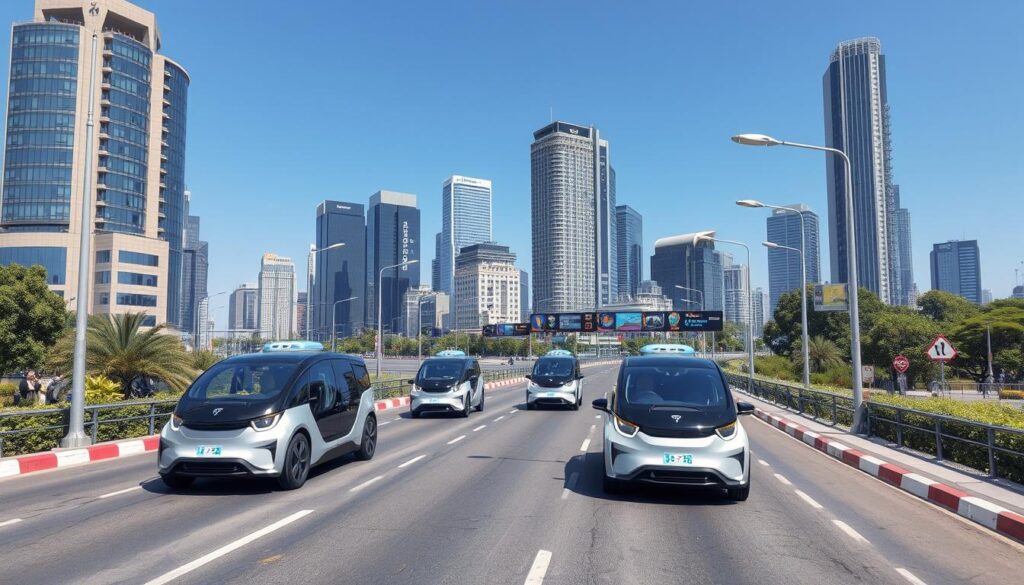
The rise of autonomous electric vehicles brings new challenges in safety and regulation. Governments worldwide are grappling with autonomous vehicle regulations to ensure public safety. These regulations cover a wide range of issues, from testing procedures to liability in case of accidents.
Safety standards for self-driving cars are evolving rapidly. Manufacturers must meet stringent requirements for sensors, software, and vehicle performance. These standards aim to make autonomous vehicles safer than human-driven ones.
Liability issues remain a complex topic in the world of autonomous driving. Questions arise about who’s responsible in case of an accident – the vehicle manufacturer, software developer, or the person behind the wheel.
Government policies play a crucial role in shaping the future of autonomous electric vehicles. Some countries are taking a proactive approach, creating dedicated lanes for self-driving cars and offering incentives to manufacturers.
| Country | Key Autonomous Vehicle Regulations | Safety Standards | Liability Approach |
|---|---|---|---|
| United States | State-level regulations, federal guidelines | NHTSA safety framework | Product liability laws |
| European Union | Harmonized EU regulations | UNECE WP.29 standards | Strict liability for manufacturers |
| China | National AV testing regulations | GB/T standards | Shared liability approach |
As technology advances, regulatory frameworks must keep pace. Balancing innovation with public safety remains a key challenge for policymakers in the autonomous vehicle industry.
Environmental Impact and Sustainability
Autonomous electric cars are poised to revolutionize sustainable transportation. These vehicles combine the benefits of electric propulsion with advanced self-driving technology, paving the way for significant carbon footprint reduction in the automotive sector.
Electric vehicles powered by renewable energy sources like solar and wind can drastically cut emissions. When paired with autonomous capabilities, they optimize energy usage, further enhancing their eco-friendly mobility potential.
The integration of self-driving technology with electric cars offers numerous environmental advantages:
- Improved traffic flow, reducing congestion and idle times
- Optimized routing for energy efficiency
- Platooning capabilities for reduced air resistance
- Enhanced vehicle sharing, decreasing the overall number of cars on roads
While the environmental benefits are promising, challenges remain in the lifecycle assessment of autonomous electric vehicles. The production of batteries and advanced sensors requires careful consideration to ensure true sustainability.
| Aspect | Impact on Sustainability |
|---|---|
| Energy Consumption | 25-40% reduction compared to conventional vehicles |
| Emissions | Up to 90% decrease when powered by renewable energy |
| Resource Use | Increased demand for rare earth metals in battery production |
| Vehicle Lifespan | Extended due to optimized usage and maintenance |
As technology advances and renewable energy infrastructure expands, autonomous electric cars are set to play a crucial role in creating a more sustainable transportation ecosystem.
Market Trends and Consumer Adoption
The autonomous EV market growth is gaining momentum as consumers embrace cutting-edge transportation solutions. A recent survey reveals that 65% of respondents are eager to try self-driving electric cars, indicating a shift in consumer acceptance.

Ride-sharing services are at the forefront of this revolution. Companies like Uber and Lyft are investing heavily in autonomous electric vehicles, aiming to reduce operational costs and improve service efficiency. This trend is reshaping urban mobility and paving the way for widespread adoption of self-driving EVs.
Fleet electrification is another key driver in the market. Many corporations and government agencies are transitioning their vehicle fleets to electric, with plans to incorporate autonomous features in the near future. This shift not only reduces carbon emissions but also optimizes fleet management and reduces long-term costs.
| Sector | Autonomous EV Adoption Rate | Projected Growth (Next 5 Years) |
|---|---|---|
| Ride-sharing Services | 12% | 45% |
| Corporate Fleets | 8% | 35% |
| Public Transportation | 5% | 30% |
As technology advances and infrastructure improves, we can expect to see a surge in autonomous electric vehicles on our roads. This transformation promises to revolutionize transportation, making it safer, cleaner, and more efficient for everyone.
Conclusion
The future of autonomous EVs is set to revolutionize transportation as we know it. As technological innovation continues to advance, we’re moving closer to a world where self-driving electric cars are the norm. This shift promises to reshape our cities, reduce traffic congestion, and improve road safety.
The transportation revolution brought about by autonomous electric vehicles will likely have far-reaching effects on society and the economy. Jobs in the automotive and transportation sectors will evolve, while new industries focused on sustainable mobility solutions will emerge. These changes may lead to cleaner air in urban areas and reduced carbon emissions, supporting global efforts to combat climate change.
Despite the exciting prospects, challenges remain on the path to widespread adoption of autonomous EVs. Regulatory frameworks need to keep pace with technological advancements, and infrastructure must be upgraded to support this new era of mobility. As we navigate these hurdles, the potential for innovation in this field remains vast, promising a future where transportation is safer, cleaner, and more efficient than ever before.
FAQ
What are self-driving EVs?
How do autonomous electric cars benefit the environment?
What are the main challenges facing autonomous EV development?
How are companies like Tesla and Waymo contributing to autonomous EV technology?
What is V2G technology, and how does it relate to autonomous EVs?
How might autonomous electric cars change urban transportation?
What safety measures are being implemented in autonomous EVs?
How are governments regulating autonomous electric vehicles?
