
Renewable Energy Wind Farm Repowering Trends
Maximizing wind power efficiency requires adapting aging assets to modern aerodynamic, mechanical, and electrical standards. As initial utility-scale infrastructure approaches its operational end-of-life, global Wind Farm Repowering Trends are defining the trajectory of asset optimization.
This strategic article outlines the core mechanisms behind full and partial system modernization, financial benefits, regulatory hurdles, and contemporary global progress.
What is wind farm repowering and how does it optimize legacy sites?
Wind farm repowering is the practice of rebuilding or upgrading older wind generation assets to increase energy capacity and operational efficiency.
Instead of abandoning prime geographic locations with premium wind resources, asset operators replace mature, underperforming components with advanced aerodynamic technologies.
This structural modification manifests as either full repowering, which involves tearing down old units completely, or partial repowering.
Partial upgrades focus strictly on keeping existing towers while installing longer rotor blades, efficient gearboxes, and enhanced electrical conversion systems.
Why are operators choosing retrofitting over new site deployment?
Securing fresh land rights, environmental permits, and greenfield interconnection agreements has become incredibly complex and time-consuming for utility developers.
By focusing on established assets, companies bypass extensive environmental impact assessments and capitalize on existing grid infrastructure that is already operational.
Consequently, observing how Wind Farm Repowering Trends mitigate development risks reveals that modernizing existing spaces yields far predictable return cycles.
Operators utilize historical wind resource datasets collected over decades to eliminate energy generation modeling uncertainties before committing capital.
Furthermore, community opposition to new greenfield developments is significantly minimized when upgrading sites that neighboring populations have already accepted.
The process allows developers to deliver significantly higher electrical volumes while often reducing total turbine counts across regional landscapes.
What structural modifications define modern asset modernization?
Modern turbine upgrades involve scaling rotor diameters and implementing advanced control software to harvest lower-velocity wind currents more effectively.
Lightweight carbon-fiber blades are replacing traditional fiberglass options, enabling larger aerodynamic surface areas without adding dangerous mechanical stress to older towers.
To study validated global capacity statistics, tracking reports, and official technological policy roadmaps provided by leading global agencies, explore the International Energy Agency.
These upgrades dramatically lift project capacity factors, transforming aging assets into highly profitable nodes.
Additionally, vintage drive systems are swapped for smart, variable-speed gearboxes or direct-drive generators that require significantly less preventative maintenance.
Integrated digital twins continuously track mechanical stress, adjusting pitch angles in real time to extend operational life spans.
How do market metrics reflect global turbine optimization?
The actual scale of global infrastructure modernization becomes highly evident when analyzing the verified structural data released by international energy tracking organizations.
To evaluate how these clean energy transitions are unfolding across major geographical regions, review the compilation of active capacity metrics below:
| Geographic Trading Region | Active Wind Capacity (2025 Baseline) | Anticipated Growth Rate (CAGR 2026-2031) | Repowering Pipeline Share (%) | Prime Regulatory Incentive |
| Asia-Pacific Market | 721.2 Gigawatts | 11.42% annual growth | 35% of ongoing projects | Provincial Auction Priorities |
| European Union Zone | 234.5 Gigawatts | 8.20% annual growth | 48% of ongoing projects | REPowerEU Permitting Rules |
| North American Grid | 165.8 Gigawatts | 9.15% annual growth | 42% of ongoing projects | Section 45Y Production Tax |
| Latin American Network | 41.2 Gigawatts | 7.65% annual growth | 18% of ongoing projects | Regional Decarbonization Goals |
| Rest of Global Markets | 184.1 Gigawatts | 6.10% annual growth | 12% of ongoing projects | Grid Infrastructure Expansion |
The structured data highlights a distinct focus on asset optimization within mature markets like Europe and North America.
These regions possess the oldest operating fleets, making them prime territory for massive technological replacement campaigns through the turn of the decade.
Which policy frameworks accelerate wind asset transformation?
Government financial initiatives remain a primary catalyst driving the financial viability of sweeping industrial turbine refurbishment programs across the globe.
For example, federal production tax credits reward clean energy operators for maximizing output at existing installations that hit milestone operational ages.
Knowing that current Wind Farm Repowering Trends are tied closely to policy alignment helps developers schedule updates before legacy incentives expire.
Learn more: The Future of Wind Energy: Trends and Innovations
Streamlined permitting frameworks like the European Union’s corporate wind package cut administrative approval times down to under two years.
These legislative interventions ensure that capital flows smoothly into asset modernization rather than getting tied up in multi-year judicial reviews.
Clear legal guidelines provide institutional investors with the long-term cash flow predictability required to fund massive capital expenditures.
When do partial drivetrain upgrades outpace full facility liquidation?
Partial system modifications become the preferred operational path when existing foundation concrete and steel tower structures remain structurally sound.
Swapping out internal components while retaining the physical tower slashes up to 40% of standard capital costs compared to full site reconstruction.
Read more: Comparing Solar, Wind, and Hydropower: Pros and Cons
This targeted methodology keeps local grid connections active, avoiding long shutdown periods that cause major revenue losses for energy producers.
Partial upgrades allow operators to capture modern efficiency gains quickly, adapting to fluctuating wholesale electricity prices without undergoing lengthy construction delays.
Future Outlook for Asset Lifespan Optimization
Sustainable asset management requires balancing initial capital inputs against long-term operational resilience and predictable clean energy production output profiles.
Learn more: Vertical-axis wind turbines: why they’re making a comeback in dense urban settings
The evolution of commercial wind assets underscores the value of upgrading legacy positions to meet demanding carbon reduction targets efficiently.
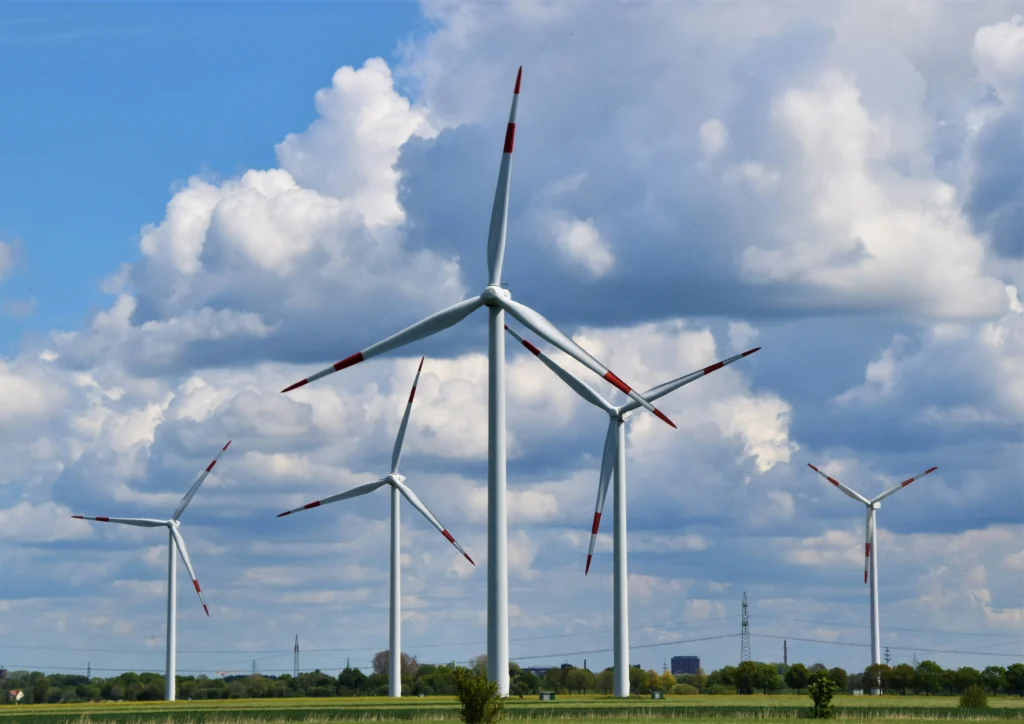
As manufacturing supply chains stabilize and engineering teams master high-altitude component swaps, partial upgrades will become standard operational practice.
This structural transition effectively secures clean, reliable power production from established geographic footprints while preserving precious natural landscapes.
For comprehensive market insights, manufacturer market shares, and up-to-date wind power project tracking data, visit Global Wind Energy Council.
Frequently Asked Questions (FAQ)
What is the typical operational lifespan of a modern onshore wind turbine?
A standard onshore wind turbine is designed to operate efficiently for 20 to 25 years under normal meteorological conditions. After this window, mechanical fatigue increases maintenance costs significantly, making the unit a prime candidate for a technological repowering upgrade.
How does partial repowering differ from full decommissioning of a wind site?
Partial repowering retains the existing concrete foundations and steel tower sections while replacing blades, gearboxes, and generators.
Full decommissioning involves tearing down all structural components, restoring the land completely, or building a brand-new facility from scratch.
Can old wind turbine blades be recycled during a site repowering project?
Historically, composite fiberglass blades ended up in specialized landfills due to complex recycling processes. However, modern decommissioning programs utilize advanced thermal co-processing and chemical recycling methods to turn old blades into raw materials for cement manufacturing.
Why do some repowering initiatives decrease the total number of turbines on-site?
Modern turbines generate significantly more electrical power per unit than legacy models from the early 2000s. By installing fewer, larger machines with expanded rotor diameters, developers can increase total site capacity while reducing the overall physical footprint.
