
Vertical-axis wind turbines: why they’re making a comeback in dense urban settings

Vertical-axis wind turbines represent a significant shift in how modern cities approach renewable energy integration within dense, high-rise environments traditionally dominated by solar panels.
This evolution reflects a growing need for diverse energy portfolios that can function efficiently where space is limited and wind patterns are notoriously unpredictable.
Summary of Contents
- Evolution of vertical mechanics
- The “Urban Canyon” aerodynamic advantage
- Noise levels and biodiversity safety
- Comparative efficiency metrics
- Economic logic for 2026 infrastructure
What are vertical-axis wind turbines and how do they function?
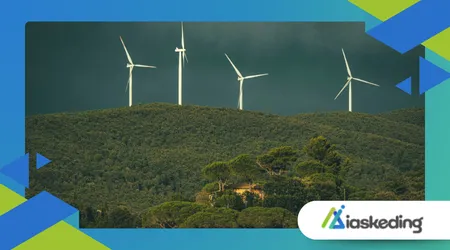
Think of the traditional horizontal turbine as a giant, fixed propeller. It is a masterpiece of engineering, yet it is fundamentally rigid.
In contrast, vertical-axis wind turbines operate on a transverse rotor shaft, a design choice that moves the heavy lifting—the generator and gearbox—down to the base.
This isn’t just a mechanical preference; it’s a practical necessity for technicians who would otherwise be dangling off skyscraper edges to fix a simple gear.
The blades wrap around a central axis, capturing air from any direction without the need for the sluggish yaw motors found in traditional models.
This omnidirectional nature is where the magic happens. In a city, wind doesn’t blow; it bounces. It hits glass, dives into alleys, and swirls.
By 2026, the structural fragility that once plagued these designs has largely vanished. We’ve moved past the experimental phase into an era of carbon-fiber resilience.
These modern iterations of the Darrieus and Savonius models are no longer the “underdogs” of the renewable world; they are the specialized tools built for the chaos of the human habitat.
Why is turbulence an advantage for urban wind energy?
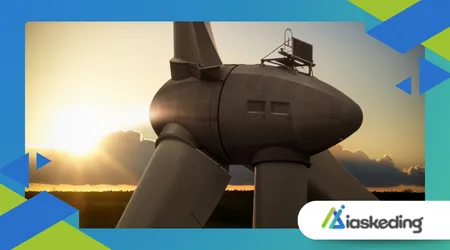
There’s a common misconception that wind needs to be smooth to be useful. On a flat plain, that’s true. But in a metropolis, “clean” air is a myth.
++Why Electric Ferries Need More Than Just Big Batteries — The Port Bottleneck Problem
The urban landscape creates what engineers call “dirty wind”—a chaotic mix of gusts and vortices.
While a standard turbine would stall or vibrate itself to pieces in this environment, vertical-axis wind turbines actually thrive on the mess.
These machines treat turbulence as an asset. Their design allows them to maintain a steady rotation even when the wind is pulsing at irregular intervals.
It’s a bit like a flywheel; once they get going, the erratic nature of city air keeps them fed.
This resilience transforms the very architectural obstacles that usually hinder green energy—like the gaps between high-rises—into concentrated wind tunnels.
++Gravity-based energy storage using underground shafts: is it scalable?
A well-placed vertical unit captures this artificial speed boost, turning a structural necessity into a localized power plant.
Which technical specifications define modern VAWT performance?
The shift toward localized production isn’t just about being green; it’s about the cold logic of the balance sheet. The following data highlights why these units are appearing on more city skylines this year.
VAWT Performance Comparison (2025-2026 Data)
| Feature | Savonius Type | Darrieus (H-Rotor) | Traditional HAWT |
| Wind Direction | Omnidirectional | Omnidirectional | Requires Yaw |
| Start-up Speed | 2.0 m/s | 3.5 m/s | 4.0 m/s |
| Noise Level | < 35 dB | < 40 dB | 55+ dB |
| Space Footprint | Minimal | Small | Large |
| Urban Suitability | Excellent | High | Low |
How do these turbines address noise and environmental concerns?
One of the loudest arguments against urban wind—quite literally—is noise. No one wants a jet-engine whine outside their bedroom window.
This is where vertical-axis wind turbines excel. Because their blade tips move at a much lower velocity than their horizontal cousins, they operate at a frequency that blends into the city’s background hum.
At less than 40 decibels, they are quieter than a standard office air conditioner.
There is also the matter of our feathered neighbors. The “motion smear” of high-speed horizontal blades is a well-documented hazard for birds.
++Is Nuclear Energy Considered Renewable?
This ecological sensitivity has made them a favorite for planners. Organizations like the International Energy Agency have noted that while solar is great, a truly resilient city needs the 24-hour backup that only wind can provide.
When should developers choose vertical over horizontal designs?
The decision often comes down to the “skin” of the building. We are seeing a move away from seeing turbines as appliances bolted onto a roof and toward seeing them as part of the architecture itself.
If you have a wide-open coastal pier, by all means, use a horizontal fan. But for a penthouse roof in a congested zip code, vertical-axis wind turbines are the only logical choice.
They fit into corners. They can be stacked. They can be integrated into the facade to power specific loads like EV charging banks or hallway lighting.
This modularity allows for a “plug-and-play” approach to skyscraper energy that was previously impossible.
You’re sending a technician to the roof with a toolbox. That reduction in long-term O&M (Operations and Maintenance) costs is what finally tipped the scales for commercial real estate developers.
What are the economic benefits of urban wind integration?
Transmission is the hidden ghost in the electricity bill. We lose an incredible amount of energy just moving it from distant wind farms to the city center.
By generating power right where it’s consumed, vertical-axis wind turbines eliminate those losses. It’s the energy equivalent of a “farm-to-table” movement—fresher, more direct, and significantly more efficient.
The 2026 fiscal landscape has also shifted. Many municipalities have moved beyond simple subsidies, offering aggressive tax credits for “Active Facades.”
Ultimately, these turbines are a statement of intent.
In a market where ESG (Environmental, Social, and Governance) scores dictate investment, a building that visibly generates its own clean power is more than just a structure; it’s an asset that proves its own future-proofing.
For more on the technical evolution of these systems, the Office of Energy Efficiency & Renewable Energy provides a deep dive into the physics of the latest rotor designs.
FAQ
The turbines are more efficient than solar panels.?
It isn’t a competition; it’s a partnership. Solar is a daytime hero, but vertical-axis wind turbines work through the night and during the very storms that block out the sun. A resilient building uses both.
Can VAWTs be installed on existing residential buildings?
Retrofiting is increasingly common. While you need a structural engineer to check the load-bearing capacity of the roof, the vibration-dampening mounts on modern vertical-axis wind turbines make them remarkably easy to integrate into older buildings.
How long do these turbines typically last?
With fewer moving parts and shielded generators, you’re looking at a 20-to-25-year lifespan. It’s a “set it and forget it” piece of infrastructure, provided you do basic annual inspections.
