
Electric Transport Battery Swapping Scaling in Cities
Battery Swapping Scaling in Cities is quietly rewriting the rules of urban movement by finally severing the link between the vehicle and its most stubborn limitation: the charge time.
For years, the dream of total electrification hit a wall of logistics.
We simply cannot expect a delivery driver or a busy commuter to treat a one-hour charging stop as a “minor inconvenience.”
By treating batteries as modular energy pods that can be swapped in under five minutes, cities are finding a way to make electric transport actually fit the frantic pace of modern life.
What is the Driving Force Behind Rapid Battery Swapping Expansion?
Metropolitan planners face a spatial crisis that no amount of fast-charging can solve. There is a physical limit to how many curbside chargers a city can install before the sidewalk becomes a jungle of cables.
This is where Battery Swapping Scaling in Cities offers a necessary escape hatch. Instead of turning every parking spot into a slow-burn power outlet, swapping concentrates energy delivery into a compact, high-throughput footprint.
A single automated station, roughly the size of three SUVs, can handle the energy needs of hundreds of riders a day.
This density is a godsend for cities like Tokyo or London, where real estate is priced like gold. It’s not just about convenience; it’s about the sheer geometry of survival in a crowded urban core.
The urgency is driven largely by the invisible backbone of our cities: the gig economy riders and last-mile couriers.
For these workers, a dead battery is a direct hit to their daily wages.
Swapping transforms electrification from an environmental luxury into a viable tool for the working class, allowing for continuous operation without the “range anxiety” that plagues traditional plug-in models.
How Does Battery Swapping Scaling in Cities Impact Grid Management?
There is a common fear that EVs will eventually “break” the city power grid. However, swap stations act more like sponges than drains.
Because the batteries are sitting in a rack, the station can wait for the exact moment when the grid has excess capacity, like the middle of a windy night, to charge them.
This isn’t just a technical perk; it’s a fundamental shift in how we balance urban energy.
When Battery Swapping Scaling in Cities is done right, these stations function as Virtual Power Plants (VPPs).
During a heatwave or a sudden spike in demand, the station can pause its charging or even feed power back into the neighborhood.
This symbiotic relationship helps prevent the very blackouts that critics of electric transport often predict.
Centralization also fixes the “battery abuse” problem. When people fast-charge their own cars, they often prioritize speed over the long-term health of the chemistry.
In a swap station, the environment is thermally controlled and the charging curves are optimized by AI.
This results in batteries that stay healthy for significantly more cycles, delaying the need for resource-intensive recycling.
Why are Commercial Fleets Prioritizing Swappable Power Models?
For a fleet manager in 2026, downtime is the enemy of profit. Transitioning a fleet to electric used to mean complicated scheduling around charging breaks.
Learn more: How E-Scooter Fleets Use Swappable Batteries to Reduce Logistics Costs
Now, the conversation has shifted. By adopting Battery Swapping Scaling in Cities, logistics companies can maintain a 24/7 operational tempo that was previously only possible with diesel engines.
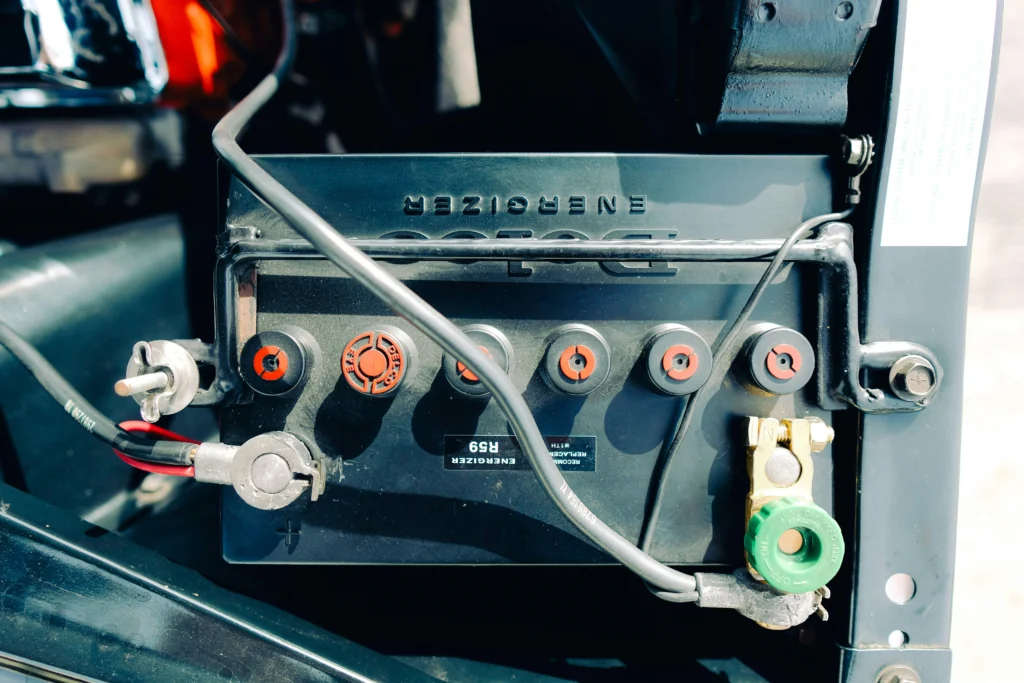
The “Battery-as-a-Service” (BaaS) model is the real financial kicker here. By stripping the battery, the most expensive part of an EV, out of the purchase price, the entry cost for a new van or scooter drops by nearly 40%.
It changes the accounting from a massive, risky capital investment into a predictable, monthly operational fee.
| Performance Metric | Traditional DC Fast Charging | Battery Swapping (2026) |
| Typical Vehicle Downtime | 30–90 Minutes | 3–5 Minutes |
| Grid Strategy | Peak Demand Load | Off-Peak Smoothing / V2G |
| Upfront Capital | High (Asset Heavy) | Low (Asset Light / BaaS) |
| Throughput per Sq/m | Limited by Port Count | High (Vertical Storage) |
| Ownership Risk | High (Battery Degradation) | Zero (Provider Responsibility) |
When Will Standardization Become a Reality for Global Cities?
We are currently in the “VHS vs. Betamax” phase of battery design, though the fog is starting to lift. The industry is realizing that proprietary plugs and odd-shaped packs are an anchor on growth.
In 2026, we see a massive push toward modular, open-standard packs that work across different vehicle brands. It’s a move toward the “AA battery” of the transport world.
Organizations like the International Energy Agency (IEA) have pointed out that without interoperability, cities risk ending up with a graveyard of incompatible hardware.
This realization is forcing competitors to sit at the same table. Governments are finally using their leverage, often refusing to grant permits to companies that won’t share their infrastructure with the wider ecosystem.
As these standards solidify, the cost per swap continues to slide downward. We are reaching a tipping point where the infrastructure is no longer a collection of “startup experiments” but a reliable utility.
When a single pack can slide into a Honda, a Yamaha, or a local delivery trike, the network effect becomes unstoppable.
Which Cities Lead the Way in Swapping Infrastructure?
The blueprint for the future is currently being written in Asia. In places like Taipei, the swapping network has become so ubiquitous that it’s almost invisible, it’s just how things work.
These cities didn’t wait for a “perfect” battery; they built a system that could evolve, focusing first on the two-wheelers that dominate their streets before scaling up to four wheels.
Europe and North America are now adopting this “Asia-first” logic, but with a twist toward heavy-duty logistics.
Read more: Electric Motorcycle Swappable Battery Network Limits
London and New York are aggressively piloting swap stations for electric taxis and “heavy-mileage” delivery vans.
They have realized that to hit their 2030 net-zero targets, they need to solve the charging problem for the vehicles that never stop moving.
These success stories aren’t just about technology; they are about savvy public-private partnerships. The cities that are winning are the ones that treat energy companies as urban planners, allowing for fast-tracked permits in exchange for grid-stabilization services.
It’s a pragmatic trade-off that is finally paying off in cleaner air and quieter streets.
What are the Main Challenges Hindering Faster Expansion?
Of course, it isn’t all smooth sailing. The initial bill for these stations is eye-watering. To make the system work, you need a massive “float” of batteries, often double the number of vehicles on the road.
This represents a significant amount of tied-up capital and lithium that must be managed with surgical precision to ensure the business model remains profitable.
Scaling Battery Swapping Scaling in Cities also hits the “old grid” wall.
Learn more: Battery Swapping for Electric Trucks: Does It Make Sense?
Even though these stations help balance the load, they still require massive power pipes. In many older cities, the local substations simply weren’t built for this kind of concentrated demand.
Navigating the ancient bureaucracy of municipal power companies is often more difficult than the engineering itself.
Then there is the looming shadow of solid-state technology. There is a persistent fear that today’s swapping hardware might be obsolete by 2030.
However, the most successful operators are building “chemistry-agnostic” stations. These are essentially smart vending machines that don’t care what is inside the battery casing, as long as the dimensions and the software handshake remain consistent.
Final Thoughts
The narrative around electric transport is shifting from “how far can it go?” to “how fast can I get back on the road?”
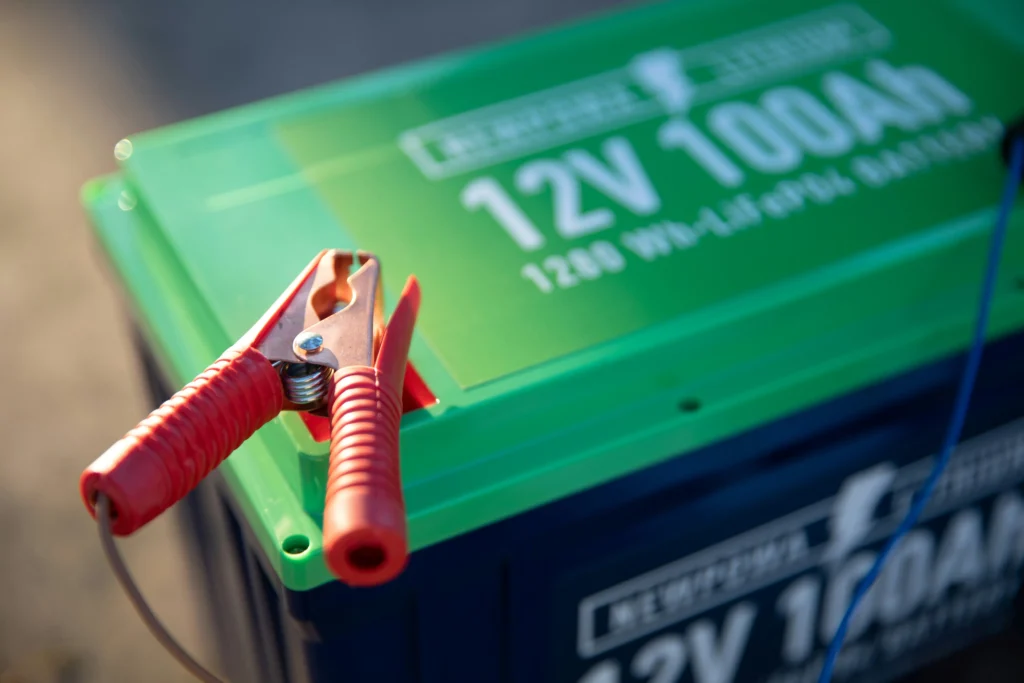
By embracing Battery Swapping Scaling in Cities, we are finally addressing the friction that has held back the EV revolution for over a decade.
It is a transition that turns vehicles into part of the energy grid itself, creating a city that is not just cleaner, but smarter and more resilient.
FAQ (Frequently Asked Questions)
Is battery swapping safe in wet or extreme weather?
Modern stations are designed with industrial-grade weatherproofing and internal fire suppression systems. The connection points are shielded and tested to handle everything from tropical humidity to sub-zero temperatures without compromising the electrical integrity.
Does the constant swapping damage the vehicle’s connectors?
The connectors are engineered for thousands of cycles, far exceeding the typical lifespan of the vehicle. In fact, because the station checks the connector health during every swap, problems are often caught and fixed before the driver even notices them.
What happens if a station runs out of charged batteries?
Top-tier providers use predictive AI to move batteries between stations or adjust charging speeds based on historical demand. Most users in established networks rarely experience a “dry” station, as the apps redirect them to the nearest available pack.
Will my car’s resale value drop if I don’t own the battery?
Actually, the opposite is often true. Since you aren’t tied to a degrading battery, the “shell” of the car holds its value better. A buyer in five years will simply subscribe to a new battery plan, ensuring the vehicle always has the latest energy tech.
How does this help with battery recycling?
Because the batteries are owned by a central provider, they are never “lost” to a landfill. The company tracks every cell, ensuring that when a pack reaches its automotive end-of-life, it is professionally dismantled and recycled for its raw materials.
For a deeper look at the global policies driving this transition, the United Nations Environment Programme (UNEP) offers extensive resources on how sustainable transport is being integrated into modern urban planning.
