
Hydropower Innovations: Clean Energy Solutions
The world of renewable energy is changing fast, and hydropower is at the forefront. New water technology is reshaping how we think about sustainable power. These innovations are creating eco-friendly electricity that’s reliable and efficient.
From smart turbines to advanced dam designs, hydropower is evolving. These changes are making it a key player in our clean energy future. Let’s dive into the exciting world of modern hydropower and see how it’s powering a greener tomorrow.
Understanding Modern Hydropower Technology
Modern hydropower technology has evolved to meet the growing demand for clean energy. Today’s hydroelectric systems boast impressive turbine efficiency, allowing for maximum power generation from water flow. These high-performance turbines convert kinetic energy into electrical power with minimal losses.
Variable speed generators represent a significant leap forward in hydropower innovation. Unlike traditional fixed-speed generators, these adaptable systems can optimize output across a range of water flow conditions. This flexibility enhances overall plant efficiency and reduces wear on equipment.
Fish-friendly designs are crucial in modern hydropower facilities. Engineers have developed innovative solutions to protect aquatic life while maintaining energy production. These include specially shaped turbine blades and fish passage systems that allow safe migration around dams.
Advanced control systems play a vital role in optimizing hydropower operations. These sophisticated technologies monitor water levels, adjust turbine settings, and manage power output in real-time. By fine-tuning performance, they maximize energy production while minimizing environmental impact.
| Technology | Benefits | Challenges |
|---|---|---|
| High-efficiency turbines | Increased power output | Higher initial costs |
| Variable speed generators | Adaptability to flow variations | Complex control systems |
| Fish-friendly designs | Reduced ecological impact | Potential energy trade-offs |
| Advanced control systems | Optimized operations | Cybersecurity concerns |
The integration of these technologies has transformed hydropower into a more efficient, flexible, and environmentally responsible energy source. As research continues, we can expect further improvements in turbine design, generator efficiency, and ecological safeguards.
The Evolution of Hydropower Infrastructure
Hydropower infrastructure has undergone significant changes over the years. Dam retrofitting breathes new life into aging structures, enhancing their efficiency and environmental performance. This process involves upgrading turbines, generators, and control systems to boost power output and reduce ecological impacts.
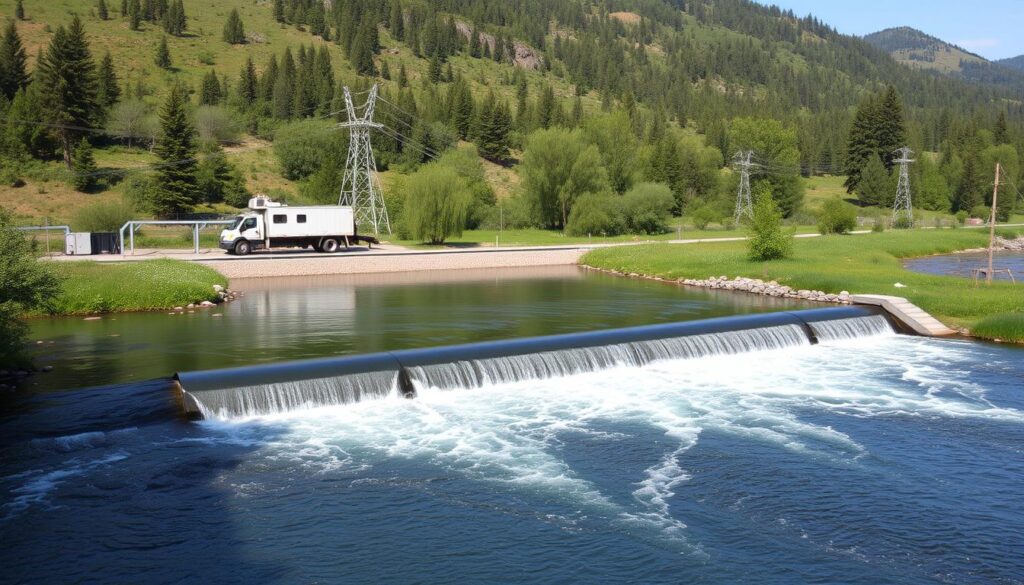
Run-of-river systems represent a shift towards more sustainable hydropower. These projects harness the natural flow of rivers without large reservoirs, minimizing environmental disruption. They provide a steady source of clean energy while maintaining river ecosystems.
Pumped storage facilities offer a solution to the intermittency of renewable energy sources. By pumping water to higher elevations during low demand periods and releasing it to generate power during peak times, these systems act as giant batteries for the grid.
Offshore hydropower is an emerging frontier in clean energy production. Tidal and wave energy converters tap into the vast potential of ocean currents and waves, opening new possibilities for coastal communities.
“The future of hydropower lies in innovative designs that maximize energy production while minimizing environmental impact.”
| Technology | Key Advantage | Environmental Impact |
|---|---|---|
| Dam Retrofitting | Improved Efficiency | Reduced Fish Mortality |
| Run-of-River Systems | Minimal Reservoir Needed | Preserves River Flow |
| Pumped Storage | Grid Stabilization | Closed-Loop Options Available |
| Offshore Hydropower | Untapped Energy Source | Limited Visual Impact |
As these technologies advance, the hydropower sector continues to evolve, offering cleaner and more sustainable energy solutions for our growing world.
Smart Grid Integration and Hydroelectric Power
Hydroelectric power plants are evolving to play a crucial role in smart grid systems. These modern facilities offer unique capabilities for grid stability and load balancing. By integrating with smart grids, hydropower can respond quickly to fluctuations in electricity demand, ensuring a steady power supply.
One of the key advantages of hydroelectric power is its ability to provide effective demand response. When electricity usage spikes, hydropower plants can ramp up production almost instantly. This flexibility helps maintain grid stability and prevents blackouts during peak hours.
Energy storage is another vital aspect of smart grid integration. Pumped-storage hydropower facilities act as giant batteries, storing excess energy during low-demand periods. This stored power can be released when needed, smoothing out supply and demand imbalances.
“Hydropower’s integration with smart grids is revolutionizing our energy landscape, providing unmatched flexibility and reliability.”
The synergy between hydropower and other renewable sources is reshaping the energy sector. By working together, these technologies create a more resilient and sustainable power grid. As we move towards a cleaner energy future, the role of hydroelectric power in smart grid systems will only grow in importance.
Hydropower Innovations Clean Energy: Latest Developments
The hydropower sector is experiencing a revolution with cutting-edge technologies. Artificial intelligence is reshaping operations, making power generation more efficient and responsive to demand fluctuations. Machine learning algorithms analyze vast amounts of data to optimize turbine performance and water flow management.
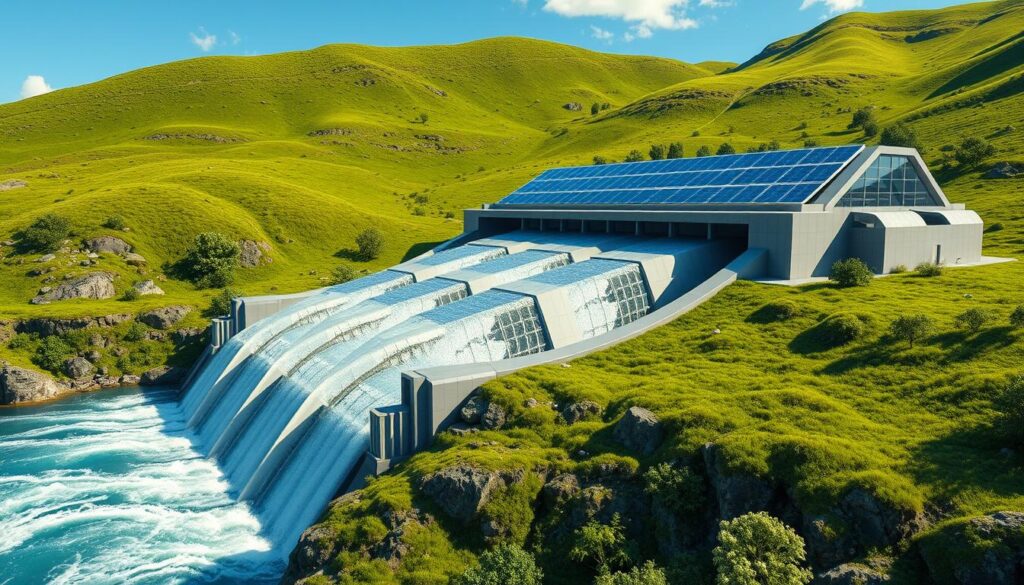
Digital twins are virtual replicas of physical hydropower plants, enabling operators to simulate various scenarios and make informed decisions. These digital models help in predicting potential issues and improving overall plant efficiency.
Predictive maintenance is another game-changer in hydropower. By using sensors and data analytics, operators can anticipate equipment failures before they occur, reducing downtime and maintenance costs. This proactive approach ensures continuous power generation and extends the lifespan of critical components.
| Innovation | Benefits | Implementation Challenges |
|---|---|---|
| Artificial Intelligence | Improved efficiency, demand response | Data integration, staff training |
| Digital Twins | Enhanced simulation, decision-making | High initial costs, complex modeling |
| Predictive Maintenance | Reduced downtime, cost savings | Sensor installation, data analysis |
These innovations are paving the way for a more sustainable and reliable hydropower sector. As technology continues to advance, we can expect even greater improvements in efficiency and environmental performance of hydroelectric plants.
Small-Scale Hydropower Solutions
Small-scale hydropower solutions offer a sustainable approach to energy generation. Microhydro systems harness the power of flowing water in streams and rivers, providing clean electricity to remote areas. These systems are perfect for decentralized power generation, reducing reliance on large-scale infrastructure.
In-stream turbines are a key technology in this field. These devices are placed directly in water currents, converting kinetic energy into electricity. Unlike traditional dams, in-stream turbines have minimal impact on river ecosystems. They’re ideal for powering local communities sustainably.
Hydrokinetic energy is another innovative approach. This technology captures energy from tides, waves, and river currents without the need for dams. It’s a promising solution for coastal and riverine communities seeking clean, reliable power sources.
| Technology | Power Output | Best Application |
|---|---|---|
| Microhydro | 5-100 kW | Rural communities |
| In-stream Turbines | 10-500 kW | Rivers and streams |
| Hydrokinetic Systems | 100-1000 kW | Coastal areas |
These small-scale solutions are revolutionizing hydropower. They provide clean energy to areas previously without access, supporting local economies and reducing carbon footprints. As technology advances, we can expect even more efficient and eco-friendly hydropower innovations.
Environmental Protection in Modern Hydropower
Modern hydropower projects prioritize environmental safeguards and mitigation strategies to preserve ecosystems. Fish passage systems play a crucial role in maintaining biodiversity by allowing fish to migrate through dams. These systems range from fish ladders to high-tech elevators, ensuring aquatic species can move freely.
Sediment management is another key aspect of environmental protection in hydropower. Dams can disrupt natural sediment flow, impacting downstream habitats. To combat this, innovative technologies are being developed to mimic natural sediment transport processes.
Habitat restoration efforts focus on creating and enhancing areas for wildlife near hydropower facilities. This includes planting native vegetation, constructing wetlands, and improving riparian zones. These initiatives help offset the ecological impact of dams and support local biodiversity.
Water quality monitoring is essential in hydropower operations. Advanced sensors and real-time data collection systems help operators maintain optimal water conditions for aquatic life. This includes monitoring temperature, dissolved oxygen levels, and pollutants to ensure a healthy aquatic environment.
“Integrating environmental protection measures in hydropower projects is not just beneficial for ecosystems, it’s essential for the long-term sustainability of the energy sector.”
By implementing these measures, modern hydropower facilities strive to balance clean energy production with environmental stewardship, ensuring a sustainable future for both power generation and natural ecosystems.
Economic Benefits and Cost Analysis
Hydropower innovations bring significant economic advantages to communities. The levelized cost of energy for hydropower projects has decreased, making it competitive with other renewable sources. This cost-effectiveness attracts long-term investments, fostering sustainable economic growth.
Job creation is a key benefit of hydropower developments. These projects require skilled workers for construction, operation, and maintenance. In rural areas, hydropower initiatives spark economic activity and provide employment opportunities.
Rural development gains momentum through hydropower investments. New infrastructure, improved roads, and enhanced electricity access stimulate local businesses and raise living standards. The long-term nature of these projects ensures lasting positive impacts on regional economies.
“Hydropower investments are catalysts for rural economic transformation, creating jobs and fostering sustainable growth.”
Let’s examine the economic impacts of hydropower compared to other energy sources:
| Energy Source | Job Creation (per MW) | Investment Return Period | Rural Development Impact |
|---|---|---|---|
| Hydropower | 7.5 | 15-20 years | High |
| Solar | 3.5 | 10-15 years | Moderate |
| Wind | 2.5 | 8-12 years | Moderate |
| Natural Gas | 1.2 | 5-10 years | Low |
This data highlights hydropower’s strong performance in job creation and rural development, solidifying its role in sustainable economic growth.
Conclusion
Hydropower innovations are paving the way for a cleaner energy future. These advancements play a key role in the global clean energy transition. From smart grid integration to small-scale solutions, hydropower is evolving to meet modern demands.
The future of hydropower looks bright. New technologies are making it more efficient and eco-friendly. These improvements help us reach sustainable development goals. They also support our efforts in climate change mitigation.
As we move forward, hydropower will remain a vital part of our energy mix. It offers reliable, renewable power while helping to balance the grid. With ongoing research and development, hydropower continues to adapt to our changing world.
In the end, hydropower innovations are not just about energy. They’re about creating a sustainable future for all. By embracing these clean energy solutions, we take important steps towards a greener planet.
FAQ
What are the main benefits of hydropower innovations in clean energy?
How do modern hydropower technologies differ from traditional systems?
What is pumped storage hydropower and why is it important?
How do hydropower innovations contribute to environmental protection?
Can hydropower be used in small-scale applications?
How do artificial intelligence and machine learning enhance hydropower operations?
What role does hydropower play in achieving global sustainability goals?
How do modern hydropower facilities integrate with smart grids?
