
Why Electric Trucks Experience Faster Battery Degradation Than Passenger EVs Under High Load Cycles
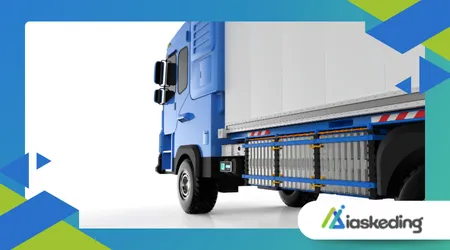
Electric Trucks Experience Faster Battery Degradation than traditional passenger vehicles due to the extreme thermal and mechanical stresses inherent in heavy-duty logistics operations.
The transition to zero-emission freight is accelerating, but it reveals a critical technical divergence between light-duty and heavy-duty battery performance.
While a Tesla Model 3 might retain 90% of its capacity after five years, a Class 8 electric semi-truck often faces a steeper decline.
This disparity is not due to inferior cell quality, but rather the aggressive duty cycles required for commercial viability.
In this article, we examine how “C-rates,” thermal management, and energy throughput combine to shorten the lifespan of industrial power packs.
What is the Primary Cause of Battery Fatigue in Trucks?
The fundamental reason Electric Trucks Experience Faster Battery Degradation lies in energy throughput. Commercial vehicles are designed to be “workhorses,” often covering 100,000 miles or more annually.
Unlike passenger cars that spend 90% of their time parked, trucks operate on near-continuous cycles.
This constant movement forces the lithium-ion cells to undergo multiple full discharge-recharge cycles within a 24-hour period.
Every time a battery cycles, microscopic physical changes occur within the electrodes.
In heavy-duty applications, the sheer volume of kilowatt-hours (kWh) passing through the system accelerates “SEI layer” growth.
++EV vs Plug-in Hybrid: Which Makes More Sense for Daily Use?
This solid-electrolyte interphase acts as a barrier that gradually increases internal resistance. Consequently, the battery loses its ability to deliver high power and store energy efficiently over time.
How Does Payload Weight Impact Battery Chemistry?
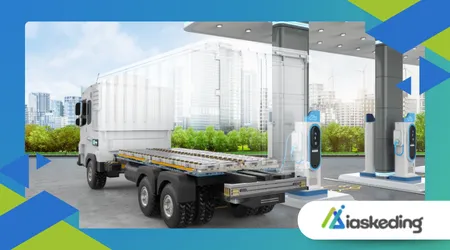
High-load cycles are the silent killers of commercial battery health.
When a truck carries 80,000 pounds of freight up a steep grade, the “C-rate”—the measure of how fast a battery is discharged—spikes significantly.
Passenger EVs typically cruise at low C-rates, placing minimal strain on the internal chemistry. Conversely, electric trucks frequently operate at high discharge rates to maintain highway speeds under load.
These high-load demands trigger localized “hot spots” within the battery pack.
++What Truck Drivers Say After 6 Months Driving Electric
Even with advanced liquid cooling, the internal temperature of the cells can fluctuate rapidly during heavy acceleration or regenerative braking.
These thermal excursions promote lithium plating, a phenomenon where lithium ions metallicize on the anode instead of intercalating.
This process permanently reduces the amount of active lithium available for energy storage.
Why Is Megawatt Charging a Double-Edged Sword?
To minimize downtime, fleet operators rely on ultra-fast charging infrastructure. The emerging Megawatt Charging System (MCS) can deliver over 1,000 kW of power to a vehicle.
While essential for logistics, this level of power injection is a major reason Electric Trucks Experience Faster Battery Degradation compared to cars using standard 50 kW chargers.
According to technical insights from the International Council on Clean Transportation (ICCT), rapid charging at high currents generates intense internal heat.
If the thermal management system cannot dissipate this energy instantly, the electrolyte begins to decompose.
This chemical breakdown creates gaseous byproducts that can cause cell swelling and structural micro-cracks, further reducing the pack’s operational lifespan.
Comparative Battery Stress Factors: Truck vs. Passenger EV
| Feature | Passenger EV (Light Duty) | Electric Truck (Heavy Duty) | Impact on Degradation |
| Typical Daily Cycles | 0.2 – 0.5 Cycles | 1.5 – 2.5 Cycles | 4x faster wear |
| Average C-Rate (Load) | 0.3C – 1.0C | 1.5C – 3.5C | Increased Lithium Plating |
| Charging Power | 11kW (AC) / 150kW (DC) | 250kW – 1,000kW+ | Severe Thermal Stress |
| Annual Mileage | 12,000 – 15,000 miles | 80,000 – 120,000 miles | Faster “Calendar” Aging |
| Depth of Discharge | 20% to 80% (Optimized) | 5% to 95% (Operational) | Accelerated Capacity Loss |
Which Thermal Management Challenges Are Unique to Trucks?
Managing heat in a 500 kWh battery pack is exponentially harder than in a 60 kWh car battery.
Trucks require massive heat exchangers and sophisticated software to balance temperatures across thousands of individual cells.
When a truck is pulling a heavy load in summer heat, the cooling system itself consumes a significant portion of the battery’s energy.
++What Happens to Battery Efficiency in Electric Trucks During Winter?
If the cooling system fails to maintain uniformity, “cell imbalance” occurs. Some cells will degrade faster than others due to higher thermal exposure.
Because battery strings are only as strong as their weakest cell, a few degraded modules can significantly limit the entire pack’s range.
This systemic vulnerability is a core reason why Electric Trucks Experience Faster Battery Degradation in extreme climates.
When Does Vibration and Mechanical Stress Become a Factor?
The physical environment of a commercial vehicle is brutal. Heavy-duty trucks generate constant low-frequency vibrations and experience high-G shocks from uneven road surfaces.
Over hundreds of thousands of miles, these mechanical stresses can compromise the structural integrity of the battery housing and internal connections.
Vibrations can lead to “delamination” of the electrode materials from their current collectors. This physical separation increases internal resistance, which in turn generates more heat during use.
Unlike passenger cars, which are built for comfort and smoothness, trucks are rigid structures that transmit road energy directly into the battery floor, accelerating mechanical fatigue.
What Are the Latest Strategies to Mitigate Degradation?
In 2025, manufacturers are turning to Lithium Iron Phosphate (LFP) chemistry for medium-duty trucks.
LFP is more resilient to high-load cycles and can handle more charge cycles than traditional Nickel Manganese Cobalt (NMC) batteries.
However, for long-haul Class 8 trucks, NMC remains the standard due to its higher energy density, despite its sensitivity to heat.
Software-defined battery management is the new frontier. Advanced AI algorithms now predict “State of Health” (SoH) in real-time, adjusting power delivery based on current temperature and load.
By “throttling” power during extreme conditions, these systems help ensure that Electric Trucks Experience Faster Battery Degradation only when absolutely necessary for safety, rather than as a default of operation.
Conclusion
The reality that Electric Trucks Experience Faster Battery Degradation is a byproduct of the laws of thermodynamics and the high-demand nature of global logistics.
Heavy payloads, rapid megawatt charging, and high annual mileage create a “perfect storm” for lithium-ion fatigue.
However, as the industry shifts toward more robust chemistries like LFP and solid-state alternatives, the gap between truck and passenger EV longevity is expected to narrow.
Understanding these stressors is the first step for fleet managers to optimize their routes and charging schedules for maximum ROI.
For more detailed technical specifications on commercial battery standards, you can consult the International Energy Agency (IEA) Global EV Outlook.
FAQ: Frequently Asked Questions
Why do trucks need faster charging if it hurts the battery?
Trucks are commercial assets that must remain in motion to be profitable. “Downtime” is expensive, so operators prioritize fast charging (MCS) over battery longevity to meet delivery windows, accepting faster degradation as an operational cost.
Can a truck battery be “repaired” if it degrades?
Generally, no. While individual modules can sometimes be replaced, the labor costs and the risks of balancing “new” cells with “old” ones make full pack replacement or second-life repurposing more common.
Does cold weather affect truck battery degradation?
Cold weather primarily affects immediate range and charging speed. While it doesn’t “degrade” the battery as permanently as heat does, charging a frozen battery can cause permanent damage unless the thermal management system pre-heats the cells first.
Is LFP better than NMC for electric trucks?
LFP is better for “cycle life” (it can last 3,000+ cycles), making it ideal for urban delivery. NMC is better for “energy density,” which is required for heavy long-haul trucks that need maximum range.
