
How to Finance an Electric Motorcycle
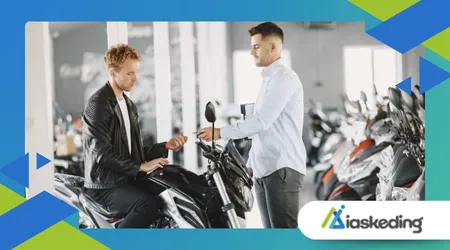
How to Finance an Electric Motorcycle marks a critical junction for riders looking toward a cleaner, quieter future on two wheels.
As the electric motorcycle market evolves rapidly in 2025, the initial sticker price can be daunting for prospective owners.
Yet, viewing the cost through a financial lens reveals numerous pathways to ownership, often proving the long-term economics are substantially more favorable.
The smart rider understands that transitioning to electric power involves not just selecting the right bike, but securing the smartest financial model to support the investment.
Why is Electric Motorcycle Financing Different from Traditional Bikes?
Electric motorcycles represent an emerging asset class with distinct financial profiles.
Their value proposition centers on reduced operating expenses and increased longevity due to simpler mechanicals.
These differences influence lender perception and available financing products.
Many traditional lenders are still adapting their assessment models to fully account for the lower maintenance and fuel costs inherent to an Electric Vehicle (EV).
++The Top 5 Electric Trucks for Urban Waste Collection
Securing the best terms often involves educating the lender on these unique cost-saving benefits. The total cost of ownership (TCO) calculation for an electric model is radically lower over a five-year period.
This financial advantage acts as a powerful offset to the higher initial purchase price. Why would you settle for outdated combustion-era financing when the vehicle itself is a leap forward?
What Are the Most Viable Paths to Acquire an Electric Motorcycle?
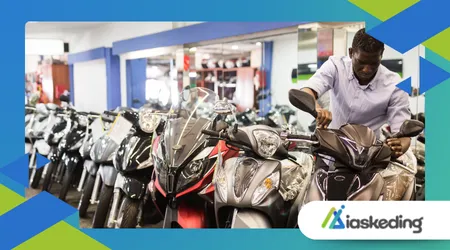
Acquiring an electric motorcycle involves exploring several specialized financial avenues.
It’s no longer a simple choice between a personal loan or dealer financing; the modern landscape is much more nuanced and attractive.
++What Is Torque in Electric Motorcycles and Why It Matters
Savvy buyers are leveraging manufacturer programs and specialized EV loan products designed for sustainability.
These options often provide competitive interest rates and terms reflecting the technology’s reliability.
Manufacturer-Specific Financing: The Zero-Emissions Advantage
Leading electric motorcycle manufacturers often provide their own dedicated financing arms. These programs typically offer promotional APRs or extended terms specifically for new, untitled models.
Such captive financing entities possess the deepest understanding of the product’s residual value, leading to more favorable terms for qualified applicants.
Explore more: Best Electric Motorcycles for City Riding
For example, a major electric motorcycle brand recently offered a promotional rate as low as $2.99\%$ APR for up to 60 months on select 2025 models for tier 1 credit applicants.
This rate is highly competitive compared to the broader unsecured personal loan market. This approach is highly recommended, as it streamlines the process and maximizes savings from the offset.
Unsecured Personal Loans: Flexibility and Freedom
A personal loan from a bank or credit union offers exceptional flexibility since the bike itself is not used as collateral.
This approach removes the lender’s lien on the title, simplifying future transactions like private sales.
While unsecured loans may carry slightly higher rates for similar credit scores, they provide the buyer with complete asset ownership from day one.
++Navigating the Path of Electric Motorbike Finance
This flexibility can be a significant advantage for those who anticipate paying off the loan ahead of schedule.
Dealer and Third-Party Secured Loans: The Familiar Route
Traditional secured loans remain the most common method, using the motorcycle as collateral. Banks, credit unions, and non-prime lenders all offer these options.
Roadrunner Financial, for instance, caters specifically to powersports and offers terms ranging from 24 to 72 months.
The interest rates here are heavily dependent on your credit profile, ranging from low single digits to over $20\%$ for subprime borrowers.
It is crucial to obtain pre-approval from your own bank or credit union before visiting a dealership.
This single step arms you with a competitive benchmark, preventing unnecessary financial pressure at the point of sale.
Don’t let the excitement of a new machine overshadow the importance of rigorous financial due diligence.
How Do Government Incentives and Rebates Affect the Total Cost?
The true cost of a premium electric motorcycle dramatically reduces when factoring in available government support.
Numerous state and local incentives exist to accelerate the adoption of zero-emission vehicles. These incentives act as an immediate discount or tax credit, directly lowering the financed amount.
For instance, several US states offer rebates on new electric vehicle purchases, and while the federal EV tax credit has had varying application to motorcycles, local programs are booming.
The Oregon Clean Vehicle Rebate, as one example, offers a $\$750$ rebate on the purchase of an electric motorcycle for eligible residents. This is essentially free money subtracted from your loan principal.
Consider the following illustrative example of how the financial variables coalesce:
| Financial Instrument | Interest Rate (APR) | Typical Term (Months) | Impact on Principal |
| Manufacturer (Tier 1) | $2.99\% – 7.34\%$ | $36 – 84$ | Minimal; competitive rate |
| Secured Bank Loan (Avg) | $6.49\% – 10.05\%$ | $36 – 72$ | Minimal; market rate |
| State/Utility Rebate | $0\%$ | N/A | Direct reduction of cost (e.g., $-\$750$) |
| Fuel Savings (Annually) | N/A | N/A | Effectively lowers monthly budget |
This table clearly illustrates the powerful combination of a low-interest loan and direct rebate.
What Intelligent Budgeting Strategies Complement Electric Motorcycle Financing?
Transitioning to an electric motorcycle provides a powerful financial analogy: think of it like moving from a rental property to owning a home.
The monthly expense is initially higher, but a significant portion of that payment is building equity and reducing long-term costs.
The electric rider moves from constantly paying the gas pump and mechanic to investing in their own efficient battery pack.
The global market for electric motorcycles and scooters is projected to grow from $\$39.83$ billion in 2025 to over $\$61.73$ billion by 2034, at a CAGR of $4.99\%$, signaling robust market confidence (Precedence Research, July 2025).
This growth reflects increasing consumer trust in the long-term viability and value retention of these vehicles.
Choosing How to Finance an Electric Motorcycle today means banking on tomorrow’s market growth.
A strategic move involves dedicating the money previously spent on gasoline and routine oil changes toward the monthly loan payment.
For a rider who spent $\$150$ monthly on fuel and maintenance, that $\$150$ immediately offsets a portion of their new payment.
How to Finance an Electric Motorcycle involves a mental shift as much as a banking transaction.
The Smart Rider’s Budget
Sarah, an experienced commuter, opts for a $\$15,000$ electric motorcycle. She secures a $4.99\%$ APR loan over 60 months with a $\$750$ state rebate.
Her monthly payment is approximately $\$278$. Her old gas bike cost her $\$100$ in gas and $\$50$ in oil changes monthly.
She redirects the full $\$150$ savings toward the loan, effectively reducing her new net mobility cost to only $\$128$ per month while gaining a superior machine.
The Equity Builder
Mark decides to take out an unsecured personal loan at $8.5\%$ for his $\$12,000$ purchase to avoid a lien. He receives a $\$500$ utility company rebate for his purchase.
He plans to sell the bike in three years. Because the title is clear, he can sell it quickly to a private party, potentially fetching a better price than trading it in, while avoiding complicated loan releases.
This approach maximizes financial agility and provides the answer to How to Finance an Electric Motorcycle for the short-term owner.
Conclusion: How to Finance an Electric Motorcycle
The era of electric mobility is here, and smart How to Finance an Electric Motorcycle options are more abundant than ever.
Between competitive manufacturer financing, flexible personal loans, and valuable government incentives, the barrier to entry is continually decreasing.
The forward-thinking rider does not see a higher initial price tag, but a minimized total cost of ownership achieved through intelligent financing.
Embrace the electric revolution not just for the ride, but for the remarkably sound financial decision it represents.
How to Finance an Electric Motorcycle (Frequently Asked Questions)
What credit score do I need to get the best electric motorcycle financing rates?
Typically, the most competitive interest rates (often below $6\%$) are reserved for applicants with a credit score of $720$ or higher, categorized as Tier 1 by most lenders.
Scores above $660$ can still qualify for good rates, but they will likely be slightly higher.
Can I use a personal loan for a used electric motorcycle?
Yes, absolutely. Unsecured personal loans are excellent for used purchases because they do not require the lender to appraise the vehicle, often making the process faster and simpler than a traditional secured loan for a pre-owned model.
Are the lower running costs of an electric motorcycle really enough to offset the higher price?
For the average commuter, yes. When comparing a typical loan payment plus fuel and maintenance for a gas bike versus the loan payment plus minimal charging costs and zero routine maintenance for an electric model, the TCO is often lower for the EV over the typical 5-year loan term.
The fuel and maintenance savings effectively reduce the net cost of the electric motorcycle payment.
