
Comparing EV vs Hybrid vs Fuel Cell & Hydrogen: Pros, Cons, and Real-World Usage
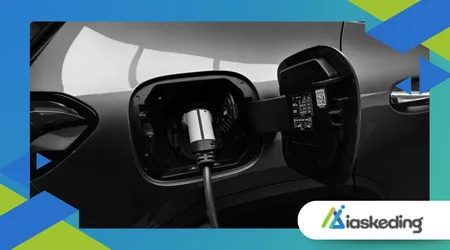
Comparing EV vs Hybrid vs Fuel Cell and Hydrogen is essential for anyone contemplating a new vehicle purchase in this transformative era of personal transport.
The automotive landscape is rapidly evolving, presenting consumers with increasingly complex choices beyond the traditional internal combustion engine.
Our column today delves into the distinct merits and drawbacks of three leading green technologies, examining their viability, environmental impact, and real-world applicability in 2025.
Electric Vehicles (EVs): The Charge of the Battery-Electric Future
Battery Electric Vehicles, or EVs, represent a complete paradigm shift, operating solely on electrical power stored in large battery packs.
Their appeal lies in zero tailpipe emissions, making them champions for urban air quality. This fundamental difference drastically reduces reliance on fossil fuels for daily operation.
A significant advantage is the simple, robust powertrain, leading to lower long-term maintenance costs.
The driving experience is often praised for instant torque and near-silent operation, a welcome change for many drivers.
However, the primary hurdle remains range anxiety and the associated charging infrastructure.
While public charging networks are expanding rapidly globally, recharging takes considerably longer than a quick fuel stop.
Battery degradation over a vehicle’s life is another consideration, though modern systems show promising longevity.
Hybrid Electric Vehicles (HEVs): Bridging the Gap with Dual Power

Hybrids offer a compelling middle ground, artfully combining a smaller gasoline engine with an electric motor and a modest battery pack.
++Electric SUVs Gaining Popularity: Best Options & Comparing Range, Price
This duality allows the vehicle to operate electrically at low speeds or on stored energy, enhancing fuel efficiency considerably.
The internal combustion engine can also charge the battery or provide supplementary power.
The key benefit is unparalleled convenience: drivers never worry about range or charging times.
A hybrid seamlessly blends electric efficiency with the familiarity of a gas tank, making it an excellent transition vehicle.
++Recent recalls and safety challenges of electric vehicles
Nevertheless, hybrids are not zero-emission vehicles; they still burn gasoline and possess a more complex, heavier system than either a pure EV or a traditional gasoline car.
They are less revolutionary and more of an evolutionary step towards full electrification.
Fuel Cell Electric Vehicles (FCEVs): The Power of Hydrogen
Fuel Cell Electric Vehicles utilize a different approach, generating electricity onboard through a chemical reaction between stored hydrogen and oxygen from the air.
++What Is a Personal Electric Vehicle (PEV)?
Their sole emission is water vapor, positioning them as an extremely clean alternative.
A major selling point for FCEVs is the refueling time, which is comparable to filling a gasoline tank, addressing a significant EV drawback.
This rapid turnaround offers the zero-emission benefit without the charging wait.
The challenge, however, is monumental: the severe lack of hydrogen refueling infrastructure.
Hydrogen production and transportation are also energy-intensive, and the current cost of the vehicles themselves remains high.
++Electric Cars v Hydrogen Cars – Which Is The Better Choice?
This technology is, for now, a niche player, heavily reliant on a future, dedicated infrastructure build-out.
A Comparative Look: Pros and Cons
When Comparing EV vs Hybrid vs Fuel Cell and Hydrogen, it is useful to distill the core trade-offs:
| Feature | Battery EV (BEV) | Hybrid (HEV) | Fuel Cell (FCEV) |
| Emissions | Zero Tailpipe | Reduced Tailpipe | Zero Tailpipe (Water Vapor) |
| Refueling/Recharge | Slow (Hours) | Fast (Minutes) | Fast (Minutes) |
| Infrastructure | Growing, but Incomplete | Ubiquitous (Gas Stations) | Extremely Limited |
| Complexity | Low (Simple Drivetrain) | High (Two Power Systems) | High (Fuel Cell Stack) |
The choice often comes down to individual driving patterns. Consider an example: a city courier driving 100 miles daily in Los Angeles.
An EV is ideal due to low operating costs and reliable overnight charging.
Conversely, a traveling sales representative covering 500 miles weekly across the remote Midwest would currently find a Hybrid more practical, given the vast distances and scattered charging points.
The Current State and Market Reality in 2025
The global market undeniably favors the EV.
As of early 2025, data from the International Energy Agency (IEA) indicates that annual EV sales have continued their exponential rise, fundamentally altering market dynamics.
This scale of adoption drives down battery costs and rapidly accelerates charging network expansion.
Comparing EV vs Hybrid vs Fuel Cell and Hydrogen shows that EVs have the strongest market momentum.
Hybrids serve a crucial role, often acting as a reliable first step for hesitant consumers. They offer immediate emissions reductions without demanding a lifestyle change.
They represent a significant portion of new car sales globally.
Fuel Cell technology, by contrast, is struggling for widespread acceptance.
It remains an exclusive technology, largely confined to regions like California in the US, Korea, and Japan, where targeted government incentives have pushed infrastructure development.
Until hydrogen production becomes cheaper and the network expands dramatically, widespread adoption remains a distant prospect.
Isn’t it fascinating how infrastructure dictates the viability of even the cleanest technologies?
Intelligent Selection: Matching the Technology to the Need
The journey toward sustainable transport isn’t a single lane; it’s a multi-pronged highway. An effective analogy is to view these technologies as tools in a toolbox.
The EV is the power drill: incredibly efficient for its specific job (daily driving), but constrained by its battery.
The Hybrid is the multi-tool: flexible and reliable in almost any situation, but not optimized for one.
The FCEV is the specialized laser cutter: powerful, precise, and groundbreaking, but requires a unique, dedicated workspace (hydrogen station).
Comparing EV vs Hybrid vs Fuel Cell and Hydrogen reveals that the market is currently a two-horse race dominated by BEVs and HEVs.
The long-term winner will be determined by energy storage solutions, be it improved battery technology or a breakthrough in cost-effective, green hydrogen.
The responsible choice today requires careful assessment of one’s driving habits and local infrastructure.
The decision is personal, but the direction is clear: the internal combustion engine’s dominance is waning.
Ultimately, the best choice is the vehicle that best serves the owner’s needs while minimizing environmental impact.
Frequently Asked Questions
1. Which technology is the most environmentally friendly?
The Battery EV (BEV) is generally considered the most environmentally friendly in terms of tailpipe emissions (zero).
However, the overall impact depends on the electricity source used for charging. FCEVs also have zero tailpipe emissions, releasing only water vapor. Hybrids still burn gasoline.
2. Are hybrids going to be phased out soon?
No, hybrids are expected to remain relevant for the foreseeable future, particularly in markets with underdeveloped charging infrastructure or for drivers who require maximum range flexibility.
They are a necessary transitional technology.
3. What is the biggest barrier to Fuel Cell Vehicles?
The single largest barrier for FCEVs is the lack of a widespread, convenient, and cost-effective hydrogen refueling infrastructure.
The cost of producing and storing hydrogen is also a significant hurdle to large-scale adoption.
