
Battery Energy Storage Systems (BESS) Surpassing Pumped Hydro: Implications for Grid Reliability and Renewable Integration
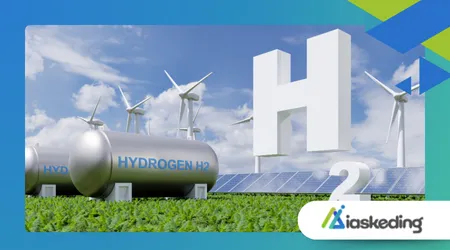
Battery Energy Storage Systems (BESS) have emerged not as a fleeting trend, but as a transformative force reshaping how we think about grid stability and renewable energy integration.
In an unprecedented shift within the energy landscape, the once-unquestioned dominance of pumped hydro storage is now facing a formidable challenger.
The implications of this are profound, signaling a new era of agility and resilience for power grids worldwide.
The question is no longer whether BESS will play a role, but rather how quickly they will ascend to become the primary mechanism for balancing our increasingly renewable-centric electrical grids.
From Gigawatts to Giga-hours: A New Metric for Power
Pumped hydro storage (PHS) has long been the heavyweight champion of energy storage.
Its sheer capacity, measured in gigawatts (GW) of power and gigawatt-hours (GWh) of energy, has made it the go-to solution for long-duration storage needs.
These massive, purpose-built projects, essentially a giant water battery, leverage gravity to store and release energy.
They charge by pumping water to a higher reservoir when electricity is abundant and cheap, then release it through turbines to generate power when demand soars.
This model has served grids reliably for decades, providing a stable foundation.
However, the physical and economic constraints of PHS are significant. They are geographically constrained to locations with the right topography and water availability.
The construction timelines are measured in years, if not decades, and the capital investment is immense. This makes them inflexible and slow to adapt to the rapid pace of renewable energy deployment.
++Top Brands Leading the Electric Motorcycle Market
As solar and wind power proliferate, the need for a more agile, scalable, and location-agnostic storage solution has become critical.
This is precisely where Battery Energy Storage Systems step in.
The Rise of BESS: A Revolution in Agility
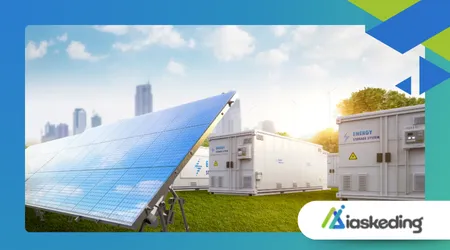
The proliferation of BESS is fundamentally changing the energy storage conversation. Unlike PHS, batteries can be deployed in a modular fashion, anywhere on the grid.
This flexibility allows them to be placed exactly where they are needed most, whether at a utility-scale solar farm, a substation, or even as part of a localized microgrid.
++How to Reduce Your Carbon Footprint at Home
This decentralized approach enhances grid reliability at a more granular level. The speed at which BESS can respond to fluctuations is another game-changer.
They can go from zero to full power in milliseconds, a crucial capability for frequency regulation and other ancillary services.
This agility is not a hypothetical advantage; it is a current operational reality.
The North American Electric Reliability Corporation (NERC) noted in its 2025 State of Reliability report that batteries are increasingly providing frequency regulation services, with times in Texas where they provided all the necessary capacity.
This demonstrates their capacity to act as a vital safety net for grid operators.
++How to Invest in Green Energy the Right Way
This ability to instantly balance supply and demand is the single most important factor for integrating large amounts of intermittent renewable energy.
The Economic and Operational Tipping Point
The economic landscape for energy storage has fundamentally shifted. While PHS boasts a very long lifespan, the capital costs are prohibitive.
Meanwhile, the cost of lithium-ion batteries has plummeted over the last decade.
A report from BloombergNEF in early 2025 noted that the costs for a utility-scale Battery Energy Storage Systems have continued to decline, making them a more economically viable option for a wider range of applications.
Read more: Impact of Energy Storage Technologies on Grid-Connected Renewable Energy Systems
This cost reduction, combined with their operational flexibility and rapid deployment, has led to a surge in projects.
According to a mid-2025 report by Rho Motion, global BESS deployments in the first half of the year increased by a remarkable 54% compared to the same period in 2024.
This growth trajectory is simply not matched by new PHS projects.
Consider a simple analogy: pumped hydro is like building a massive, custom-designed dam for a single, long-term purpose. It’s a monumental feat of engineering but slow and costly.
Conversely, Battery Energy Storage Systems are like adding a series of agile, high-performance engines wherever they are needed on a grid.
They can be installed quickly, scaled up easily, and repurposed as needs change. This analogy highlights the core difference in their value proposition.
The future of energy storage is not about building one colossal structure but about weaving a network of flexible, intelligent assets into the fabric of the grid.
A compelling real-world example of this is the case of the Moss Landing Energy Storage Facility in California.
| Feature | Battery Energy Storage Systems (BESS) | Pumped Hydro Storage (PHS) |
| Response Time | Milliseconds to seconds | Minutes to hours |
| Siting Flexibility | Highly flexible; can be co-located with renewables | Geographically constrained; requires specific topography |
| Capital Investment | Modular, lower initial cost per deployment | Extremely high, multi-billion dollar projects |
| Deployment Timeline | Months to a few years | A decade or more |
| Scalability | High; can be scaled up incrementally | Limited; requires massive, upfront expansion planning |
Conclusion: The New Pillar of Grid Reliability
While pumped hydro will retain its importance for specific, long-duration needs, particularly in regions with suitable geography and existing infrastructure, its role as the dominant energy storage solution is being usurped.
The future of a stable, reliable, and decarbonized grid rests on the shoulders of Battery Energy Storage Systems.
Their speed, flexibility, and rapidly improving economics make them the perfect partner for variable renewable energy sources like wind and solar.
They don’t just store energy; they are becoming the invisible hand that balances supply and demand, ensuring that our lights stay on and our grids remain stable.
It is the silent, ongoing revolution that is building the foundation for a truly sustainable energy future. We are witnessing the dawn of a new era.
Frequently Asked Questions (FAQs)
Q1: Are BESS replacing all pumped hydro facilities?
No, BESS are not replacing all PHS facilities. PHS will continue to be a vital part of the energy mix, especially for very long-duration storage where its massive capacity is valuable.
However, BESS are now the preferred solution for short- to medium-duration needs, grid services, and new projects due to their flexibility and cost-effectiveness.
Q2: What are the main challenges for BESS adoption?
Some challenges include the long-term degradation of batteries, supply chain risks for key minerals like lithium, and the need for robust recycling infrastructure.
However, ongoing technological advancements and market innovations are addressing these issues.
Q3: How do BESS make the grid more reliable?
They improve reliability by providing a fast response to grid disturbances, such as sudden drops in power supply. They can inject or absorb power in milliseconds, helping to stabilize voltage and frequency.
This prevents blackouts and ensures the seamless integration of intermittent renewables.
